


E432 (Polyoxyethene (20) sorbitan monolaurate (polysorbate 20))
Polysorbate 20 stabilizes flavor emulsions, sauces, and products with essential oils; carbohydrates usually come from the full formula, not from this emulsifier.
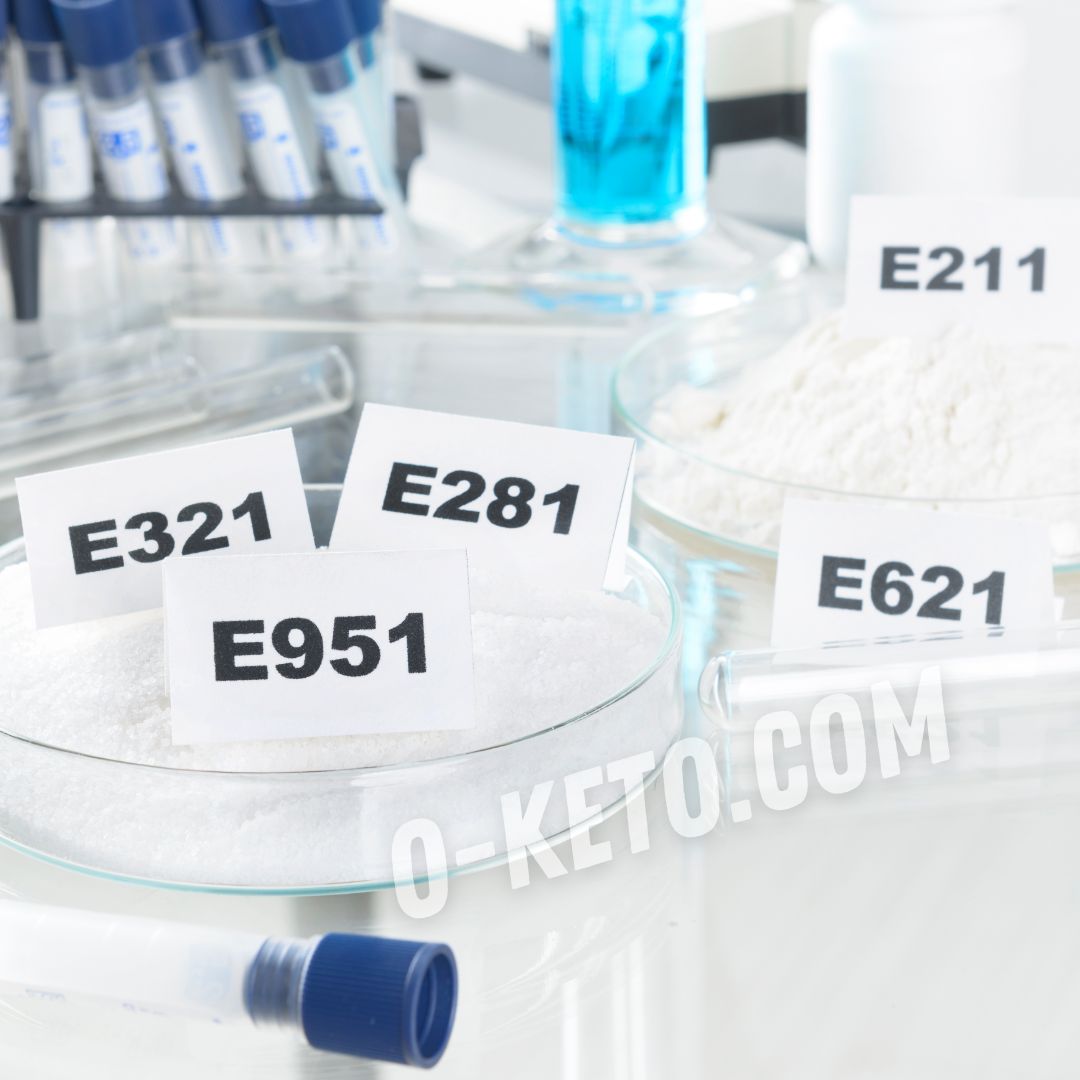
Polysorbate 20 is labeled as E432 and belongs to emulsifiers based on sorbitan, lauric acid, and a polyoxyethylene part. Its technological role is to help fat-soluble flavors, essential oils, and other hydrophobic components disperse evenly in a water-based system. In foods, E432 is used not for its own taste or nutritional value, but for emulsion stability. For low-carbohydrate eating, polysorbate 20 is usually not a sugar source, but it often appears in complex flavored products.
What polysorbate 20 does
Polysorbate 20 helps mix components that would normally separate. Oil-based flavors, citrus essential oils, spices, fat-soluble colors, and some active components do not distribute well in water. The emulsifier reduces phase separation and helps produce a more even flavor, appearance, and texture.
It is especially useful in systems where the fat phase is small but must be spread uniformly. This may be a flavored drink, sauce, glaze, dessert mixture, or technical flavor preparation. Unlike thickeners, E432 does not necessarily make a product thick. Its main work is distribution and stability at the oil-water boundary.
Where E432 appears
Polysorbate 20 may be used in flavor emulsions, sauces, beverages, glazes, desserts, chewing products, and mixtures containing essential oils. It is also known outside food: related substances are used in pharmaceutical, cosmetic, and technical formulas. That does not make the food additive automatically dangerous; the same technological principle can be useful in different fields.
For the consumer, another question matters more. If E432 appears in the formula, the product usually has a complex flavor or emulsion system. It is important to see what is being stabilized. It may be an unsweetened sauce with oil and spices, or it may be a sweet drink, syrup glaze, or flavored dessert. These cases deserve very different assessments.
Low-carbohydrate context
Polysorbate 20 is not sugar, flour, or starch. It is used in small amounts and rarely determines the carbohydrate content of a product. But products with E432 may contain sugar, syrups, fruit concentrates, maltodextrin, starch, sweetened flavor bases, or polyols. The E432 line should not distract from the nutrition panel and the main ingredients.
On keto and LCHF, the correct order of checking remains the same: carbohydrates per serving, sources of sugar and starch, fat quality, sweeteners, and only then technological emulsifiers. If the product is low-carbohydrate and useful for flavor or convenience, E432 may be a secondary detail. If the product is high-carb, sweet, and ultra-processed, polysorbate merely helps it become more uniform and attractive.
Tolerance and sensitivity
Most people do not notice small amounts of polysorbate 20 in occasional products. But emulsifiers can be part of the broader load of ultra-processed food. If someone frequently uses ready-made sauces, flavored drinks, bars, desserts, and mixes, they are not getting one E432 only. They are getting combinations of emulsifiers, gums, sweeteners, acids, flavorings, and protein concentrates.
With bloating, rumbling, heaviness, loose stool, or individual reactions, the whole formula should be reviewed. Sometimes the issue is not polysorbate but polyols, inulin, milk protein, caffeine, acids, spices, or simply a large portion of a sweet product. If reactions repeat with products that have a similar emulsion system, reducing frequency and choosing simpler formulas is reasonable.
Essential oils and flavorings
Polysorbate 20 is often connected with dispersing essential oils and flavor components. This matters because oils can be very concentrated and do not mix well with water. The emulsifier helps avoid droplets on the surface and makes taste more uniform. E432 may therefore appear where a small amount of citrus, mint, or spicy aroma is needed in a water-based product.
The presence of an emulsifier does not make a flavor natural or beneficial. A natural essential oil, artificial flavor, and sweetened flavor mixture may use similar dispersion technology. For health and low-carbohydrate eating, the more important issues are sugar content, base composition, flavor dose, and personal response.
Difference from polysorbate 80
Polysorbate 20 is often compared with polysorbate 80 because both belong to the same emulsifier family. The difference is related to the fatty-acid part and technological behavior: polysorbate 20 is more associated with lauric acid and flavor emulsions, while polysorbate 80 is associated with oleic acid and other emulsion tasks. For the buyer, the function in the specific product matters more than chemical detail.
If E432 is listed, the useful step is to understand what mixture is being stabilized. In a drink it may be flavor, in a sauce oil and spices, in a dessert fat and water phases. The same emulsifier in different foods does not mean the same nutritional assessment. Context matters more than the number.
Practical assessment
E432 is best treated as a technological emulsifier, not a nutrient. It does not add complete protein, beneficial fats, minerals, or vitamins. In a small amount in an occasional product, it may be acceptable if the whole formula fits and is well tolerated. But it should not justify sweet drinks, syrupy desserts, or ultra-processed foods with long ingredient lists.
Practical choice rests on simple questions: how many carbohydrates are in the serving, what is the base of the product, which sweeteners and fats are used, and whether symptoms appear after use. If the answers are calm, E432 does not require panic. If the product is sweet, encourages repeated use, or causes discomfort, a simpler alternative is better.
If you have any questions about the term "E432 (Polyoxyethene (20) sorbitan monolaurate (polysorbate 20))", you can ask them to AI. Please note, a low-cost OpenAI model is used. It may answer questions about disease treatment with errors!


 1 / 4
1 / 4

 1 / 4
1 / 4 1 / 4
1 / 4 1 / 4
1 / 4 1 / 4
1 / 4

 1 / 4
1 / 4