


How to identify bile problems?
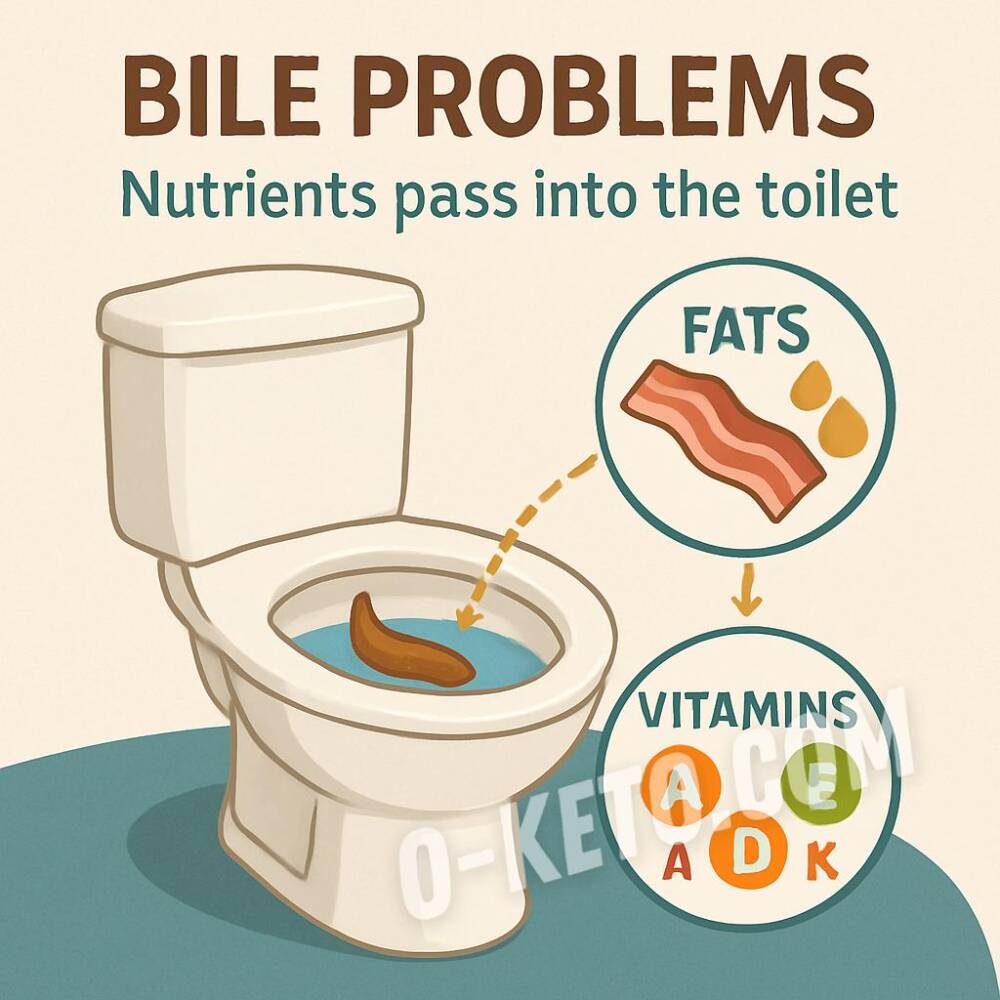
If the stool smears the toilet or floats in the toilet (does not sink), it indicates problems with bile. This signals that not all nutrients are being absorbed from your food. This means that you may already have deficiencies in fat-soluble vitamins and minerals.
Bile is produced in the liver and enters the intestine when food is consumed, especially fatty food. Its main function is to emulsify fats, that is, to break them down into tiny droplets so that the enzymes of the pancreas (lipases) can digest them.
If there is not enough bile, or it is delivered irregularly, fats remain poorly digested. In this case:
- they can color the stool light or grayish,
- the stool becomes softer, greasy, "fatty," and sticks to the toilet bowl,
- characteristic floating fecal masses appear, as fat is lighter than water.
Why this is important
Fats carry vitamins A, D, E, K (fat-soluble). If they are not digested, the vitamins are not absorbed → a deficiency develops.
Minerals and trace elements (such as calcium, magnesium, zinc) are also less effectively incorporated into metabolism without normal bile function.
A lack of bile may indicate stagnation in the gallbladder, dyskinesia of the bile ducts, or a deficiency of cholesterol or amino acids involved in its synthesis.
Possible consequences:
- constant deficiencies of fat-soluble vitamins,
- dry skin, hair loss, brittle nails,
- predisposition to inflammation and weak immunity (vitamin D and omega-3 deficiency),
- worsening night vision (vitamin A deficiency),
- problems with blood clotting (vitamin K deficiency).