


Why does bad cholesterol increase due to a carbohydrate diet?
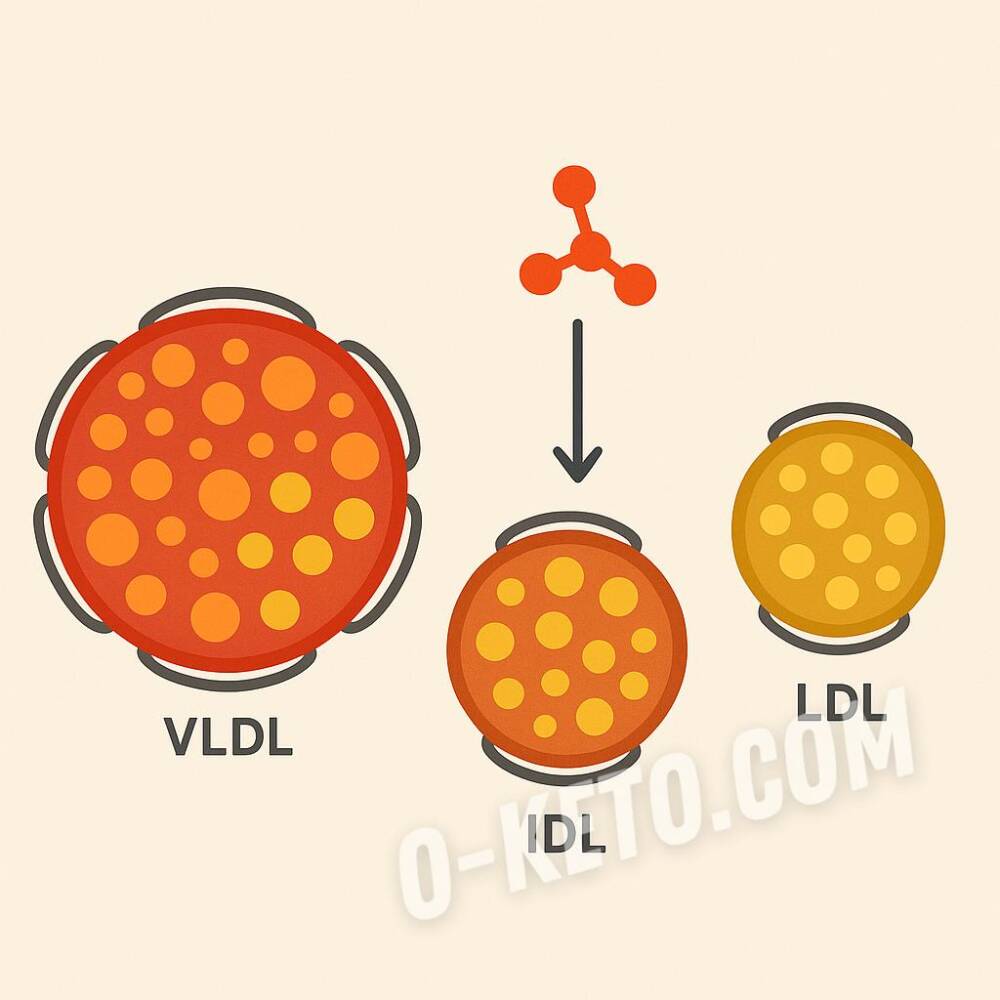
Bad cholesterol is very low-density lipoproteins and intermediate-density lipoproteins. Good cholesterol is low-density and high-density lipoproteins. However, if we look at the composition of very low-density, intermediate, and low-density lipoproteins, the only thing that distinguishes them is the amount of triglycerides. The lower the triglycerides, the better the cholesterol. In other words, if you remove triglycerides from very low-density and intermediate-density lipoproteins, they will turn into low-density lipoproteins, which is good cholesterol. Thus, it is the excess of triglycerides that makes cholesterol bad. Triglycerides in the body increase due to a carbohydrate diet. On a keto diet, for example, there is always a very low amount of triglycerides in the blood.
The key difference between «bad» and «good» lipoproteins lies not so much in the cholesterol itself, but in the amount of triglycerides they transport. To understand this physiologically, one needs to consider the pathway of lipoprotein transformation in the body.
How Lipoproteins Are Formed
All lipoproteins — are transport capsules that carry fat (triglycerides and cholesterol) through the blood, as fats are insoluble in water.
The liver secretes very low-density lipoproteins (VLDL) — these are large particles that contain:
- a lot of triglycerides (up to 50–60% of the mass),
- a little cholesterol,
- a protein shell (apolipoproteins, mainly ApoB100).
VLDL are directed to peripheral tissues — muscles and adipose tissue, where the enzyme lipoprotein lipase (LPL) breaks down triglycerides into fatty acids. These fatty acids are used by cells for energy or stored in fat depots.
Transformation of «Bad» into «Good»
When VLDL lose some triglycerides under the action of lipase, they become intermediate-density lipoproteins (IDL). If the process continues and triglyceride levels drop even further, IDL transform into low-density lipoproteins (LDL).
LDL contain:
- already few triglycerides,
- a lot of cholesterol,
- and perform an important function — delivering cholesterol to cells, where it is used for building membranes, synthesizing hormones, and vitamin D.
Thus, LDL — is not "bad cholesterol", but rather the result of «maturation» of VLDL, when the excess amount of triglycerides has been removed from the blood.
Why Excess Triglycerides Make Lipoproteins Dangerous
If a person consumes a lot of fast carbohydrates (sugar, bread, starch, fructose), the liver actively synthesizes triglycerides from them. This leads to:
- overproduction of VLDL,
- increased triglyceride levels in the blood,
- and reduced activity of lipoprotein lipase (especially in insulin resistance).
As a result, VLDL and IDL circulate longer, oxidize, and become atherogenic particles — they damage the vascular wall, trigger inflammation, and form plaques.
What Happens on a Keto Diet
On a ketogenic diet:
- insulin levels decrease,
- triglyceride synthesis in the liver drops,
- less VLDL is formed,
- lipolysis is activated, and fats are used as fuel.
The amount of triglycerides in the blood sharply decreases, while the share of dense LDL (large buoyant LDL) increases — these particles are considered safe and even beneficial for cholesterol metabolism.
Conclusion
What is referred to as «bad cholesterol» is actually a consequence of carbohydrate metabolism and excess triglycerides, rather than cholesterol itself.