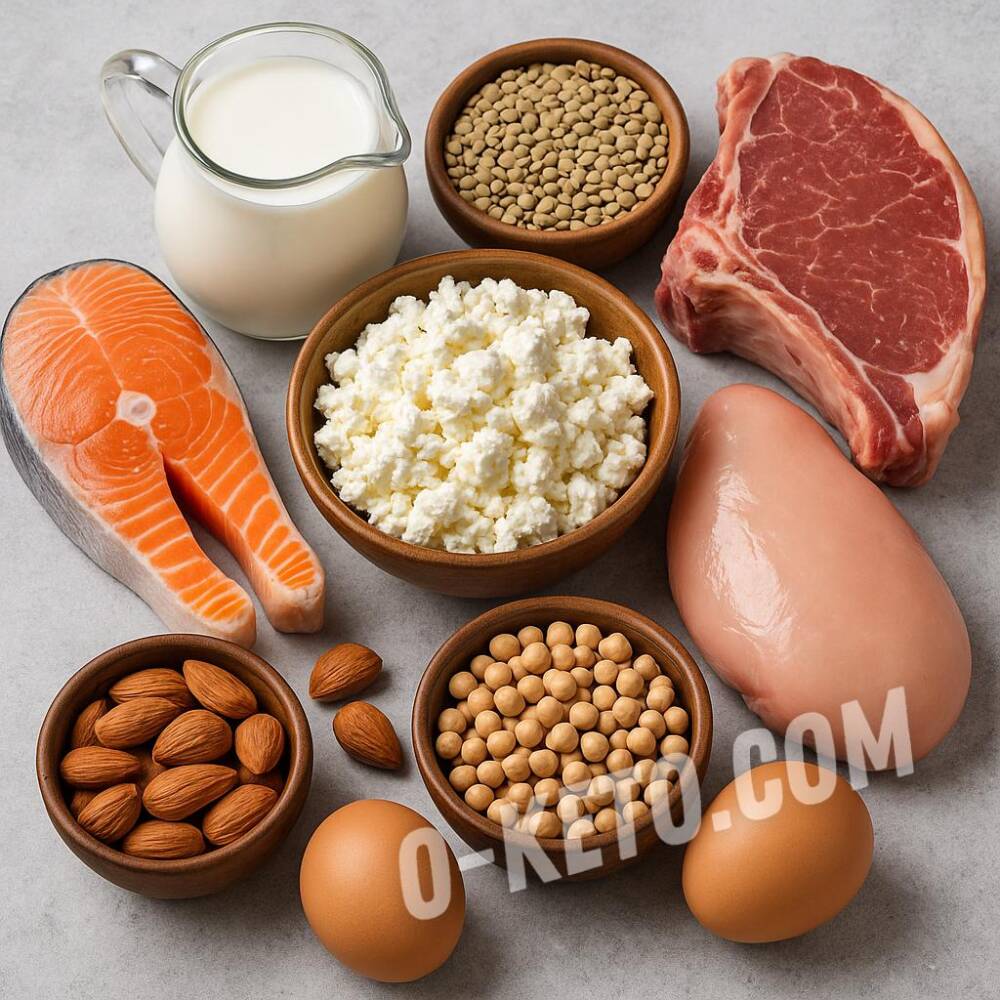
The acid-base balance of the body is determined not by the source of protein (plant or animal), but by the amino acid composition and how these amino acids are metabolized in the body.
How proteins affect the acid-base balance
Proteins are made up of amino acids, each of which can produce either acidic or alkaline products during metabolism.
Amino acids that acidify the body. Some amino acids produce strong acids, such as sulfuric, phosphoric, and hydrochloric acid, when broken down. Examples:
These products acidify the internal environment of the body (in particular, they increase the acidity of urine), as the body has to neutralize or excrete these acids through the kidneys, lungs, and blood buffer systems.
Amino acids that alkalize the body. Other amino acids produce alkaline ionic forms (e.g., bicarbonate, ammonia) as a result of metabolism:
- Glutamine, asparagine, histidine, etc. → provide ammonia groups (NH₃), which can be used to form ammonium (NH₄⁺), and also stimulate the production of bicarbonate (HCO₃⁻), which alkalizes the blood.
Why it doesn't matter whether the protein is plant or animal
Each protein — whether plant or animal — is a mixture of amino acids. It is impossible to say that all protein from plant sources alkalizes, while that from animal sources acidifies. It all depends on the balance of amino acids in a specific product:
- Animal proteins (meat, fish, eggs) contain all essential amino acids and often more sulfur-containing ones, which can lead to a greater acidic response.
- Plant proteins (legumes, nuts, grains) also contain acidic amino acids — especially in grains. For example, wheat produces a significant amount of acidic residues during metabolism.
Thus, both can either acidify or alkalize — it all depends on the specific amino acid profile and combination of products.
The role of complete protein
Complete protein — is a protein that contains all essential amino acids in the necessary proportions. Such proteins are better absorbed, put less strain on the kidneys and liver, and allow the body to:
- Effectively use amino acids for the synthesis of tissues, enzymes, and hormones (rather than for energy purposes)
- Reduce the formation of excess acids or toxins, as there are no excess amino acids to be broken down
Thus, high-quality protein (e.g., egg, collagen, whey protein, a blend of plant proteins with a complete amino acid profile) better maintains the acid-base balance because it does not overload with individual acidic metabolic products.