


Why does a low-protein diet lead to blood acidosis?
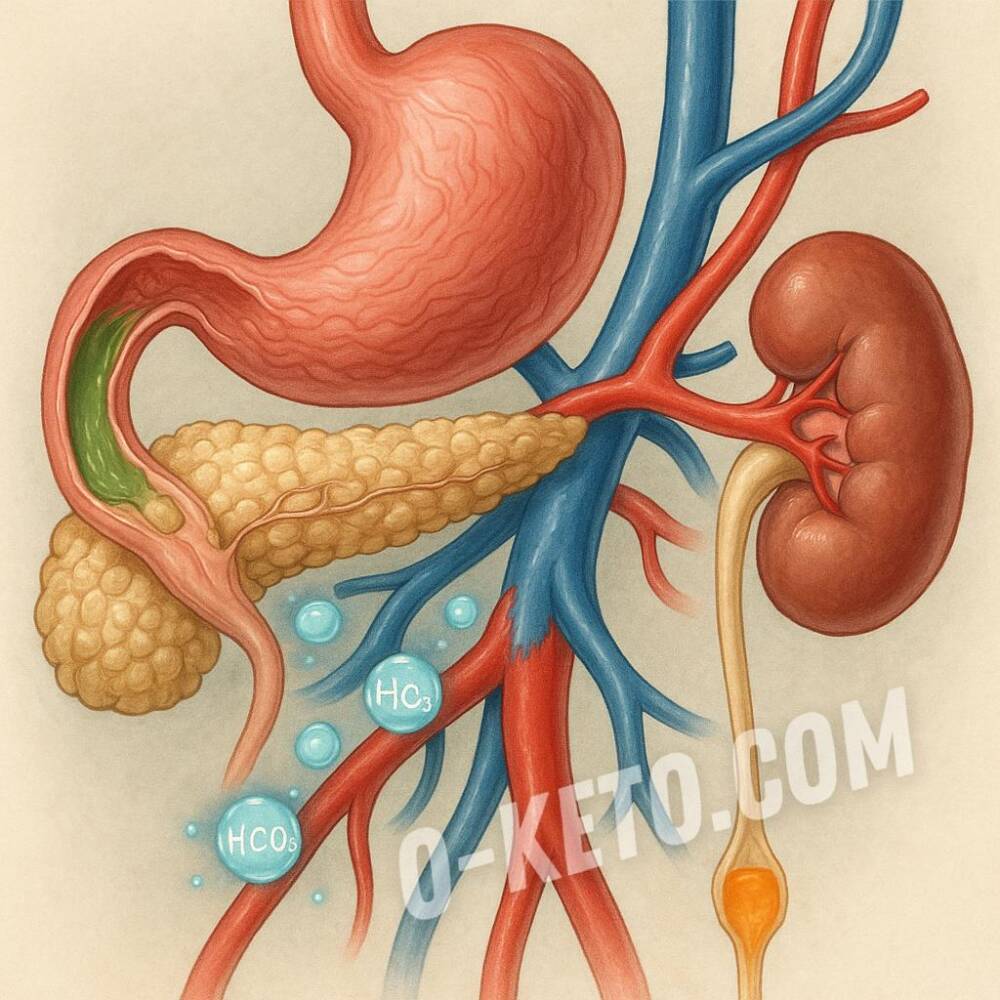

Low-protein diet leads to blood acidification due to the secretion of the gastrointestinal tract.
Protein — not just a building material, but also a key participant in maintaining acid-base homeostasis. The exocrine secretion of the gastrointestinal tract (GIT) heavily depends on the composition of food, particularly on the amount of protein.
With low-protein nutrition, there are pronounced shifts in the composition and volume of digestive juices, which ultimately also affect the acid-base balance and the internal state of the body, including the acidification of the blood.
Reduction of gastric juice secretion (HCl)
Protein — the main stimulator of hydrochloric acid (HCl) secretion in the stomach. Its presence activates gastrin, which triggers the activity of parietal cells in the stomach.
With low-protein nutrition, gastrin production decreases → HCl secretion falls → gastric juice becomes less acidic. In response, the body tries to compensate for this secretion deficit by increasing HCl release, taking bicarbonate (HCO₃⁻) from the blood (through exchange in the stomach cells). This is the alkaline "debt," which acidifies the blood.
When parietal cells produce HCl, an equivalent amount of HCO₃⁻ (alkali) enters the blood — this temporarily alkalizes the blood after meals (the so-called alkaline "surge"). But with chronic reduction in HCl stimulation, this mechanism is disrupted:
- either the stomach compensatorily withdraws HCO₃⁻ from the blood to still produce acid,
- or with reduced HCl secretion, protein breakdown is disrupted, leading to secondary protein starvation and increasingly severe acidosis.
Weakening of pancreatic secretion (pancreas)
Proteins stimulate the production of secretin and cholecystokinin (CCK), which activate the release of pancreatic juice — containing bicarbonates and enzymes. With insufficient protein, the secretion of these hormones decreases → the production of alkaline pancreatic juice, which should neutralize stomach acid, worsens.
This leads to insufficient alkalization of chyme in the duodenum and gradual acidification of the mucosa, and subsequently the internal environment of the body.
Decrease in bile secretion
Proteins stimulate the release of bile through CCK. Bile contains alkaline salts and participates in the emulsification of fats, as well as in the buffer neutralization of acids. Low-protein nutrition → less CCK → bile secretion worsens → less alkalization in the intestines.
What this leads to:
The GIT disrupts the acid-base gradient, particularly at the transition from the stomach → duodenum. There is a compensatory increase in the absorption of hydrogen ions (H⁺) and a decrease in the excretion of acids with feces. Gradually, this affects the systemic blood pH, especially with weak buffer systems — as seen in individuals with low protein supply.
List of YouTube videos on the topic "Why does a low-protein diet lead to blood acidosis?":