


What remedy is effective against viruses, including HIV?
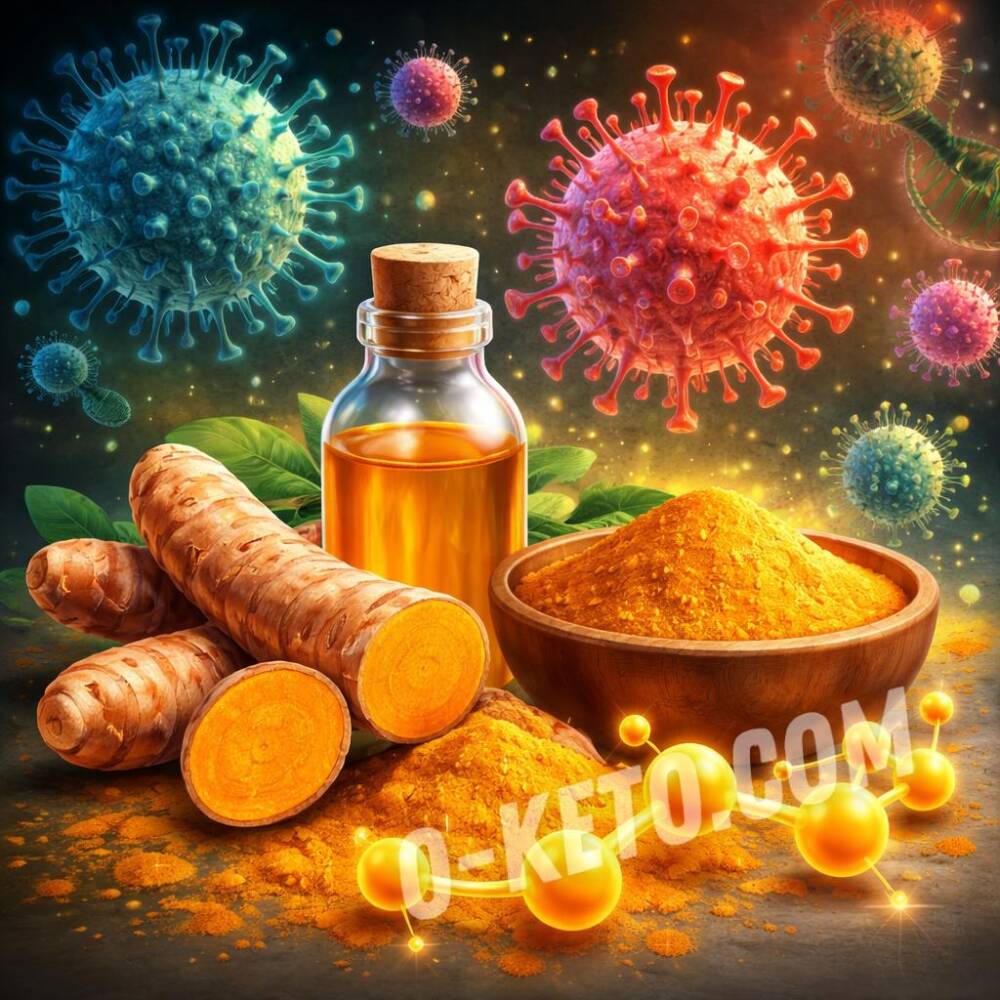

Curcumin has proven antiviral and anti-inflammatory effects. It helps against viruses, including HIV, by allowing the separation of the virus's attachment to the host cell.
Curcumin exhibits multifaceted biological activity, including antiviral and anti-inflammatory effects. Its molecular properties make it a promising substance for the therapy of a wide range of viral infections.
Antiviral Action of Curcumin
Curcumin affects the viral life cycle at several levels:
Inhibition of virus attachment to the host cell. Many viruses, including HIV, hepatitis C virus (HCV), influenza virus, and SARS-CoV-2, use specific proteins to bind to receptors on the cell surface.
Curcumin can modify the lipid bilayer of the cell and virus membranes, as well as disrupt the function of viral proteins (e.g., gp120 in HIV or the S protein in SARS-CoV-2), thereby reducing the likelihood of fusion and penetration of the virus into the cell.
Inhibition of viral replication. Curcumin suppresses the activity of viral enzymes such as proteases and RNA polymerases. It can directly interact with the active sites of these enzymes, slowing down or halting the replication of viral RNA or DNA.
Modulation of the cellular immune response. Curcumin affects the expression of genes related to interferons and pro-inflammatory cytokines. This allows the body to respond more quickly to the virus and limit the spread of infection.
Anti-inflammatory Mechanism
Curcumin modulates several key signaling pathways of inflammation:
Suppression of NF-κB (nuclear factor kappa B). This is the main transcription factor that initiates the inflammatory response in the cell. Curcumin inhibits its activation, thereby reducing the levels of inflammatory cytokines — TNF-α, IL-6, IL-1β.
Blocking COX-2 and LOX. Curcumin reduces the synthesis of prostaglandins and leukotrienes, which enhance inflammation and swelling.
Antioxidant activity. Curcumin neutralizes free radicals and activates the body's own antioxidant enzymes, such as catalase, superoxide dismutase (SOD), and glutathione peroxidase.
Curcumin Against HIV and Other Viruses
HIV. Curcumin suppresses the expression of the viral protein Tat, reduces the activity of integrase necessary for integrating viral DNA into the host cell genome, and prevents viral replication.
Hepatitis B and C viruses. It suppresses the expression of viral antigens and inhibits the activity of viral polymerases.
SARS-CoV-2 (COVID-19). Studies have shown that curcumin can interact with the viral S protein and the ACE2 receptor on the cell surface, reducing the likelihood of infection.
Herpes simplex virus (HSV-1 and HSV-2) and influenza. Effects have been noted at the stage of viral entry into the cell and replication.
List of YouTube videos on the topic "What remedy is effective against viruses, including HIV?":