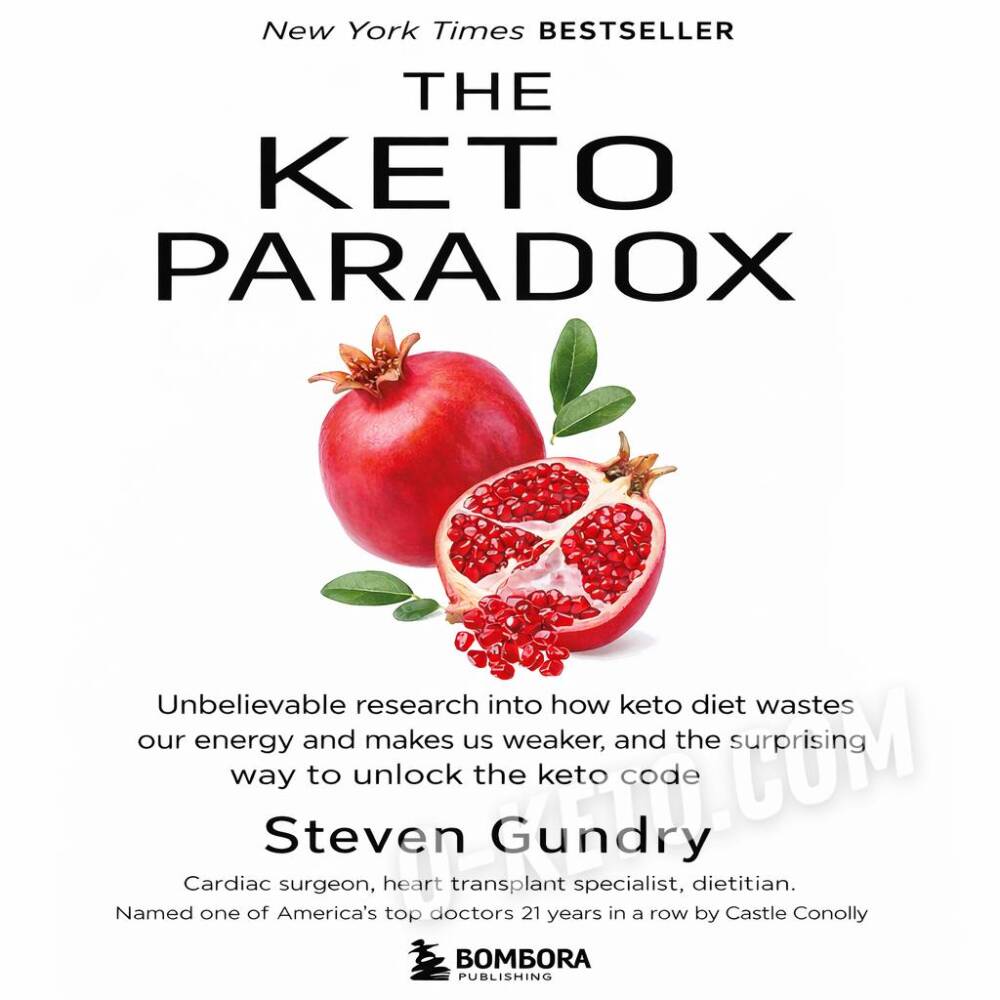
From the author of the site. Many of the claims made in this book are controversial and can be easily refuted. Moreover, in the section The Most Important, some of them have already been disproven.
Chapter 1. We Misunderstood Ketosis
Ketosis is presented not as a special "fat-burning mode," but as a stress adaptation of the body to a lack of available energy. Ketones arise not because they are the ideal fuel, but because the body is forced to seek alternative survival routes.
The main mistake of the modern keto approach is the representation of ketones as the primary goal. In reality, they are merely signaling molecules that inform mitochondria of the need to change their mode of operation.
The author emphasizes that focusing on macronutrients, percentages of fat, and calories distracts from the essence. The key factor for health is not ketosis itself, but the ability of cells to adapt to energy stress and effectively manage energy production.
Chapter 2. Ketones Are Not Superfuel
According to the author, ketones cannot fully replace glucose as a universal energy source, especially for the brain and muscles. They produce less ATP and require more oxygen, making them metabolically disadvantageous for prolonged use. This is why endurance, cognitive functions, and muscle mass often suffer on a strict keto diet.
The main role of ketones is not to nourish the cell, but to initiate recovery and adaptation processes through mitochondrial uncoupling. This explains why short-term ketosis can be beneficial, while chronic ketosis can be exhausting. The author concludes that chasing high levels of ketones is pointless and potentially harmful.
Chapter 3. Taming Our Little Cellular Energy Factories
Mitochondria are viewed as dynamic structures that can either efficiently produce energy or become overloaded and damaged. The key to health is the ability to periodically reduce ATP production efficiency, forcing mitochondria to dissipate energy as heat. This process protects cells from oxidative stress and premature aging.
Mitochondrial uncoupling is triggered not only by ketones but also by fiber, polyphenols, short-chain fatty acids, organic acids, and breathing practices. Thus, health is achieved not through a strict diet, but through the intelligent stimulation of adaptive mechanisms that support metabolic flexibility.
Chapter 4. The Power of Uncoupling
Mitochondrial uncoupling is shown as a fundamental mechanism of survival and longevity embedded in our physiology. When mitochondria work "too efficiently," they produce an excess of reactive oxygen species, accelerating inflammation, DNA damage, and aging. Uncoupling reduces ATP output but simultaneously protects the cell by converting energy into heat and reducing oxidative stress.
The author emphasizes that this mechanism explains the benefits of cold exposure, physical activity, short-term fasting, ketones, and plant compounds. Uncoupling is not a side effect, but a goal: it initiates mitochondrial renewal, improves insulin sensitivity, and enhances the body's resilience to metabolic stress.
Chapter 5. Keys to Unlocking the Keto Code
The keto code is not a diet, but a set of signals that activate mitochondrial uncoupling without strict carbohydrate restriction. Key roles here are played by polyphenols, fiber, short-chain fatty acids, organic acids, and the microbiome. These allow one to reap the benefits of ketosis without entering a deep and constant state of ketosis.
The author shows that plant foods low in lectins, fermentable fibers, and products of microbial metabolism act more powerfully and safely than an excess of fats. As a result, the body transitions into a state of metabolic flexibility, where ketones are merely an auxiliary signal rather than the basis of the diet.
Chapter 6. The Truth About Fats
Fats are no longer viewed as the unconditional foundation of healthy eating. Gundry argues that an excess of fats—especially with low physical activity—overloads mitochondria and hinders their adaptation. Not all fats are created equal: the source, structure, and context of consumption are important, not just the percentage of calories.
The author emphasizes that even "healthy" fats lose their value with chronic overeating and a lack of metabolic stimuli. Fats should be a signaling tool, not a constant fuel source. Health is achieved not through a high-fat diet, but through a balanced combination of fats, plant components, and factors that support mitochondrial adaptation.
Chapter 7. Rewriting Destiny
Genetics is presented not as a sentence, but as a set of scenarios that are turned on or off depending on the environment and nutrition. The author explains that metabolic and age-related diseases are the result of chronic signals from the environment, not "bad genes." Through nutrition, movement, temperature, and energy stresses, a person can reprogram gene expression.
The key role is assigned to mitochondria as mediators between the environment and the genome. Their state determines which genes are activated—those related to inflammation and energy accumulation or those associated with recovery, endurance, and longevity.
Chapter 8. The Paradox of Nutrition
The more we eat and the more "comfortable" the food, the worse the adaptive mechanisms function. Constant availability of calories, especially in the form of fats and refined products, deprives the body of the signals necessary for cell renewal. The author shows the paradox: not excess, but moderate deficiency and variability make metabolism resilient.
Healthy eating is not about constant saturation, but about alternating signals: satiety and light hunger, warmth and cold, rest and movement. This rhythm keeps mitochondria in a "trained" state.
Chapter 9. The "Keto Code" Program
The "Keto Code" program is a practical system aimed at activating mitochondrial uncoupling without strict ketosis. Its foundation is plant foods low in lectins, fiber, polyphenols, moderate protein intake, and flexible use of fats.
The author emphasizes seasonality, diversity of plant sources, and support for the microbiome. Ketones here are not the goal, but a side effect of properly structured signals that the body interprets as a stimulus for renewal.
Chapter 10. Transitioning to "Keto Eating"
The transition is described as a gradual process, not a sharp rejection of carbohydrates. The author warns that a sudden entry into strict ketosis can increase stress, worsen well-being, and disrupt hormonal balance. Much more important is to prepare the mitochondria—through fiber, fermentable products, and reducing inflammation.
The transition to keto eating should be flexible and individualized, taking into account activity level, age, and metabolic state. The main goal is metabolic flexibility, not stable high ketone levels.
Chapter 11. Recipes for the "Keto Code"
Recipes are viewed not just as food, but as tools for delivering metabolic signals. They combine products that stimulate mitochondrial uncoupling: polyphenols, organic acids, fermentable fiber, and moderate sources of fats.
The author emphasizes that taste and pleasure are important parts of the program. Eating according to the "Keto Code" should be sustainable in the long term, support the microbiome, and not turn into yet another restrictive diet.