



Interest in nootropics for lucid dreaming is easy to understand. Many people want not only to remember dreams but also to recognize the dream state while it is happening and keep a clear sense of awareness. Yet vivid dreaming, good dream recall, and lucidity are different outcomes. A substance may make dreams unusual or easier to remember without creating lucid awareness.
That is why popular lists are better treated as maps of hypotheses than as ready-made protocols. Galantamine has a small controlled research signal when combined with a night awakening and MILD. For most other substances, reliable evidence specifically for lucid dreaming is lacking. None replaces sleep, journaling, or attention training.
What has actually been studied
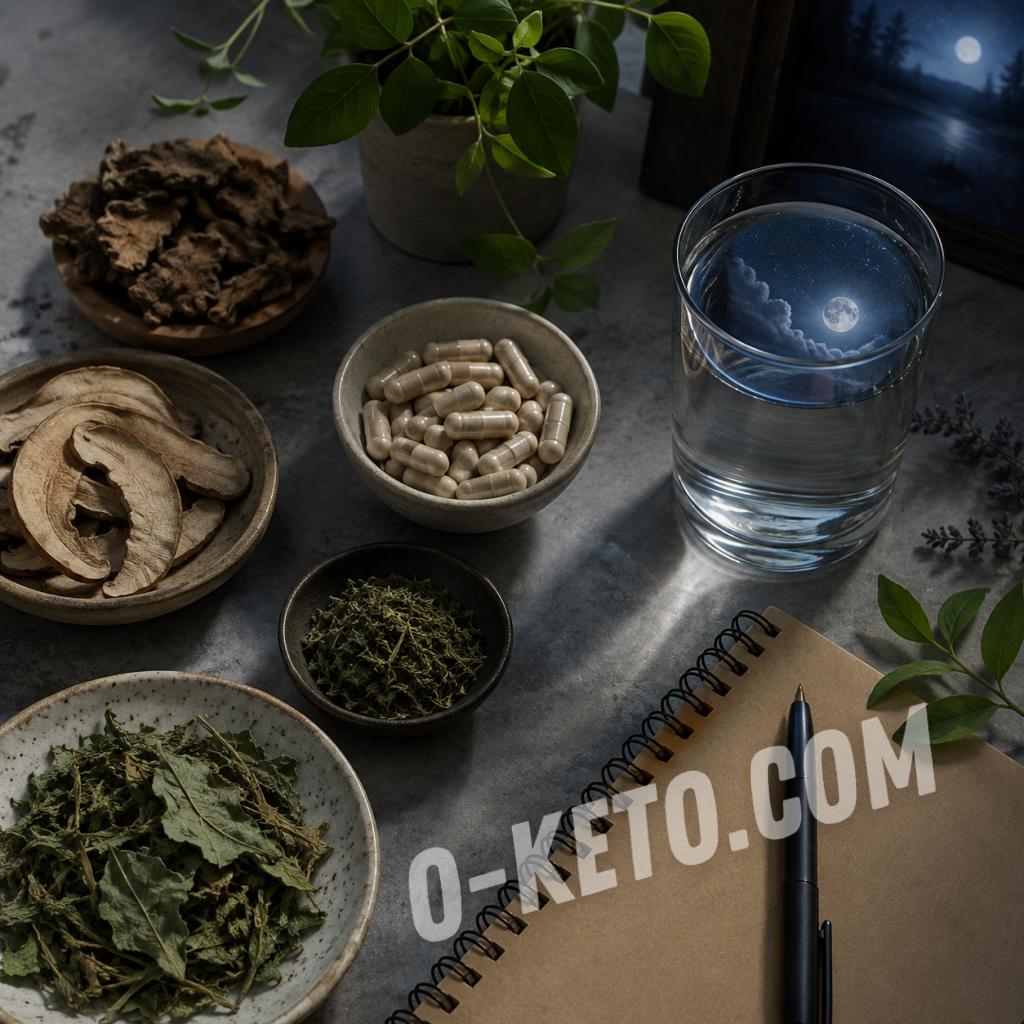
The key distinction is between a study of a substance and one practitioner’s report. A laboratory study may measure lucid-dream reports under defined conditions. Personal experience is also shaped by expectation, sleep loss, awakenings, recall practice, and the ordinary variability of dreams.
In a controlled galantamine study, 121 people familiar with lucid dreaming slept for about four and a half hours, woke briefly, practiced MILD, and returned to sleep. Lucid dreams were reported by 14% without galantamine, 27% after 4 mg, and 42% after 8 mg. This is an interesting result, but it came from a specialized protocol and a limited sample, and it needs further replication. It does not turn galantamine into a safe household supplement.
A review of induction methods also found MILD among the more promising behavioral approaches, while galantamine and SSILD need additional research. There is currently no reliable pharmacological method that guarantees a lucid dream for everyone.
Galantamine
Galantamine is not an ordinary vitamin-style nootropic. It is a medicine that affects cholinergic signaling and is used for medical indications. In theory, stronger cholinergic activity may support clearer awareness during sleep, and the study using 4 and 8 mg provides a signal consistent with that idea.
It also has medication-related limitations: nausea, stomach discomfort, dizziness, sleep disruption, and unusually vivid dreams can occur. Risk depends on health, other medicines, and individual response. The timing used in the study after a night awakening was part of a research protocol, not an instruction for self-treatment. Do not use galantamine for dreams without medical advice.
Choline and alpha-GPC
Choline is connected with acetylcholine production, which is why it is often mentioned alongside galantamine. That biochemical relationship does not prove that choline or alpha-GPC induces lucid dreams. Adequate clinical evidence for that purpose is lacking, and more vivid dreams should not automatically be counted as lucidity.
Choline is a normal nutrient, but more is not always better. High intakes may cause sweating, nausea, low blood pressure, and a fish-like body odor. Check the ordinary diet and the actual need for a supplement instead of stacking several cholinergic products.
5-HTP
5-HTP is a precursor to serotonin. Popular lists associate it with mood, vivid dreams, and dream recall, but there is no reliable evidence that it specifically induces lucid dreaming. A named capsule or a label dose on the market is also not evidence of a suitable sleep protocol.
Extra caution is needed with antidepressants and other medicines that affect serotonin. Interactions are possible, and long-term unsupervised use for lucid dreams has not been established as safe. Do not take 5-HTP merely because vivid dreams sound attractive.
Mucuna pruriens
Mucuna contains compounds related to levodopa and dopaminergic signaling. That is why it sometimes appears in lists about vivid dreams, motivation, and unusual states of consciousness. A dopaminergic mechanism, however, does not show that mucuna reliably creates lucidity in dreams; quality studies with that outcome are lacking.
The active content can vary between powders and extracts, and reactions depend on medicines and nervous-system health. A 500 mg capsule describes a product, not a validated lucid-dream dose. Do not combine mucuna with dopamine-affecting medicines or treat it like a harmless culinary spice.
Lion’s mane
Lion’s mane is discussed in relation to memory, the nervous system, and neurite growth in experimental models. That makes it appealing to people who want to remember dreams better. Better memory in one task is not the same as inducing lucidity, however, and convincing research on lion’s mane for lucid dreams is absent.
If the goal is to test dream recall, keep a journal and change only one habit at a time. Otherwise it is impossible to tell whether the result came from a supplement, regular writing, or simply more awakenings.
Ginkgo biloba
Ginkgo is sometimes associated with attention, memory, and vivid dreams. Authoritative reviews do not establish a clear benefit for healthy people, and there is no dependable evidence that it induces lucid dreams. Individual stories are not a substitute for controlled research.
Ginkgo also has practical limitations: headache and digestive discomfort can occur, and it may interact with medicines that affect clotting. Anticoagulants, antiplatelet drugs, planned surgery, pregnancy, and personal contraindications should be considered before use.
Calea and amanita
Calea zacatechichi is traditionally associated with dream work, but modern high-quality evidence for lucid dreaming is insufficient. Plant material can vary, and a common name does not guarantee a consistent concentration or a clean product.
Fly agaric should not be treated as an ordinary nootropic. Its active compounds can cause poisoning, confusion, agitation, and other unpredictable reactions. The wish for an unusual dream does not make toxic material safe, so amanita should not be used for dream induction.
Why wake-up timing is discussed alongside supplements
The timing question arises because REM periods tend to become longer in the second half of the night, while a brief awakening lets a person return to sleep with the intention of noticing a dream. That is why lucid-dream practices sometimes discuss not only a substance but also the timing of the night awakening.
Popular descriptions also mention an assumed ‘peak’ about an hour after taking a substance. That estimate cannot be transferred to every supplement: absorption, metabolism, formulation, and interactions differ, and better recall may be explained by the awakening and extra attention to the dream rather than by the substance.
The practical rule is simple: do not combine several substances or take medicines or psychoactive materials according to a general online protocol. If an effect cannot be separated from sleep loss and fragmented sleep, it does not confirm that the supplement caused it.
Where to begin without nootropics
The clearest experiment starts with basic skills. Keep a notebook or voice recorder beside the bed and write down a few details immediately after waking. After one or two weeks, mark recurring places, people, emotions, and strange events as personal dream signs.
During the day, perform reality checks attentively rather than mechanically. Ask, “Am I dreaming?” Read text or look at a clock, turn away, and check again; writing and numbers often change in dreams. Before sleep, set an intention to notice a dream sign. Add MILD, SSILD, or a cautious return to sleep after a natural awakening one technique at a time while protecting normal sleep duration.
Once journaling and behavioral practice are established, any later experience is easier to judge. If several substances are introduced at once, dream vividness or anxiety can easily be mistaken for proof that they work.
Conclusion
Galantamine has the clearest research signal among popular lucid-dream substances, but even here the evidence is a limited result from a specialized night-awakening and MILD protocol. Evidence is insufficient for 5-HTP, choline, mucuna, lion’s mane, ginkgo, and calea, while amanita involves unjustified risk. Start with a dream journal, dream signs, reality checks, and intention-based techniques. Supplements should not replace sleep, and medicines or psychoactive substances should not become self-medication.
Sources
- Pre-sleep treatment with galantamine stimulates lucid dreaming: a double-blind, placebo-controlled, multi-center study.
- A systematic review of new empirical data on lucid dream induction techniques.
- Neuropsychopharmacological Induction of (Lucid) Dreams: A Narrative Review.
- Ginkgo: Usefulness and Safety — National Center for Complementary and Integrative Health.
- Sleep and Complementary Health Approaches: What the Science Says — National Center for Complementary and Integrative Health.