


TOP-5 Studies on Meditation and Mindfulness from 07.22.2026 - 07.29.2026
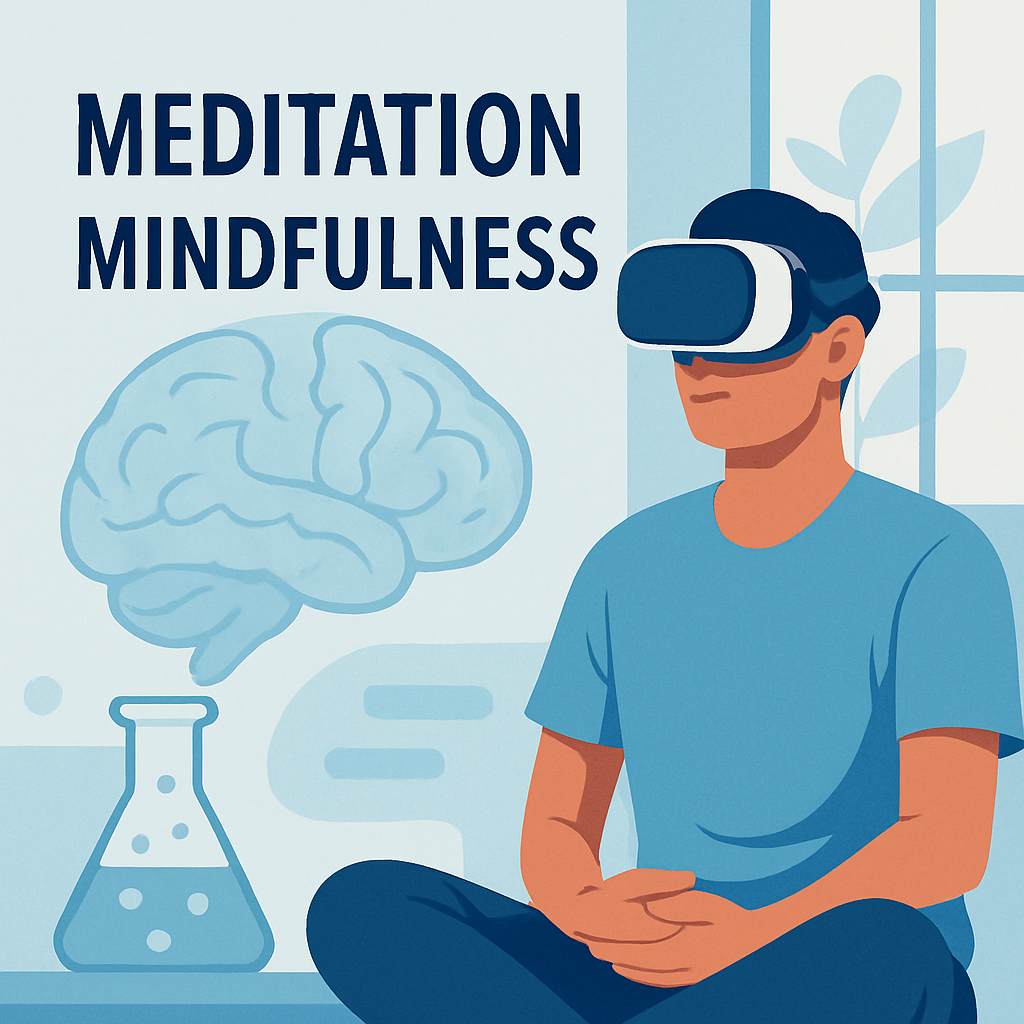

The use of recreational virtual reality to reduce stress in psychiatric inpatient settings: results of a pilot clinical trial with mixed methods; Adaptive attention processes in mindfulness meditation: a review of modifiable neural correlates based on EEG; Understanding the effectiveness of mindfulness-based dance therapy on loneliness and aggression in underprivileged children from NGOs; Using latent Dirichlet allocation-based topic modeling to identify key directions in the Ayush healthcare system in India; Continuous non-pharmacological treatments for migraines: current data and clinical practice.


5. The use of recreational virtual reality to reduce stress in psychiatric inpatient services: results of a pilot clinical trial with mixed methods.
About the work.
The aim of the study was to explore the implementation of virtual reality (VR) programs to reduce stress in a closed psychiatric ward. The study included both qualitative and quantitative methods to assess participants' experiences and changes in emotional state.
Results.
Participants using VR reported reduced distress, improved mood, and greater calmness, and perceived VR as a valuable addition to care that supports autonomy and strengthens therapeutic relationships.
4. Adaptive attention processes in mindfulness meditation: a review of modifiable neural correlates based on EEG.
About the work.
This review examines adaptive attention processes and the associated dynamic brain networks activated during mindfulness meditation. It discusses neural correlates that may be modifiable through meditation.
Results.
Evidence of long-term neuroplasticity related to positive psychological outcomes was found, as well as the impact of modifiable attention networks on reducing psychological stress and improving emotional well-being.
3. Understanding the effectiveness of mindfulness-based dance therapy on loneliness and aggression in underprivileged children from NGOs.
About the work.
The study aimed to evaluate the impact of mindfulness-based movement therapy (MBDMT) on levels of loneliness and aggression among children from underprivileged families in India. The study involved 100 children divided into treatment and control groups.
Results.
After the intervention, the treatment group showed a significant reduction in levels of loneliness and aggression. The values for loneliness were 17.890, and for aggression, 20.290, indicating a significant decrease in these metrics.
2. Using latent Dirichlet allocation-based topic modeling to identify key areas in the Ayush healthcare system in India.
About the work.
The study aimed to identify key areas in alternative healthcare policy in India using topic modeling methods. Annual reports from the Ministry of Ayush from 2012 to 2023 were analyzed.
Results.
Trends such as increased emphasis on research, integration with mainstream healthcare systems, digital initiatives, and global promotion were identified. Four critically important aspects that are underrepresented in Ayush political discourse were highlighted: positioning Ayush philosophy as a foundation for public health, formulating an Ayush-oriented healthcare system paradigm, and integrating mental health.