


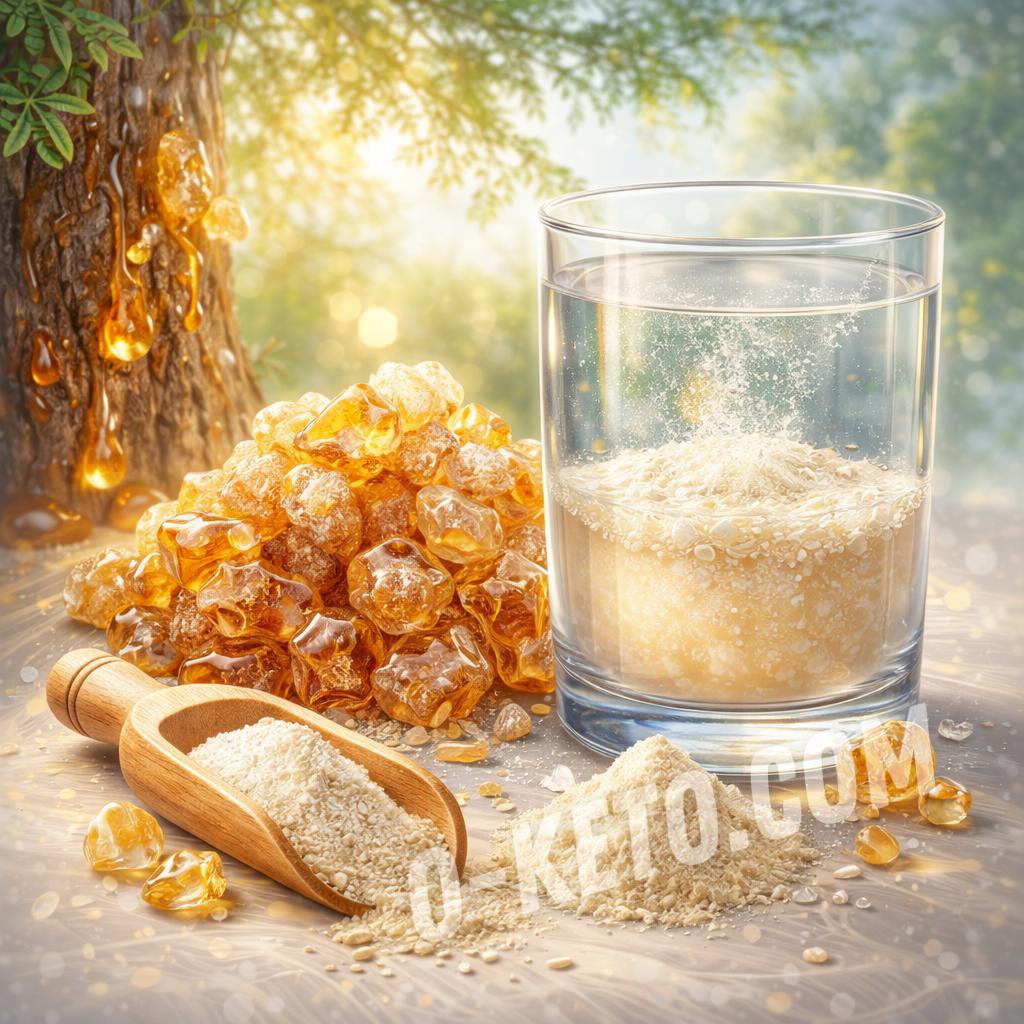

Gum arabic, or acacia gum, is the dried sap of certain acacia species, most often Acacia senegal and Acacia seyal. After cleaning, it becomes pale granules, pieces, or powder that dissolve in water and create a viscous but not jelly-like texture. In food production, gum arabic is known as E414: it is used as a stabilizer, emulsifier, carrier for aromas, and source of soluble fiber.
The main collection regions are Sudan, Chad, Nigeria, and other countries in North and East Africa. The gum is collected from natural cracks or cuts in the bark, then sorted, cleaned, and dried. Unlike gelatin, agar, or pectin, gum arabic does not make a firm gel. Its role is different: binding water, carrying aromatic compounds, helping oil mix with water, and slightly changing the body of drinks or sauces.
Nutrition
Gum arabic consists mostly of soluble fiber and complex polysaccharides. It contains no meaningful fat or protein and has almost no sweet taste. In tables it may be counted as a carbohydrate component, but most of it does not behave like sugar or starch in ordinary cooking.
For home use, tolerance and dose matter more than the label category. A small amount of powder can change the texture of a drink, cream, or sauce, while a sudden large portion may cause bloating, rumbling, or discomfort. For that reason, gum arabic is introduced gradually, especially when the previous diet was low in fiber.
Keto and LCHF
In keto and LCHF, gum arabic is used as a technical ingredient and as a way to add soluble fiber without sugar. It does not replace fats, protein, or vegetables, but it can help texture in low-carb recipes: drinks, sugar-free syrups, glazes, sauces, creams, ice cream, sugar-free pastilles, and aroma blends.
For strict carbohydrate tracking, check the label of the exact product. Pure acacia gum usually contains no sugar, but ready-made blends with it may include maltodextrin, powdered sugar, starch, or sweet-based flavorings. If a low-carb version is needed, the ingredient list should be short and clear.
Unlike nut flour or seeds, gum arabic adds almost no flavor. That is useful in recipes where the aroma of coffee, cocoa, vanilla, berries, or spices should stay clear. But it does not make a dish fattier and does not add protein, so it should not be the main filler of a dessert or drink.
How it works in recipes
Gum arabic dissolves well in water, especially if the powder is added gradually and the mixture is allowed to stand. It can reduce separation in drinks, help oil disperse in a water phase, soften the feeling of ice crystals in frozen desserts, and carry aroma in dry mixes. But it is not a one-to-one replacement for other thickeners: xanthan gum gives stronger viscosity, agar forms a gel, gelatin gives elasticity, and pectin works with acid and sugar.
If too much is added, the texture can become sticky or slimy. In home recipes, start with a very small amount, then increase only if needed. For even distribution, the powder is sometimes mixed with dry ingredients first and only then added to liquid.
In cold water, the powder may form small lumps at first. It is easier to sprinkle it in slowly while stirring constantly, or to use a blender. After hydration, the mixture often becomes smoother, so do not add more immediately just because it looks thin in the first minutes.
How to choose
Food gum arabic should be intended for eating, not technical use. Look for food grade, E414, or a clear food-use description on the package. The color can range from almost white to yellowish, depending on refining and raw material. A strong foreign smell, damp clumps, mold traces, or unclear impurities are reasons not to use the product.
Powder is more convenient in the kitchen, while granules and pieces may take longer to dissolve. If the product is needed for drinks and sauces, fine powder is easier to dose. For rare use, buy a small pack: gum arabic absorbs moisture and clumps when stored poorly.
Storage and limits
Store acacia gum in a dry closed jar, away from steam, the stove, and wet spoons. After opening, close the bag with a clip or move the powder to an airtight container. If it turns into a hard damp lump, it becomes difficult to dissolve evenly.
Gum arabic is usually used in small amounts, but individual response to soluble fiber differs. Start with a little and do not add several new fibers on the same day. If a substitute is needed, choose by function: xanthan gum for viscosity, pectin for fruit preparations, gelatin for elasticity, and agar for a firm gel. Taste and texture will change with any substitute.


