


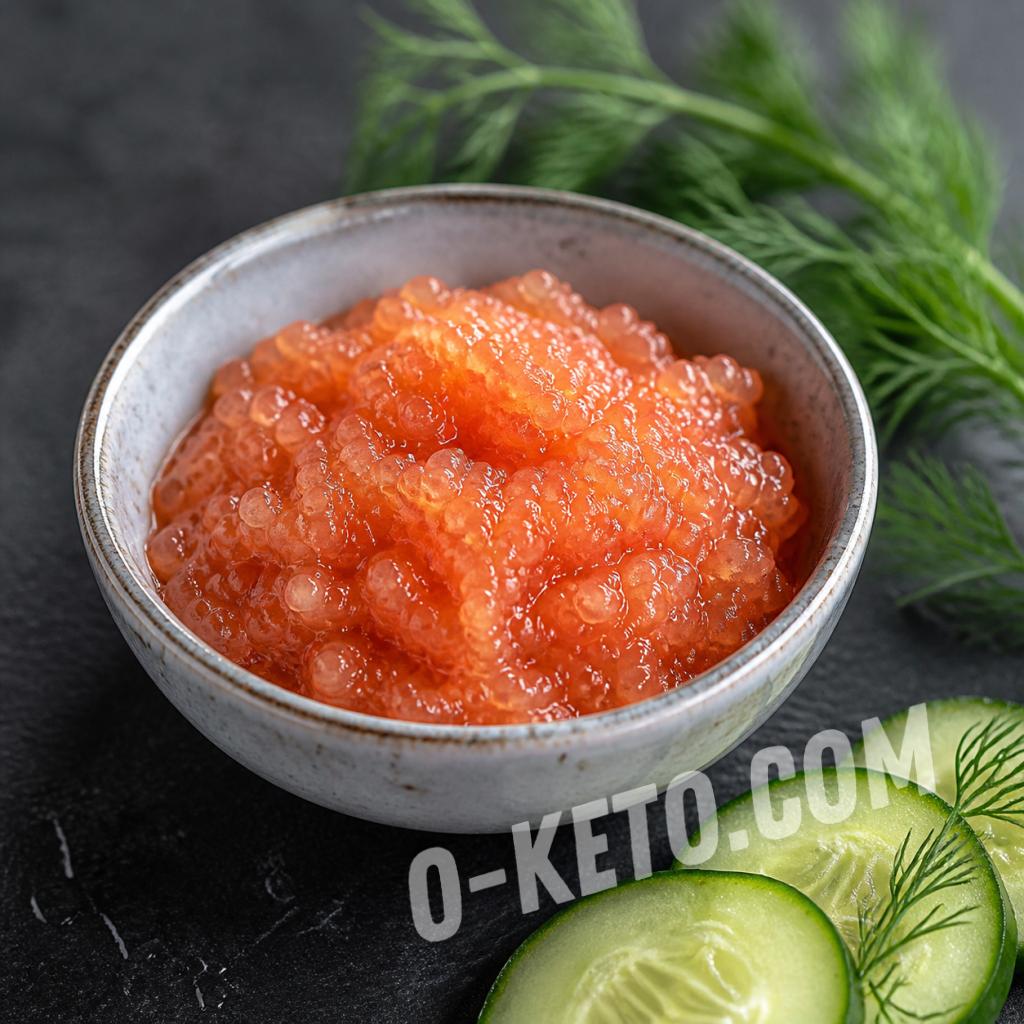

Herring roe is obtained from herring ovaries and is sold fresh, salted, pasteurized, or pressed. Its flavor is marine, rich, and distinctly salty; the eggs may be small and soft or firmer after salting.
Composition and flavor
The composition depends on the herring species and processing. Natural roe supplies complete protein, phosphorus, vitamin B12, choline, and long-chain omega-3 fats. Salted roe also concentrates sodium, so it should not be compared with fresh roe using one generic table.
Use it in cold appetizers with eggs, cream cheese, cucumber, herbs, avocado, or a small amount of keto bread. If the product is too salty, prolonged soaking is not a universal solution because it changes flavor and storage stability.
How to use it
Choose a label with roe and salt as the main ingredients and without sugar, syrups, or starch fillers. For spreadable products, check the roe percentage and avoid versions dominated by vegetable oil, flavorings, or excessive additives.
Herring roe Count the portion by the actual weight and the label of the particular package: salted, smoked, dried, and fermented versions can differ substantially in sodium, moisture, and carbohydrates.
For a practical menu, use Herring roe in a measured serving and pair it with foods that do not duplicate its dominant flavor. This makes it easier to control the salt, acidity, fat, or carbohydrate load of the whole plate rather than judging one ingredient in isolation.
When calculating a dish, account for the form of the product: drying concentrates nutrients, cooking changes weight and density, and a sauce may add sugar, flour, oil, or alcohol. Those additions are not part of the plain raw ingredient.
How to choose
Natural roe is usually compatible with a low-carbohydrate diet, but a finished marinade or sauce may contain sugar. People limiting sodium because of hypertension, edema, or another medical reason should keep the serving small.
Introduce Herring roe gradually and taste the dish before adding the final salt. Strong ingredients often need less seasoning than a recipe suggests; excess additions hide the original flavor and increase the overall food load.
Keto and carbohydrates
Fish allergy is a direct reason to avoid it. Roe does not replace a varied fish intake: omega-3, vitamin D, and sodium depend on the raw material and processing. Pregnant people and those with reduced immunity should choose pasteurized products and respect the cold chain.
If you are buying it for the first time, start with a small package. This lets you assess real saltiness, texture, and tolerance without creating a large stock of a perishable or strongly flavored ingredient.
Limits and safety
Roe was historically preserved as a way to use seasonal catches; modern products are usually packed in small jars. It is a useful ingredient for occasional appetizers, not a reason to make salted roe a daily staple.
When comparing packages, do not look only at calories. For Herring roe, moisture, edible yield, serving size, processing method, and secondary ingredients listed after the main raw material also matter.
A useful home test is to prepare a small portion without a complex sauce. This reveals the ingredient’s own aroma, saltiness, density, and aftertaste. If it works only because of sugar, large amounts of oil, or flavor enhancers, assess it as a finished mixture rather than as the plain food.
Nutritional value cannot be separated from serving context. The same ingredient may be a minor part of a balanced dish or a source of excess salt, sugar, and calories once combined with a ready-made sauce. Judge the complete recipe and serving size.
For a new purchase, save a photo of the ingredient list and compare it with your portion calculation. This is especially useful for salted, dried, alcoholic, and paste-like forms, where a small formulation difference can change the final values.
History and culinary role
Keep an unopened jar refrigerated and use a clean spoon after opening. Follow the producer’s date. A sharp ammonia smell, slime, bulging lid, or bitter taste means the product should be discarded.
Storage
Keep herring roe refrigerated and do not leave salted roe exposed after opening. Use a clean spoon, close the jar promptly, and follow the shelf life on the label. Discard it if it develops an ammonia smell, slime, bitterness, or a bulging lid.
Substitutes
Cod, pollock, capelin, and salmon roe can replace it in appetizers, but their fat, texture, and salt differ, so choose the substitute according to the recipe rather than the name alone.


