


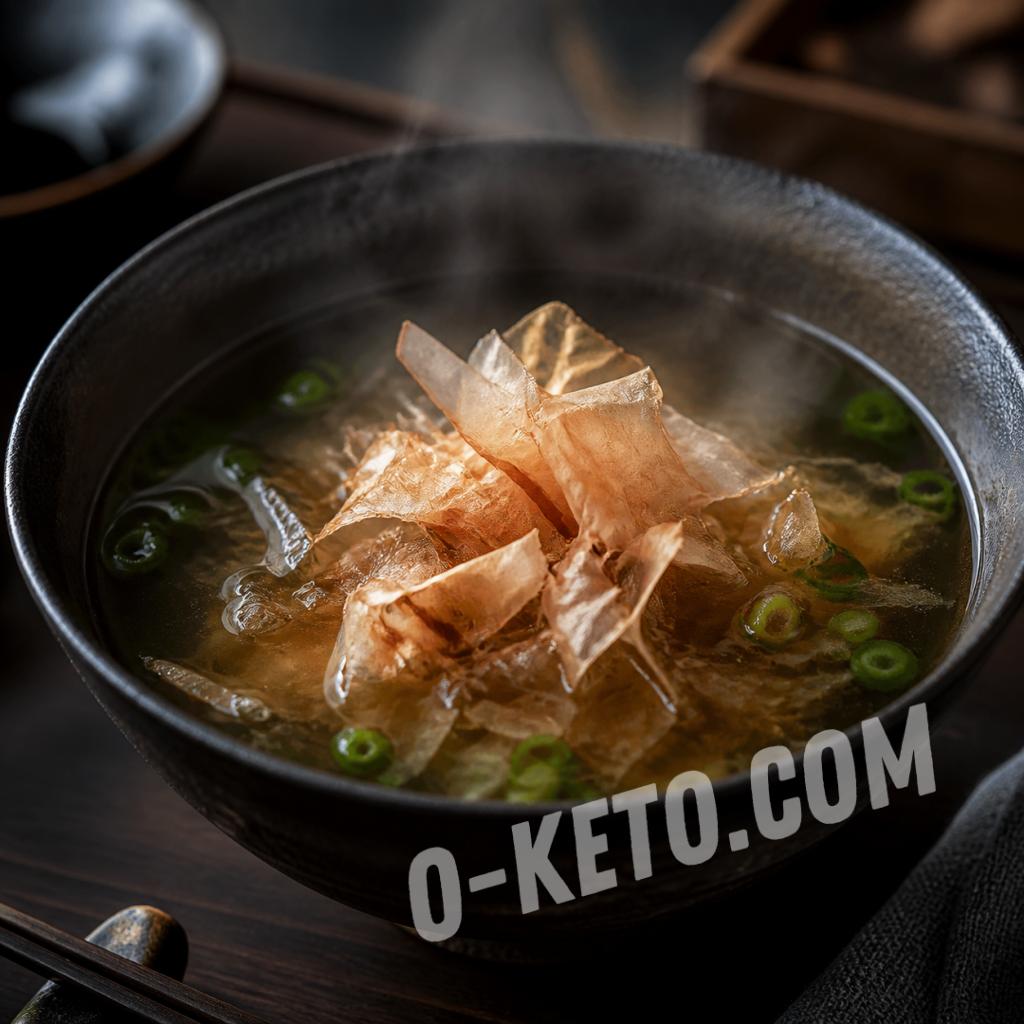

Bonito flakes, or katsuobushi, are thin shavings of skipjack tuna that has been cooked, smoked, dried, and shaved. In hot liquid they quickly release aroma, umami, and soluble compounds.
Composition and flavor
Some products undergo several smoking and drying cycles, while others are softer dried flakes. Color, smell, and density therefore vary. Dyes, flavor enhancers, and sugar are more common in seasoning blends than in plain bonito.
The classic use is dashi, but the flakes also work in omelets, salads, braised cabbage, unsweetened mayonnaise, sauces, and egg dishes. They need little cooking: steep them or use them as a finishing topping.
How to use it
Choose a pack that clearly identifies the fish and has a short ingredient list. Check salt, smoke flavor, and added sugar. Bonito is not suitable for kosher or vegetarian menus even when used only as a seasoning.
Bonito flakes Count the portion by the actual weight and the label of the particular package: salted, smoked, dried, and fermented versions can differ substantially in sodium, moisture, and carbohydrates.
For a practical menu, use Bonito flakes in a measured serving and pair it with foods that do not duplicate its dominant flavor. This makes it easier to control the salt, acidity, fat, or carbohydrate load of the whole plate rather than judging one ingredient in isolation.
When calculating a dish, account for the form of the product: drying concentrates nutrients, cooking changes weight and density, and a sauce may add sugar, flour, oil, or alcohol. Those additions are not part of the plain raw ingredient.
How to choose
Plain flakes contain almost no carbohydrate and fit keto. A small amount provides intense flavor, but drying concentrates protein, salt, and allergens, so it should be portioned rather than added freely.
Introduce Bonito flakes gradually and taste the dish before adding the final salt. Strong ingredients often need less seasoning than a recipe suggests; excess additions hide the original flavor and increase the overall food load.
Keto and carbohydrates
Bonito is fish; fish allergy and sensitivity to histamine-rich foods require caution. Dried flakes are not a substitute for properly cooked fish for very young children.
If you are buying it for the first time, start with a small package. This lets you assess real saltiness, texture, and tolerance without creating a large stock of a perishable or strongly flavored ingredient.
Limits and safety
Katsuobushi reflects a Japanese method of preserving fish and producing a concentrated broth. Its umami comes from the combination of dried raw material, smoking, fermentation, and controlled steeping.
When comparing packages, do not look only at calories. For Bonito flakes, moisture, edible yield, serving size, processing method, and secondary ingredients listed after the main raw material also matter.
A useful home test is to prepare a small portion without a complex sauce. This reveals the ingredient’s own aroma, saltiness, density, and aftertaste. If it works only because of sugar, large amounts of oil, or flavor enhancers, assess it as a finished mixture rather than as the plain food.
Nutritional value cannot be separated from serving context. The same ingredient may be a minor part of a balanced dish or a source of excess salt, sugar, and calories once combined with a ready-made sauce. Judge the complete recipe and serving size.
For a new purchase, save a photo of the ingredient list and compare it with your portion calculation. This is especially useful for salted, dried, alcoholic, and paste-like forms, where a small formulation difference can change the final values.
History and culinary role
Keep the unopened pack dry, cool, and away from strong odors. Use clean dry utensils and reseal it after opening. Damp, moldy, or sharply rancid flakes should be discarded.
Storage
Keep bonito flakes dry, tightly sealed, and away from steam: moisture quickly dulls their aroma and can lead to mold. Use dry utensils after opening and reseal the pack immediately. Discard flakes that are damp, moldy, clumped, or sharply rancid.
Substitutes
Dried mackerel, anchovies, or a sugar-free fish concentrate can replace bonito in dashi, but they differ in aroma and salt, so add them gradually.


