


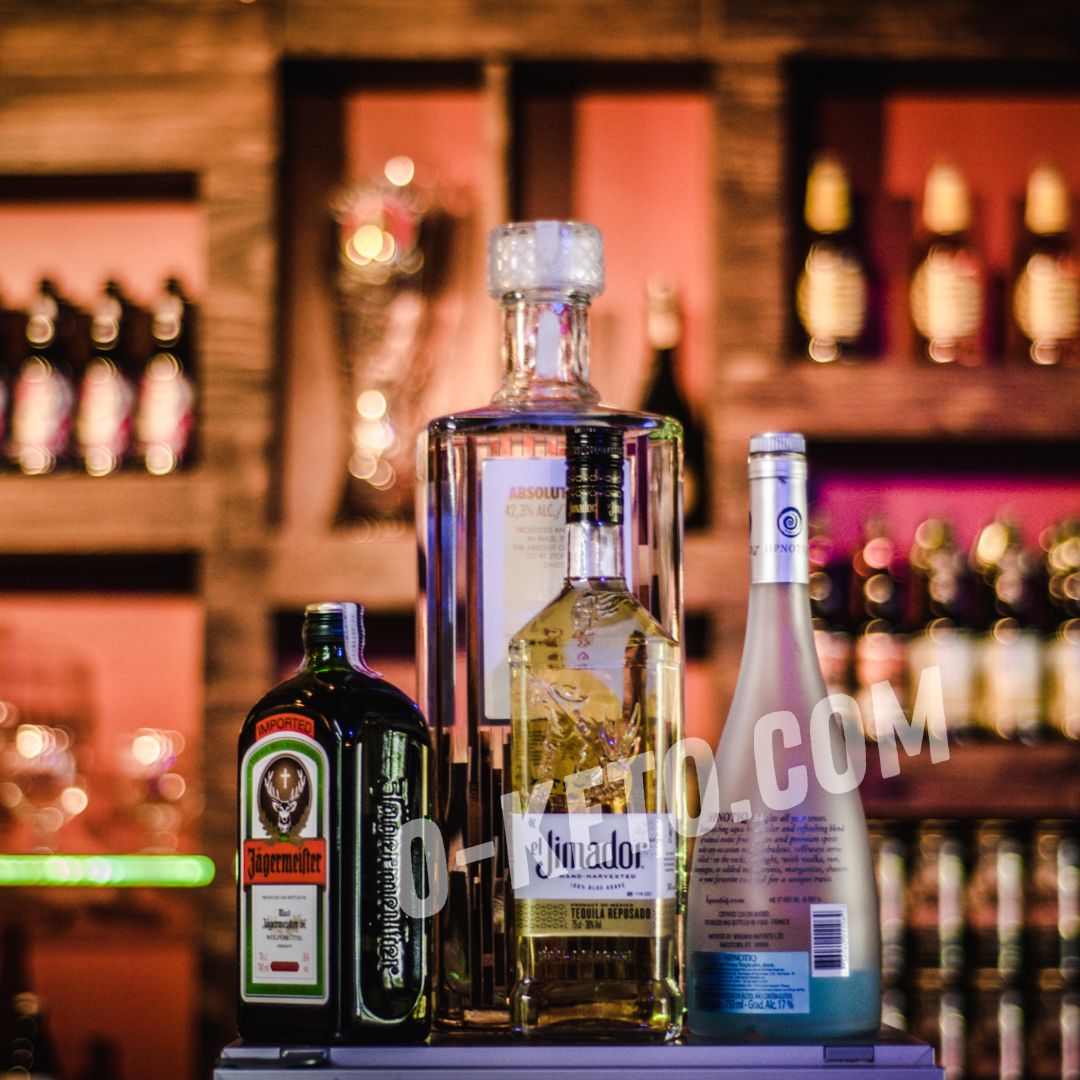

For many people following a keto diet, the question of how alcohol fits into this lifestyle becomes quite relevant.
While some alcoholic beverages may be permissible, others can lead to significant deviations from the dietary plan.
It’s important to understand which alcoholic drinks contain minimal amounts of carbohydrates and how their consumption can affect your body.
Alcohol and Carbohydrates: What You Need to Know?
When it comes to alcohol and the keto diet, it’s important to understand that not all alcoholic beverages are created equal in terms of carbohydrate content. Some types of alcohol contain significant amounts of carbohydrates, which can lead to being kicked out of ketosis.
First and foremost, it’s important to avoid sweet cocktails and liqueurs, as they often contain added sugars and syrups.
For example, popular cocktails like margaritas or piña coladas can contain over 20 grams of carbohydrates per serving.
Beer, especially light beer, can also be a source of hidden carbohydrates. It contains between 10 to 20 grams of carbohydrates per bottle.
Wine and strong alcoholic beverages, such as vodka, whiskey, and rum, are more suitable options for the keto diet.
However, even among wines, there are differences: dry wines contain fewer carbohydrates compared to sweet wines or dessert wines.
For example, dry white wine typically contains about 2-3 grams of carbohydrates per glass, while sweet dessert wine can contain up to 14 grams of carbohydrates per serving.
Thus, when choosing alcoholic beverages on a keto diet, it’s important to read labels carefully and prefer drinks with minimal carbohydrate content to avoid disrupting ketosis.
Allowed Alcoholic Beverages on the Keto Diet
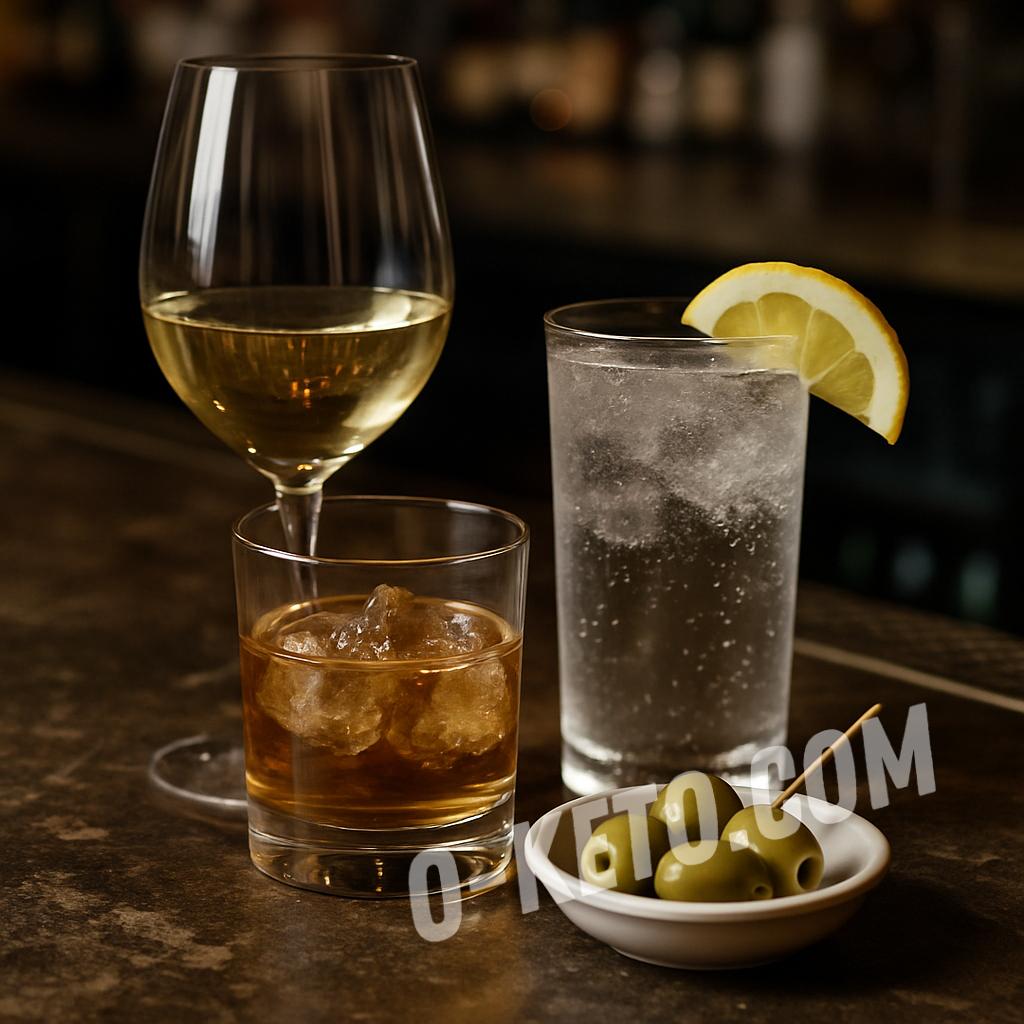
Some types of alcohol can fit into your diet if chosen wisely.
Dry wines are one of the best options. In red and white dry wines, sugar content is minimal, making them suitable for the keto diet.
For example, wines like Cabernet Sauvignon, Merlot, and Chardonnay contain about 3-4 grams of carbohydrates per glass.
Another great choice is spirits with low carbohydrate content. These include vodka, gin, rum, tequila, and whiskey.
These drinks contain virtually no carbohydrates, but it’s important to avoid sweet cocktails and liqueurs, which can be high in sugar.
You can also look for low-carb cocktails. For instance, vodka with soda and lime or gin with sugar-free tonic are tasty and safe options for the keto diet.
Don’t forget to check the ingredients and avoid adding sweet juices and syrups.
Tips for Consumption
Here are some tips for consuming alcohol on a keto diet:
- Practice moderation: Alcohol can slow down the ketosis process and increase insulin levels. Try to limit your consumption of alcoholic beverages.
- Stay hydrated: Alcohol can cause dehydration, so drink enough water to avoid unpleasant symptoms.
- Avoid sweet cocktails: Cocktails made with fruit juices, syrups, and soda can be high in sugar and carbohydrates.
The Impact of Alcohol on Ketosis and Metabolism
Alcohol can have a significant impact on ketosis and metabolism.
Consuming alcohol slows down metabolic processes as the body prioritizes ethanol as an energy source. This can temporarily reduce or even interrupt ketosis, as the liver redirects its resources to process alcohol instead of producing ketones.
Alcohol can also affect appetite and food intake. Drinking alcohol often leads to a decrease in food control, which can result in consuming large amounts of carbohydrates and disrupting ketosis.
Therefore, if you are following a keto diet, it is advisable to avoid alcohol altogether if possible.
Sources
- Ketogenic Diets: A Position Stand of the International Society of Sports Nutrition — Journal of the International Society of Sports Nutrition.
- FoodData Central: Food and Beverage Composition Database — United States Department of Agriculture.
- Alcohol: Fact Sheet — World Health Organization.
- Scientific Opinion on the Safety of Caffeine — European Food Safety Authority.
- Alcohol Metabolism: An Updated Review — National Institute on Alcohol Abuse and Alcoholism.


