


Julia Enders "Gut: The Inside Story of Our Body's Most Underrated Organ," 2017
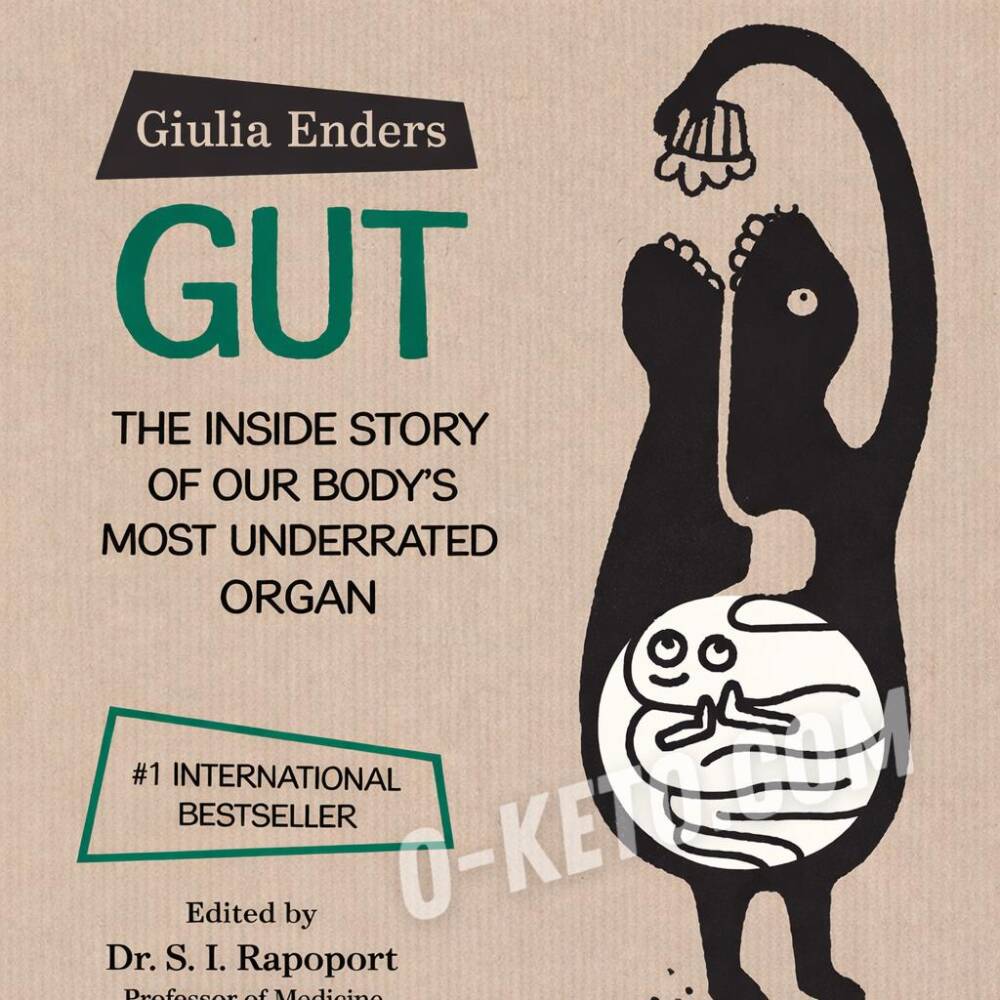

The book explains in simple language why the intestine is not just a "tube for food," but a complex system that manages well-being: from the mechanics of digestion and defecation (including practical household tips) to the workings of the "gut brain" and the connection between the intestine and emotions, stress, and conditions like irritable bowel syndrome.
A separate large section focuses on the world of microbes. Humans are viewed as an ecosystem, with the microbiota as a key participant in protecting and regulating processes in the body. It is emphasized that a significant part of the immune system is linked to the intestine and its mucosa, and that the composition of the microbiota is formed from an early age and heavily depends on conditions and habits.
The conclusion that the author reaches is that gut health is a combination of anatomy, nervous regulation, and the "right balance" of the micro-world. Instead of striving for sterility, it is more important to maintain stable habits, treat the microbi

06.02.2026. "Your second brain is the gut. A compass book on the invisible connections of our body," Kropka, 2018.
The book is dedicated to the role of the intestine as a key regulator of health, behavior, and the psycho-emotional state of a person...
How We Poop… and Why It’s Worth Having a Serious Conversation About This Apparently Unserious Topic
Normal defecation is a coordinated effort of muscles, the nervous system, and the sensitivity of the rectum, not just "pushing out waste."
The author explains why suppressing urges, incorrect posture, and chronic tension disrupt this mechanism and lead to constipation, hemorrhoids, and pain.
The importance of relaxation, adequate time, and a physiological body position is emphasized, as well as the fact that regular and painless bowel movements are one of the basic markers of gut health.
At the Entrance to the Intestinal Tube
The work of the oral cavity, esophagus, and stomach as the first stage of digestion is analyzed. The role of thorough chewing, saliva, and stomach acidity in protecting against pathogens and properly breaking down food is highlighted.
Disruptions at this stage—eating in a hurry, poor chewing, reduced acidity—lay the groundwork for problems that then "descend" throughout the gastrointestinal tract.
The Structure of the Gastrointestinal Tract
The intestine is presented as a complex organ with a vast surface area, its own nervous system, and fine regulation of motility. The author explains the differences between the small and large intestines, their functions, and why any disruptions in peristalsis or the integrity of the mucosa affect not only digestion but also immunity and overall well-being.
What We Really Eat
Food is viewed not only as a source of calories but also as a signal for gut bacteria and the immune system. The emphasis is placed on the fact that processed foods alter the composition of the microbiota, while fiber and dietary diversity support its resilience. An important point is that we "feed" not only ourselves but also trillions of microorganisms within us.
Allergies and Intolerances
A clear distinction is made between true allergies, food intolerances, and reactions related to the condition of the intestinal barrier. The author shows that many symptoms—bloating, pain, fatigue—can be the result of increased intestinal permeability and microbiota imbalance, rather than "allergies to everything."
The main conclusion is that working with the gut is often more important than completely eliminating foods.
About the Movement of Food in the Body
Food moves through the gastrointestinal tract not under the influence of gravity but thanks to coordinated peristalsis—waves of muscle contractions controlled by the nervous system.
This process begins long before swallowing and can be disrupted by stress, haste, fear, and chronic tension. The author emphasizes: a "lazy" gut is more often a problem of regulation rather than the organs themselves.
Eyes. The sight of food triggers digestion even before the first bite. Visual stimuli activate saliva production, gastric juice secretion, and prepare the entire gastrointestinal tract for food intake. If this stage is skipped (eating on the go, without appetite), further digestion initially proceeds worse.
Nose. Smells enhance digestive reflexes and help the body "evaluate" food in advance. Loss of smell or food without aroma reduces the quality of gastrointestinal preparation and can lead to overeating or, conversely, poor digestion.
Mouth. The oral cavity is not just an entrance but a full-fledged stage of digestion. Thorough chewing, mixing food with saliva and enzymes reduces the load on the stomach and intestines. The habit of swallowing quickly is directly related to bloating, heaviness, and heartburn.
Throat. Swallowing is a complex reflex that requires precise coordination of muscles and nerves. Disruptions in this process can cause a sensation of a lump in the throat, fear of food, and functional disorders, often exacerbated by anxiety.
Esophagus actively pushes food into the stomach through peristalsis, regardless of body position. Its function is sensitive to stress and tension, which explains why heartburn and discomfort often occur without organic causes.
Stomach does not "digest everything indiscriminately," but doses food into the intestine and disinfects it with acid. Insufficient acidity disrupts this control and increases the risk of fermentation, heartburn, and problems further down the gastrointestinal tract.
Small Intestine. Most nutrient absorption occurs here. The surface area of the small intestine is enormous, and its function is closely related to the microbiota and immunity. Damage to the mucosa affects the entire body—from energy to skin and psyche.
Large Intestine. The large intestine is responsible for stool formation, water balance, and interaction with bacteria. Here, the microbiota completes the processing of food remnants and produces substances that influence immunity and mood.
Heartburn and Acid Reflux
Heartburn is more often related not to "excess acid," but to motility disorders and relaxation of sphincters. Stress, overeating, and haste play a key role, and uncontrolled suppression of acid can exacerbate the problem.
Vomiting
Vomiting is viewed as a protective reflex rather than just an unpleasant symptom. The body uses it to urgently rid itself of dangerous contents, and it is important to understand the causes rather than just trying to suppress it.
The Nature of Vomiting and Methods of Its Elimination. The mechanisms that trigger vomiting are analyzed—from toxins to psychogenic factors. It is emphasized that addressing the cause (stress, irritation, infection) is more important than symptomatic suppression.
Constipation
Constipation is more often a disruption of regulation, sensitivity, and habits, rather than just a "lack of fiber." Suppressing urges, stress, and fear of the toilet play a key role in forming a chronic problem.
About Laxatives. Frequent use of laxatives weakens the natural mechanisms of the intestine and exacerbates dependence. The author urges considering them as a temporary measure rather than a solution.
The Rule of Three Days. If stool is absent for more than three days, it is a signal for attention but not a reason for panic. Regularity, comfort, and absence of pain are more important than strict "norms."
About Digesting Information Received, or The Brain and the Gut
The intestine has its own nervous system and actively exchanges signals with the brain. It "digests" not only food but also stress, emotions, and information, influencing a person's overall state.
About the Influence of the Gut on Brain Function
Through hormones, neurotransmitters, and immune signals, the gut influences mood, concentration, and anxiety levels. Disruptions in the gastrointestinal tract are often accompanied by cognitive and emotional symptoms.
Irritable Bowel Syndrome, Stress, and Depression
IBS is presented as a disorder of the "brain-gut axis," where emotions and physiology are closely intertwined. The author emphasizes that this is a real condition, not "all in the head," but treatment requires working with the nervous system.
About the Formation of One's Own "Self"
The gut participates in forming the sense of self, safety, and emotional background. Through bodily signals, it influences how a person perceives and reacts to the world, highlighting the depth of the connection between body and psyche.
Humans as an Ecosystem. Humans are viewed not as separate organisms but as complex ecosystems in which body cells and microorganisms exist in close interrelation. Bacteria are not "foreign"—they participate in metabolism, protection, and adaptation to the environment. Health depends not on the destruction of microbes but on the balance within this system.
Microflora and Immunity. The immune system is largely trained and regulated by the gut microbiota. Contact with bacteria is necessary for proper recognition of "self" and "foreign." A sterile environment and a lack of microbial diversity increase the risk of allergies and autoimmune reactions.
The Formation of Gut Microflora. The composition of the microbiota begins to form at birth and depends on the method of delivery, breastfeeding, contact with the environment, and antibiotic use. Early interventions can have long-term effects on immunity and metabolism.
Adult Gut Microflora. In adulthood, the microbiota is relatively stable but continues to change under the influence of diet, stress, diseases, and medications. The resilience of the microbiota is more important than its "ideal" composition—it determines the body's ability to adapt.
The Gene Pool of Our Bacteria. The number of genes in the bacteria living in the gut is many times greater than that of humans. This "additional genome" expands our biochemical capabilities—from food breakdown to the synthesis of biologically active substances.
Three Types of Gut
Different variants of dominant bacterial communities are described, each interacting differently with food and metabolism. There is no "good" or "bad" type—the compatibility of the microbiota with lifestyle and diet is what matters.
The Role of Microflora. Microflora participates in food digestion, vitamin synthesis, mucosal protection, and inflammation regulation. Loss of bacterial diversity makes the body more vulnerable to diseases and metabolic disruptions.
The Influence of Gut Microflora on Overweight. Bacteria affect how much energy the body extracts from food and how appetite is regulated. The same diet can lead to different results in different people precisely because of microbiota differences.
Cholesterol and Gut Microflora. Microflora participates in the metabolism of bile acids and cholesterol, influencing their levels in the blood. Disruptions in bacterial balance can contribute to metabolic and cardiovascular problems.
Pests: Bad Bacteria and Parasites
Not all microorganisms are harmless, but their influence depends on context and the state of the body. Even potentially dangerous species can exist without symptoms if the balance of microflora is maintained.
Salmonella in caps. It is shown how pathogens use protective mechanisms and why infection depends not only on the microbe but also on the state of the gut and the person's immunity.
Helicobacter pylori—the oldest "pet" in the human body. Helicobacter pylori is viewed not only as a disease-causing agent but also as an ancient companion of humans. Under certain conditions, it can coexist without harm, and its complete eradication is not always unequivocally beneficial.
Toxoplasma—the fearless feline passenger. A parasite capable of influencing human behavior and reactions is described. The idea is presented that parasites can subtly interfere with the nervous system rather than just causing acute symptoms.
Pinworms. An example of a common parasite showing that infection is often related to household conditions and habits rather than "dirt" as such.
About Cleanliness and Good Bacteria
It is emphasized that excessive sterility destroys microbial diversity and weakens immunity. Contact with microbes is necessary for maintaining health.
Cleanliness in Everyday Life. The author advocates for a reasonable approach to hygiene: washing hands and food is important, but fanatical destruction of bacteria in daily life can be harmful.
Antibiotics
Antibiotics save lives but deal a serious blow to the microflora. Their use should be justified, as restoring bacterial balance takes months and years.
Probiotics
Probiotics are viewed as an auxiliary tool rather than a universal solution. Their effectiveness depends on the specific situation and the state of the gut.
Prebiotics
Prebiotics are food for our own bacteria. The author emphasizes that supporting "one's" microflora through diet is often more important than taking external bacteria.
The Gut and the Brain: To Be Continued
The connection between the gut and the brain is shown as a bidirectional and continuous process. Signals from the gut influence the functioning of the nervous system just as much as thoughts and emotions influence digestion. The author emphasizes that the state of the gastrointestinal tract forms the basic background of well-being on which psychological reactions unfold.
Mood largely depends on substances synthesized or regulated in the gut, including neurotransmitters and products of microbiota activity. Even minor digestive disturbances can affect emotional stability and the sense of inner comfort.
Stress. Under stress, the gut is one of the first to change its function: motility accelerates or slows down, barrier function is disrupted, and the composition of the microbiota changes. Chronic stress solidifies these changes, turning them into persistent functional disorders.
Depression. Depression is viewed not only as a psychological but also as a physiological condition related to inflammation, microflora, and neurotransmitter metabolism. The gut can both exacerbate and mitigate depressive manifestations.
Rational Craving for Sour. The craving for sour foods is explained as a possible signal of the needs of the microbiota or digestive system. Sour fermented foods can support bacterial balance and stimulate digestion if consumed mindfully.
Home Fermentation of Vegetables, or How to Make Sauerkraut
Fermentation is presented as a simple and natural way to support the microflora. Fermented vegetables serve as a source of live bacteria and organic acids that strengthen the intestinal mucosa and improve digestion. The author emphasizes the value of traditional dietary methods in the modern diet.
List of YouTube videos on the topic "Julia Enders "Gut: The Inside Story of Our Body's Most Underrated Organ," 2017":