

Treat the “Ideal Day” meditation not as a test of imagination and not as an attempt to predict the future. It is a quiet practice: create a detailed inner picture of a desired day — imagine where you wake up, what you feel, who you meet, what you do, and what your inner state is like. Such a picture can reveal not only attractive goals, but also the conditions in which we genuinely want to live.
This practice is for people who are drawn to meditation, visualization, intention-setting, and attentive self-observation. It can be used in a secular way or included in a personal spiritual tradition. There is no need to accept anyone else’s explanation: your own experience, the honesty of the images, and the meaning you find in them matter most.
What the “Ideal Day” meditation is
An ordinary daydream often appears quickly: a large home, travel, a flexible schedule, money, or recognition. Slow the dream down and explore it as a whole day. Attention moves from the external result to the details: how the morning begins, what rhythm the work has, who is nearby, what is left outside the day, and what feeling accompanies ordinary actions.
An ideal day does not have to be luxurious or unusual. For one person it may be a busy city and many meetings; for another, silence, a garden, meaningful work, and a few close people. The value of visualization is not a universal perfect scenario, but the chance to hear your own. If an image feels borrowed, overly polished, or built around other people’s expectations, that is useful information too.
Treat this meditation as a conversation with yourself through images. It does not require immediate decisions and does not promise that a picture will become reality on its own. Its more modest and useful task is to make a vague wish visible, feel its atmosphere, and choose something that can gradually be brought into daily life.
Preparing for the practice
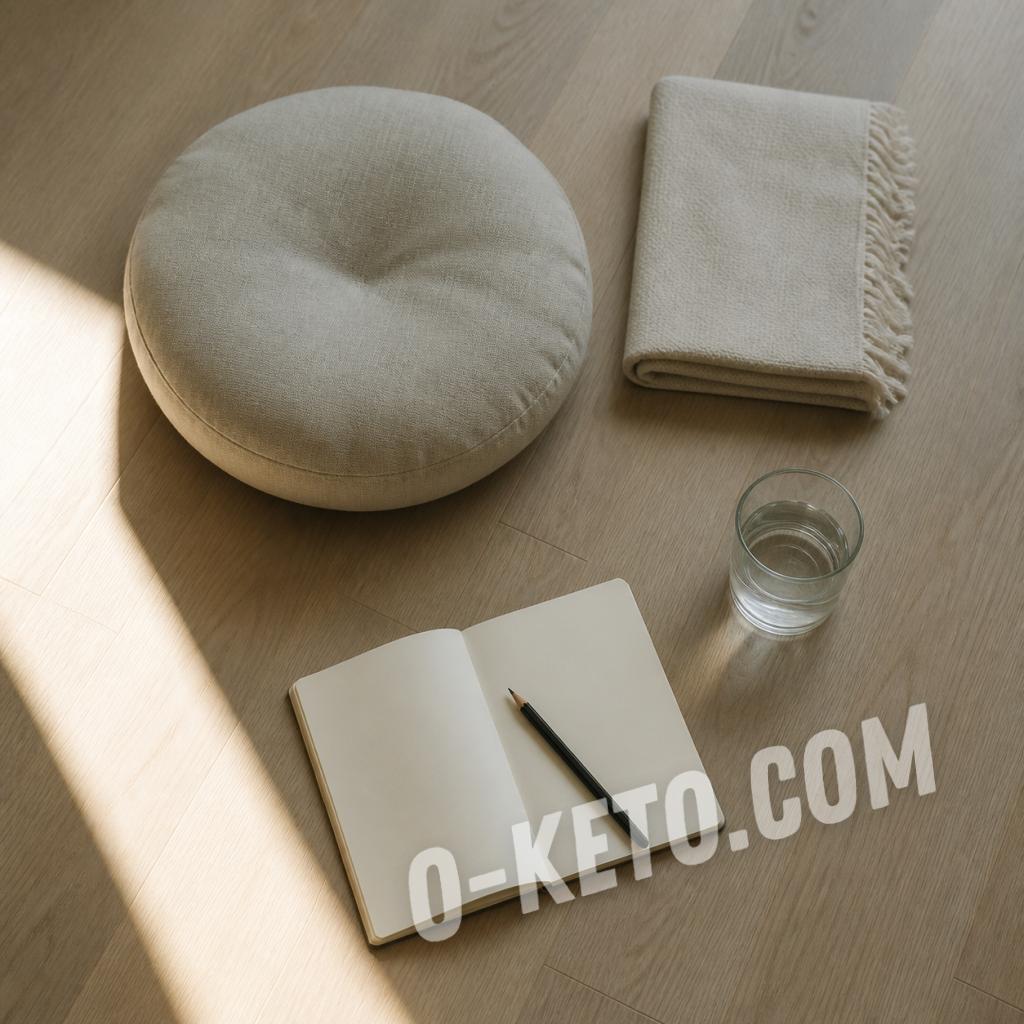
Choose ten to twenty minutes when you will not be rushed. Sit on a chair, cushion, or the edge of a bed so that your back can remain comfortably open without effort. You may lie down if that makes relaxation easier, but a seated position is usually better when you feel sleepy.
Before you begin, silence unnecessary notifications, soften the light, and keep a notebook nearby. You do not need a special setting or any particular objects. A place where you can be alone with your attention is enough. If candles, music, prayer, or another familiar element of your tradition supports you, you may include it, as long as it helps attention rather than turning the practice into an obligation.
Take several ordinary, calm breaths. There is no need to breathe more deeply than is comfortable and no need to force the mind to become empty. Thoughts will appear; notice them and gently return to the voice of the practice or to your own sensations.
Step-by-step ideal-day visualization
Begin not with the final result, but with the moment of waking. Let the scene unfold slowly, as if you were not telling yourself a story but entering it and noticing its details:
- Waking. Imagine where you open your eyes. Notice the light, the temperature, the sounds, and the first sensation in your body.
- The space. Look around. What is near the bed or resting place? Which objects create a feeling of order, beauty, or warmth?
- The first action. Imagine what you do after waking. It may be water, tea, a walk, prayer, stretching, a conversation, or a few minutes of silence.
- The people nearby. Notice who is part of this day. It is not only the number of people that matters, but the quality of contact: ease, respect, closeness, freedom, or shared work.
- The activity. Move to the main part of the day. What are you doing? What brings a sense of meaning, interest, skill, or usefulness?
- The rhythm. Observe how work, rest, movement, meals, meetings, and solitude alternate. Is there room for pauses, or has the ideal day become another crowded schedule?
- Feelings and the body. Name several sensations: calm, excitement, clarity, gratitude, freedom, safety, curiosity, or another word that fits you.
- The evening. Imagine the day ending. What remains: tiredness, satisfaction, a warm meeting, a sense of completion, or a wish to continue tomorrow?
Do not rush to correct the scene if it turns out differently from what you expected. Unplanned people, unfamiliar places, or details that do not match the original wish may appear. Let the image tell its story first. The less you force it to be beautiful, the easier it is to notice what is actually missing from ordinary life.
If the picture disappears, return to one feeling. Ask yourself, “How do you want to feel during this day?” Then find a simple scene that carries that feeling. Visualization does not have to be a high-definition film; it can be a collection of brief impressions, sounds, words, and bodily sensations.
What you may notice in the image
The main value of the practice is often not in the plot, but in details that repeat. If the day keeps returning to silence, perhaps you need more open space between tasks. If a conversation at the table is the most important part, your attention may be pointing toward closeness and belonging. If a workshop, garden, stage, or office is central, the image may show which activity you want to make a regular part of life.
There is no need to turn every symbol into a secret sign or search for one correct interpretation. Ask simpler questions: what does this home mean to you, why do you feel at ease with this person, what need is expressed by this action, and what do you feel when the scene disappears? The answer does not have to be final. It may change as circumstances change.
It is also useful to notice contradictions. A dream may contain a beautiful place but no time to enjoy it, loved ones but no real conversation, or freedom without an activity that gives the day meaning. These contradictions do not spoil the practice. They show which elements need to be brought together so that the wish becomes a life that fits you rather than a polished advertisement.
Turning visualization into an intention
When the practice ends, do not try to create a grand plan immediately. Open your eyes, take a few ordinary breaths, and write down three details that stayed with you. Then choose one and ask, “What small action could bring me closer to this feeling in the next few days?”
If the image contained a quiet morning, it may be ten minutes without news. If a live conversation mattered, you might arrange a meeting. If you saw yourself working with your hands, music, or words, give that activity a short recurring place in your week. An intention becomes steady not when it sounds impressive, but when it has a place in the real calendar.
You do not have to copy the imagined day literally. Visualization gives direction, not a ready-made instruction. Keep the feeling and meaning, but find your own form: small, doable, and compatible with your current life. That keeps the practice alive instead of turning it into another reason to criticize yourself for being imperfect.
When the image does not appear
Sometimes a person sits down to meditate and sees only darkness, fragments of thought, or ordinary worries. That does not mean the practice failed. It may be easier today to work with sound, words, or a bodily sensation rather than a picture. You can imagine one moment instead of a whole day: a morning by a window, a road, a meeting, a workplace, or evening light.
A question that is too broad can also get in the way. Instead of asking “What should your ideal life be?”, ask, “Where do you feel at ease? With whom can you be yourself? What would you like to do for at least one hour a week? What needs to leave my ordinary day?” A narrower question gives the image a place to begin and helps specific wishes appear.
If you do not want to visualize anything today, you can simply sit quietly and finish. Meditation does not have to bring an insight every time. Consistency matters more than an impressive result: over time, familiar questions become more precise and inner answers become more honest.
A five-minute version
When time is short, keep only the core of the practice:
- Sit comfortably and feel the support beneath your body.
- Take several calm breaths.
- Imagine one episode from the desired day rather than the whole story.
- Name the feeling that makes this episode important.
- Write down one small action that could bring that feeling closer.
Five minutes do not replace a longer practice, but they can help you stay connected to a chosen direction. Sometimes one clear image is enough to notice the next step.
Conclusion
The “Ideal Day” meditation is a way to speak with yourself through a sequence of images, sensations, and questions. It helps you examine a wish in detail: not only what you want to achieve, but how you want to live on an ordinary Monday, whom you want to share the day with, and how much room you want to keep for silence.
End the practice not with a promise to change your whole life, but with one clear intention. Keep the feeling that became most important and make a small place for it in the next few days. In this way, an inner picture can gradually become a personal direction instead of remaining a beautiful scene that is impossible to return to.