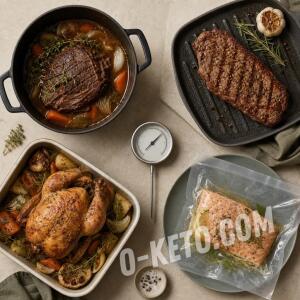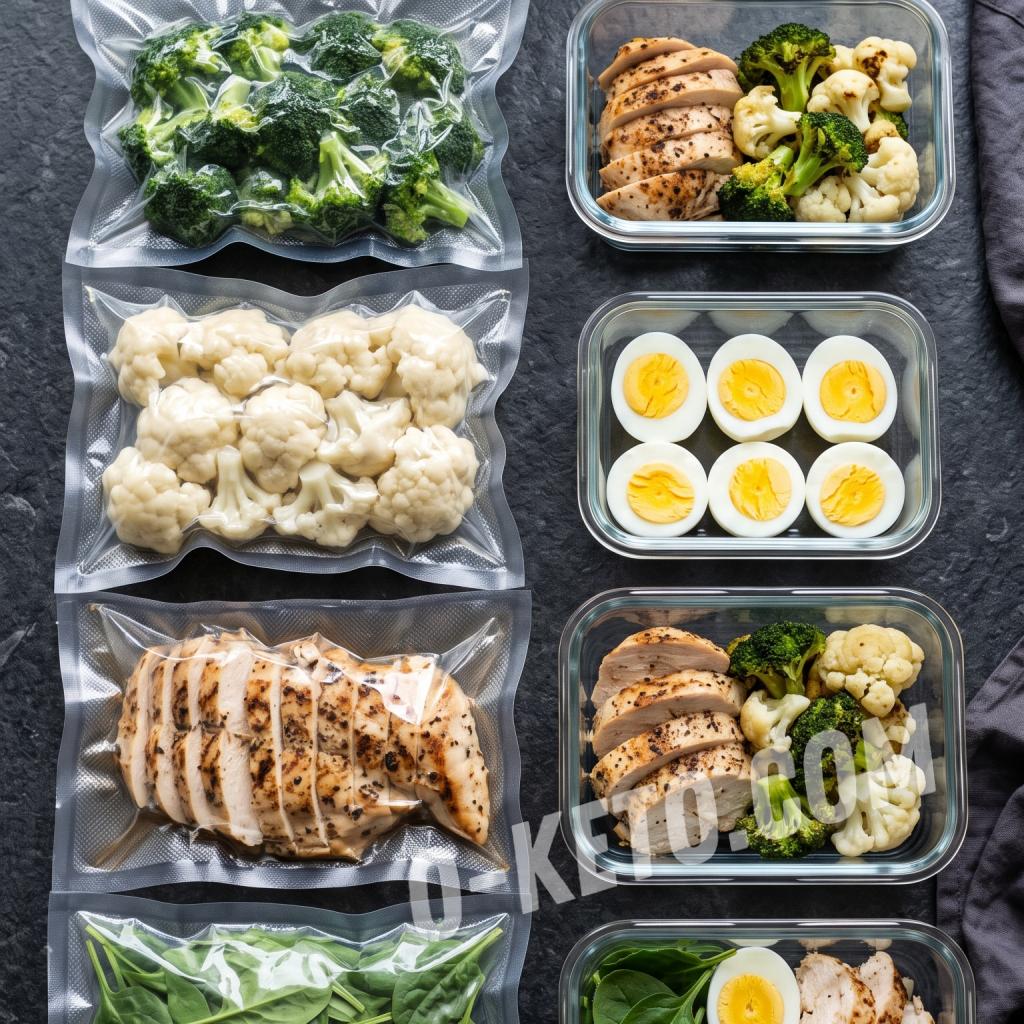

Weekly prep is useful not only for people who count calories or live by a strict schedule. In ordinary life it often protects you from chaotic snacking, from the constant question of what to eat quickly, and from the feeling that there is food in the fridge but no clear meals ready to go. For keto and LCHF this matters even more, because meals are often built around meat, fish, eggs, vegetables, sauces, and cooked components that work best when they are stored in a calm, organized way.
A vacuum sealer helps here not as the center of the whole system, but as a practical tool that turns scattered ingredients into a usable weekly structure. It does not replace washing, drying, refrigeration, or common sense. What it does is reduce excess air, limit drying, make portions cleaner, and stop you from reopening one large container every time you need a small amount of food.
Start by grouping your prep
The easiest weekly setup begins with simple categories: proteins, cooked vegetables or sides, greens, eggs, broths or sauces, and fully prepared meals. Problems usually start when all of these are packed the same way. Different foods need different handling. Some benefit from a firm vacuum, some only need clean sealing, and some are actually easier to keep in a container.
It also helps to decide the real working portion before you pack anything. One meal, one or two servings, one soup base, one set of cooked vegetables — these are usually more practical than one oversized bag meant to be “used later.” That applies to meat, fish, patties, cooked vegetables, and even broth.
How to handle vegetables and greens
Broccoli, cauliflower, spinach, and greens are common weekly-prep foods, but they depend heavily on drying. Excess moisture often shortens shelf life faster than lack of vacuum. That is why washed vegetables and greens should be dried thoroughly before you decide how to store them.
For broccoli and cauliflower that you plan to use within a few days, dry storage in a container with a paper towel often works well. The towel absorbs excess moisture and helps preserve texture. If you want a freezer-ready or tightly portioned pack, a vacuum bag can make more sense. Spinach and delicate greens need more care: a strong vacuum can collapse them too much, so a gentler mode or a container may be the better option.
What is ideal for vacuum sealing
The vacuum sealer usually works best with proteins: raw or cooked meat, poultry, fish, portioned patties, ready main dishes, firm vegetables, and some cheeses. It can also be practical for peeled boiled eggs if you plan to use them within a sensible time and not hold them indefinitely. Broths, sauces, and prepared components are also good candidates when you want them ready to grab and use.
Marinated foods are another strong use case. But again, balance matters. If the product is very wet or there is a lot of loose liquid inside the bag, it is often better to chill it more thoroughly first, then either partially freeze it or use seal-only mode rather than a deep vacuum.
What does not need aggressive vacuum
Not every food improves with maximum suction. Very wet salads, delicate greens, soft berries, and fragile components may do better with simple airtight sealing or with containers. Sometimes the real goal is not to remove every bit of air, but to package the food calmly so it does not dry out or become even wetter.
This matters in weekly prep because food must stay practical to use, not just technically packed. If a bag becomes a hard dense block that is awkward to separate later, the system is already less useful than it could be.
How to treat ready meals
Cooked meals should be cooled completely before vacuum sealing. Warm food creates steam, moisture, and weak seams. Once cooled, ready meals are best divided into real working portions. That makes reheating easier and prevents you from opening more food than you need. In keto cooking this is especially useful for meat dishes, casseroles, patties, vegetable sides, and sauces.
Liquid or very wet meals follow the same rule: cool first, then package more carefully. In practice, it is often easier to chill or slightly pre-freeze a sauce, broth, or stew than to fight a leaking seam after vacuuming.
Why labels matter
Even perfect packaging is less helpful if you stop knowing what is inside after a few days. That is why weekly prep packs should carry at least the date, the name, and the portion. This matters especially in the freezer, where similar-looking bags quickly blur together. Once labeling becomes habitual, the prep system starts behaving like a real tool rather than a pile of mystery packs.
It also helps to keep categories together: proteins with proteins, vegetables with vegetables, meals with meals. That simple grouping makes the vacuum sealer part of a calm kitchen rhythm rather than a one-off gadget.
What gives the best real-life result
The best outcome usually comes from a few steady habits: wash and fully dry produce, portion food before packing, do not treat greens and meat the same way, use paper towels where moisture needs controlling, and avoid storing everything in one oversized box. For keto kitchens this works especially well because the core foods naturally divide into proteins, vegetables, eggs, greens, broths, sauces, and finished meals.
A vacuum sealer does not make the kitchen perfect by itself, but it supports order extremely well when the basic system is already sensible. That is what turns weekly prep into something genuinely time-saving instead of just visually tidy storage.
Build a base and stop cooking from zero every day
The most useful weekly system is not seven identical finished boxes. It is a combination of base components and quick accents. The base is made of neutral prep that can move in several directions: roasted chicken, plain meatballs, boiled eggs, braised meat, cooked cauliflower, broccoli, washed greens, broth, or a small jar of simple sauce. Accents are the fast elements that change the final plate in minutes: cheese, olives, lemon, butter, capers, herbs, chili sauce, garlic dressing, or roasted seeds.
This approach prevents the classic feeling that you are eating the same bagged meal all week. The same cooked chicken can become a salad with avocado at lunch, a warm plate with broccoli and butter at dinner, and a quick soup with broth the next day. If the prep items are made without sugary glazes, starchy gravies, or very dominant marinades, they stay flexible and do not taste repetitive.
It also helps to keep ingredients at different levels of readiness. Some items can be fully ready: eggs, meatballs, braised meat, cooked vegetables. Others work better as “assembly-ready” components: washed and dried greens, sliced cucumbers, portioned cheese, a container of olives, or dry cauliflower ready for a fast pan finish. Then dinner does not begin with a full cycle of washing, cutting, and starting from scratch.
Another practical rule is not to mix everything too early when texture would suffer. Salad leaves, crunchy vegetables, herbs, and soft sauces usually keep better when stored separately from the hot protein base. That keeps the food fresher and more varied instead of turning it into one uniform container meal after two days. In that sense, the vacuum sealer helps not only with storage but with modular kitchen organization.
If you think in terms of a weekly kit rather than a rigid weekly menu, prep becomes much more sustainable. The base provides satiety and time savings, while the accents keep the food interesting. In real life it is usually more effective to prepare five solid foundations and a handful of finishing elements than to cook seven identical meals and get tired of them by midweek.