Even very good tea is easy to spoil with the wrong brewing method. If delicate green tea is hit with boiling water, it often turns bitter and sharp. If black tea is brewed with water that is too cool, the drink can feel flat and weak. In practice, the taste in the cup depends not only on the tea itself, but on whether water temperature, steeping time, and leaf amount match the specific type of tea.
This matters in an ordinary kitchen for a simple reason: the same package can behave very differently from one brew to the next. People often decide that the tea itself is poor quality when the real problem was overly hot water, too much steeping time, or the habit of brewing everything by one universal rule. Once the basic logic is clear, the drink becomes much cleaner, softer, and more predictable.
Why water temperature changes the result so much
Tea leaves contain aroma compounds, tannins, bitter fractions, and many other soluble substances that move into water at different speeds. The hotter the water and the longer the contact, the faster the extraction. But this is not always an advantage. Water that is too hot can pull more bitterness than aroma from a delicate tea, while very long steeping can make the cup heavy and drying.
That is why green and white tea are usually brewed more gently, while black tea and puer tolerate higher temperatures better. This is not a rigid dogma. Different producers and different leaf styles can shift the ideal range slightly. Still, the general rule remains useful: the lighter and less oxidized the leaf, the more careful the temperature should usually be.
Basic starting points for temperature and time
| tea type | water temperature | time | main note |
| green tea | 70-80°C | 2-3 minutes | boiling water often creates excess bitterness |
| white tea | 70-75°C | 2-3 minutes | soft water and short steeping usually work best |
| oolong | 80-90°C | 2-4 minutes | adjust by oxidation level and leaf style |
| black tea | 90-95°C | 3-5 minutes | too much time makes the drink rougher |
| puer | 95-100°C | 2-3 minutes after a quick rinse | the first short infusion is often discarded |
| hibiscus and many herbal infusions | 90-95°C | 5-10 minutes | longer time increases acidity and body |
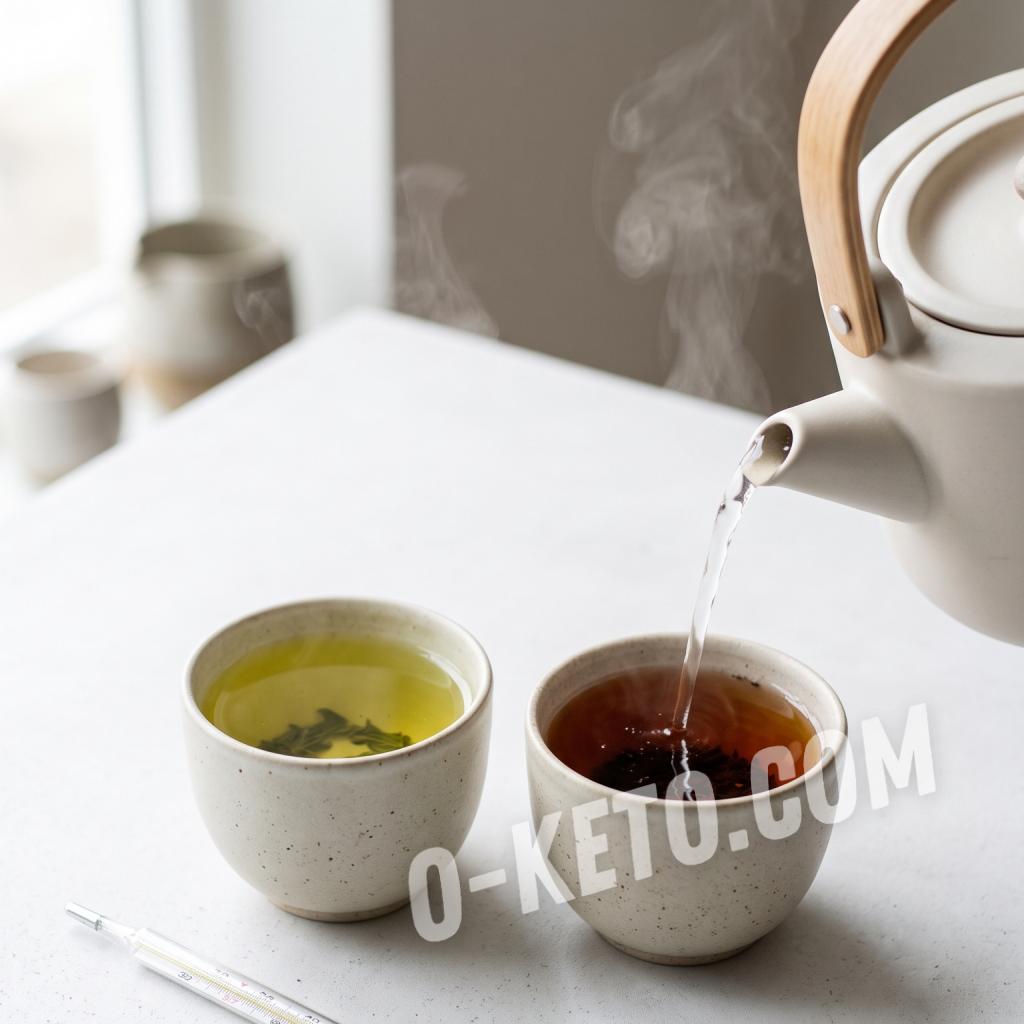
This table is not meant to cancel personal taste. It is a practical starting point. If tea tastes too aggressive, the first correction is often a slightly lower temperature or a shorter steep. If the flavor is too weak, the answer is usually not instant boiling water, but a little more time or a little more leaf.
Why tea type matters more than a universal rule
There is no single temperature that works for everything. Green tea, white tea, oolong, black tea, and puer differ in processing and in how quickly they release flavor. Leaf size matters too. Tea bags and heavily broken leaf material extract faster, which means they turn rough more easily if they are treated like large loose leaves.
The form of the leaf also matters. A rolled oolong may open gradually and release its character in stages, while a flat green tea can give up flavor more quickly. Herbal blends and hibiscus follow their own logic as well. These are not classic tea leaves in the strict sense, but infusions where aroma, acidity, and body depend strongly on how the plant material handles hot water.
It is therefore more practical to think in terms of the specific leaf and the desired taste, not in terms of tea in general. If the goal is a clean and fresh profile, gentler heat is often better. If the goal is a deeper and heavier cup, the temperature may be higher, but even then there is a big difference between pleasant intensity and over-extracted harshness.
Common tea brewing mistakes
The most common mistake is pouring boiling water over everything by habit. That may be fine for black tea and puer, but not for many green or white teas. The second mistake is steeping for too long in the hope of making the drink stronger. Very often it simply becomes more bitter, more drying, and less elegant.
A third mistake is using too much leaf for a small amount of water. If stronger tea is needed, it often makes more sense to adjust time slightly or prepare another infusion than to overload the cup at once. A fourth mistake is drinking the tea while it is still scalding hot. That is not only a taste issue. Very hot drinks are less pleasant for the mucosa and can hide the actual nuances of the tea.
Another everyday mistake is brewing strong tea on an empty stomach, especially black or green tea. For a sensitive stomach, that can be a rough start to the day. If a person already knows they tend to get reflux, nausea, or irritation from tea without food, it is often better to eat first or choose a milder drink.
How to control strength and bitterness
If tea turns out too bitter, there is no need to reject it immediately. First lower the water temperature by a few degrees or reduce the steeping time. That alone often changes the cup dramatically. A useful rule is to under-brew slightly and then make the next cup a little stronger if needed, instead of extracting everything at once and creating a harsh result every time.
Many good teas can also be brewed more than once. This is especially practical with oolongs, puer, and some green teas. In that format, the tea often becomes more interesting rather than weaker: the first infusion gives one profile and the next gives another. For home use, that is often more rewarding than trying to force maximum strength from one very long steep.
If tea tastes thin and empty instead, check the water itself. Hard water or tired repeatedly boiled water can flatten the result. Often the problem is not the tea, but the combination of weak heat, too little leaf, and unsuitable water.
What about herbal infusions and hibiscus
Herbal drinks are often brewed more simply than classic tea leaves, but they do not all need the same treatment either. Chamomile, mint, lemon balm, hibiscus, and spiced blends usually handle hotter water and longer steeping better than green tea. Even here, though, the goal matters. If a light aromatic infusion is wanted, the time can be shorter. If more body is needed, it can be increased.
Hibiscus is especially sensitive to steeping length. A shorter brew gives a lighter, fresher, more moderate tartness. A longer steep creates a deeper and brighter drink, but also a more acidic and astringent one. This is useful to remember in advance, especially when the drink will later be served cold and without sugar.
Conclusion
Good tea brewing depends on three main things: suitable water temperature, sensible steeping time, and understanding what kind of leaf or infusion is being used. Green and white teas usually need gentler handling, black tea and puer tolerate hotter water, and herbal infusions or hibiscus benefit from separate adjustments for flavor and acidity. If tea tastes harsh, the first thing to fix is usually the brewing method, not the tea itself.