The same herbal tea can feel like two different drinks depending on whether it is infused in cold water or brewed hot. This is especially noticeable with fireweed, mint, chamomile, currant leaf, thyme, and other aromatic herbs whose flavor depends not only on overall strength, but on which compounds move into the water first. Because of that, there is usually no single “correct” way to prepare herbal tea. More often, there are simply different methods that produce different results.
That is useful in a home kitchen. Once you understand what cold infusion highlights and what hot brewing pulls forward, you can shape the drink instead of preparing it by habit. The same understanding also helps with lower-waste cooking. After the first infusion, the leaves often still contain texture, fiber, color, and some remaining aroma, which means the plant material may still have culinary value.
Why cold and hot infusion taste different
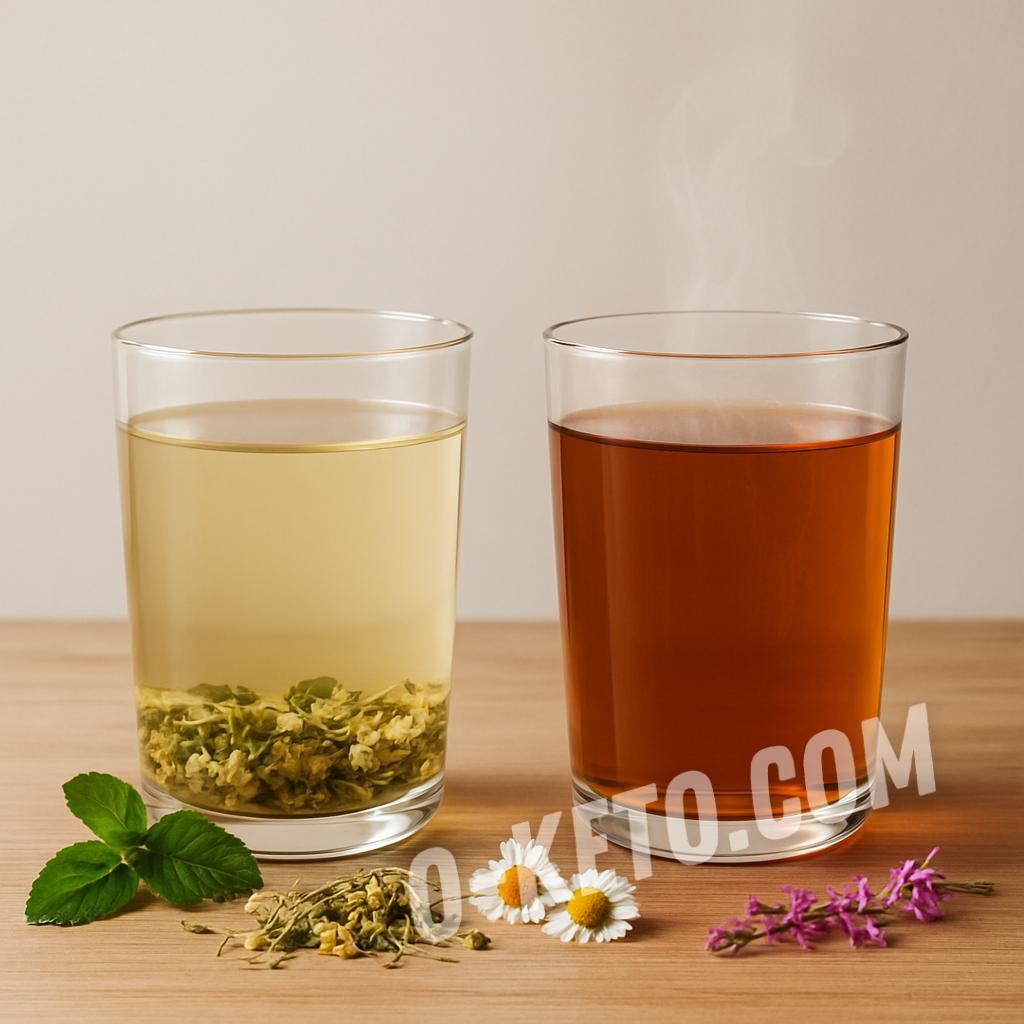
The main reason is extraction speed. Hot water breaks down plant structure faster and pulls aromatic compounds, tannins, soluble sugars, and other flavor components out of the leaves more aggressively. As a result, the drink often feels fuller, deeper, warmer, and sometimes slightly more astringent. If the herb is naturally soft, hot brewing gives it body. If it contains more drying or tannic compounds, hot water makes those easier to notice.
Cold water works more slowly and more gently. It usually does not drag out the dense, rough, and drying elements as quickly, but it can showcase lighter top notes: freshness, floral character, mild fruitiness, soft sweetness, and green nuances. That is why a cold infusion often feels cleaner and more transparent even if the aroma is still vivid. It may be paler in color, but more precise in taste.
In practice, that means one batch of herbs can first give a bright cold drink and then a softer, rounder hot second infusion. This works particularly well with fermented fireweed and other herbs that tolerate repeat extraction without feeling completely emptied after the first use.
What cold infusion usually highlights
Cold infusion is useful when you want a more delicate, refreshing, and less tannic drink. It works especially well with fermented fireweed, fireweed flowers, mint, lemon balm, chamomile, currant leaves, and other herbs whose aroma can become too heavy or dull under aggressive heat. A long rest in the refrigerator lets the easier-to-dissolve compounds move into the water while keeping the flavor clear.
These drinks often feel lighter in body but sharper in aroma. Floral, honey-like, fruity, and green notes tend to read more clearly. Excess roughness drops away, and if the raw material is good, the drink can feel almost transparent on the palate. Cold infusion is especially comfortable in warm weather, after a heavy meal, or whenever a softer drink is more appealing than a steaming mug.
There is another practical advantage: cold infusion is harder to over-bitter by accident. That matters for herbs with some natural astringency or for batches that were overdried, overheated, or overfermented. Cold water often reveals the better side of the tea without pulling out every flaw at once.
What changes with hot brewing
Hot water reveals herbal tea differently. The liquor usually becomes darker, fuller, and warmer in its overall profile. Bread-like, dried-fruit, honeyed, grassy, toasted, and mildly tannic notes may appear more easily. This makes hot brewing especially satisfying in cooler weather, in the morning, or after meals when the drink is expected to provide not only aroma, but also a sense of depth and comfort.
If the same herb has already gone through a cold infusion and is then brewed hot, the second drink can still be surprisingly pleasant. Some of the most volatile and airy notes have already gone into the first infusion, but the denser compounds remain and can give the second cup a mellow, velvety character. So a hot second brew after a cold one is not always weak or dull. It is often just calmer and rounder.
The key is not to confuse hot brewing with harsh boiling. If herbal tea is boiled too long or held at high heat unnecessarily, the flavor can become flat, rough, or overly grassy. In most home situations, a short steep or gentle brew gives a better result than prolonged cooking.
How to compare both methods at home
The simplest way is to divide the same herbs into two equal portions. Infuse one part in cold water for several hours or overnight in the refrigerator, and brew the other part hot in the usual way. When the raw material is the same, the contrast between methods becomes obvious very quickly.
It helps to compare them in a structured way:
- use the same amount of herbs for the same amount of water;
- use similar cups or glasses so aroma is not distorted by the vessel;
- taste both at a comparable serving temperature if you want to judge flavor rather than the sensory effect of cold or heat;
- take the first sip without sweeteners, lemon, or other additions;
- taste again a few minutes later after the aroma has opened slightly more.
That kind of side-by-side test quickly shows a reliable pattern: cold infusion usually lifts the upper notes, while hot brewing emphasizes the lower, fuller ones. Once you notice that, it becomes much easier to choose a method for season, herb type, and purpose.
How to use spent leaves and herb pulp without waste
If the herbal tea was made from good fresh material and has not started to spoil, the spent leaves do not always need to go straight into the bin. The most obvious use is a second infusion. After a cold infusion, the herbs can be covered with hot water. After the first hot brew, they may still be suitable for a lighter second cup. This does not work equally well for every herb, but with fireweed, mint, lemon balm, and many fermented leaves, the result can still be worthwhile.
The second route is culinary reuse. Wet herbal mass can be finely chopped or minced and added to doughs, crispbreads, flatbreads, vegetable pastes, or soup-style bases. If the material comes not from a standard tea infusion but from pressed herbs after a fermented drink, it may also contribute mild acidity, aroma, and fiber. It will not replace the main flavor of a dish, but it can enrich texture and make use of more of the plant.
Spent leaves work best where the beauty of whole leaves no longer matters and only the plant mass is important: rye or buckwheat doughs, crispbreads, savory flatbreads, vegetable spreads, and rustic soup preparations. If the wet mass is chopped well, it distributes more evenly and does not leave coarse fibers concentrated in one place.
When reusing the herbs no longer makes sense
Not every batch of wet tea material should be saved. The longer used leaves sit at room temperature, the greater the risk that microorganisms will begin to multiply. That makes the rule simple: if spent leaves or herb pulp are not being used immediately, they should be cooled quickly and stored in the refrigerator. Even then, they are better treated as short-term ingredients, not something to keep for days without attention.
Common sense matters more than thrift. If the leaves develop an unpleasant sour, stale, moldy, or otherwise abnormal smell, if the mass turns slimy, or if it no longer looks like food, it should be discarded. Reuse should remain a kitchen technique, not an endurance test for digestion.
There is also no reason to save everything automatically in the name of zero waste. Sometimes the second infusion is simply empty, or the pulp contributes so little flavor that it only weakens the next dish. Lower-waste cooking works best when the leftover still carries clear aroma, texture, or practical value.
Takeaway
Cold and hot infusion change herbal tea because they extract different compounds at different speeds. Cold water often highlights freshness, clarity, and fine aromatic notes, while hot water brings more depth, body, and velvety structure. The same herbs can perform well in both directions when prepared with intention.
Spent leaves and herb pulp also do not always need to be discarded immediately. They may still be useful for a second infusion, doughs, crispbreads, rustic soup bases, and other kitchen preparations, as long as the material is still fresh, smells normal, and is handled carefully. That makes herbal tea not only more interesting to drink, but also more sensible to use in a home kitchen.