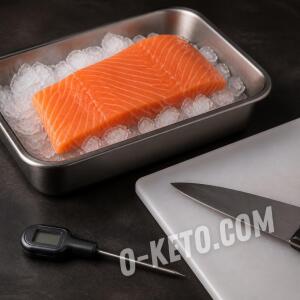


Fish is easy to ruin with one small but wrong move: rinsing a fillet, putting wet skin into a cold pan, or steaming a thin piece until it turns dry. Good results begin before the heat is turned on. A clean work surface, dry fish, suitable thickness, and temperature control matter more than a long list of seasonings.
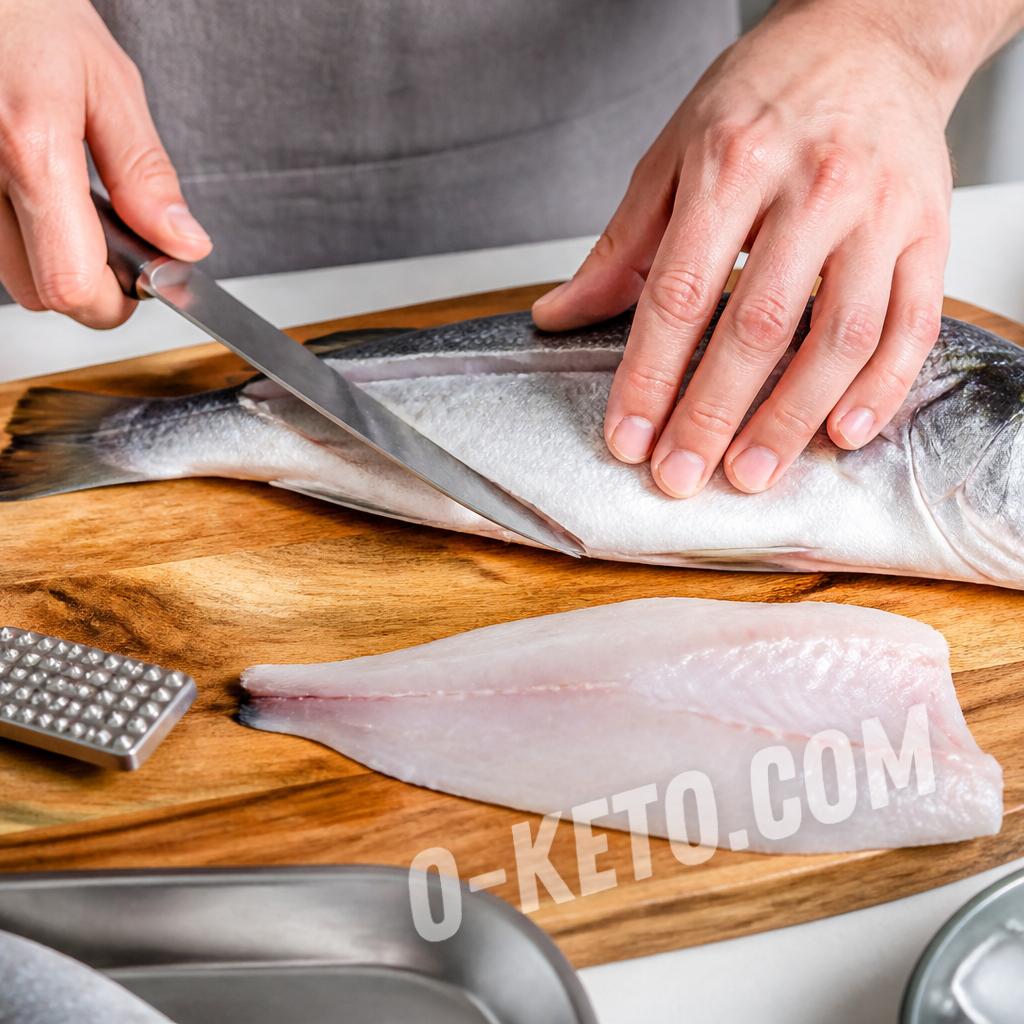
How to clean and fillet fish at home
Prepare a separate washable board, a fish scaler or the blunt side of a knife, kitchen scissors, a sharp fillet knife, tweezers, and paper towels. Keep hands, tools, and surfaces clean. Separate raw fish from ready-to-eat food and wash the board after use. Fillets do not need rinsing: they absorb water, become softer, and brown less effectively.
Pat a whole fish dry before scaling it from tail to head. Work inside the sink or a large tray so scales do not spread around the kitchen. Remove the fins with scissors, make a careful belly cut, and take out the organs without breaking the gall bladder. If you will use the head for stock, remove the gills because they can make broth bitter and cloudy. Pat the fish dry again.
To fillet a round fish, cut behind the gill cover down to the backbone, angle the knife slightly, and guide it along the bones toward the tail in long strokes. Do not saw with short movements: that leaves more scraps and tears the surface. Run your fingers over the fillet, remove pin bones with tweezers, and trim the dark belly strip if it does not suit the dish. Leave the skin on when you want a crisp crust.
Filleting should not become a race. If the fish begins to warm, return it to the refrigerator and keep trimmings separate. Small fish, flatfish, and already-gutted fish require different cuts, so buying fillets or asking the seller to prepare the fish is often better than damaging the flesh at home.
How to pan-fry fish without drying it out
The main enemy of a crust is surface moisture. Pat the fish dry, salt it immediately before cooking unless your recipe calls for earlier seasoning, and preheat the pan until it is properly hot. Use enough oil to make a thin film over the base. Put a skin-on fillet skin-side down and press it gently with a wide spatula for the first moments. This reduces curling and helps the skin contact the metal evenly.
Do not move the fish immediately. Once the bottom has set, the fillet will release more easily. Cook most of the time on the skin side, then turn it briefly to finish the flesh. A thick piece can be removed slightly early and allowed to finish on the plate. An overcrowded pan loses heat and steams the fish, so cook in batches when needed.
Use minutes only as a guide: thickness, starting temperature, and the pan all change the result. Insert a thermometer into the thickest part without touching skin or bone. The official safe minimum internal temperature for fish is about 63 °C. A lower temperature may give a softer texture but does not provide the same food-safety margin. Without a thermometer, the flesh should become opaque and separate easily with a fork, while the juices remain clear. It is better to remove a thin fillet slightly early and return it to the heat than to overcook it.
Add lemon, butter, and herbs at the end. Acid added too early can wet the surface, while butter and garlic burn quickly over high heat. Build the crust first, then lower the heat and add aromatics.

How to steam fish
Steaming suits delicate fillets and firm fish when you want moist flesh without much added fat. The water should boil below the rack or basket, not touch the fish. Leave space between pieces so steam can circulate. Place fillets skin-side down when possible; the skin helps them hold their shape. Salt, ginger, scallions, citrus zest, and herbs can go on before or after steaming.
Start timing once steady steam has returned under the lid. A piece about 2 cm thick often needs roughly 6–8 minutes; thicker pieces may need 10–15 minutes, but these are guides. A loose lid, cold fish, or an overcrowded basket increases the time. Check the thickest part: the flesh should be opaque and flake easily, and the thermometer target remains about 63 °C for safety.
To prevent watery fish, keep it above the water, do not bury it under a thick layer of vegetables, and do not leave it in hot steam after it is done. Transfer it to a warm plate, blot condensation, and serve immediately. Prepare sauces and crunchy toppings first because steamed fish loses texture while waiting.
How to choose the cooking method
Pan-frying is best when you want a crust and deeper flavor: choose a dry, evenly thick fillet and keep the skin on. Steaming keeps lean fish soft and needs no breading, but timing is less forgiving. Both methods suit fatty salmon; for lean white fish, steaming or a short fry with a sauce usually gives a wider margin for error. In every case, control thickness and heat before adding complexity.
Practical conclusion
Clean fish carefully, dry it before heating, and do not rinse fillets. For a crust, use a hot pan, start skin-side down, and avoid crowding. For steaming, keep the fish above the water, leave gaps, and check the thickest part. These three principles—dry surface, suitable heat, and short cooking—preserve flavor and moisture without extra carbohydrates or heavy breading.