





A strong grip supports more than pull-ups. It helps you carry weight, hold tools and control your body on a bar. Hangs are a simple way to train it: use short sets, then move gradually to towels and assisted one-arm variations. This progression challenges the fingers, wrists and forearms while keeping the load measurable.
How to check the equipment and starting level
Use a bar that is firmly fixed and free of movement. Keep the floor clear and avoid slippery surfaces. For the first sessions choose a height where your feet can reach the floor or a stable support. The towel must be dry and intact, with no torn fibres. Start with a supported hold so you can learn how long you can grip without shaking or pain.
How to begin with a supported hang
If a full hang is too demanding, keep part of your weight on your feet. Lean back from a low bar, hold it with both hands and gradually straighten your legs. Keep the shoulders away from the ears, the elbows soft and the trunk quiet. Do 2–4 sets of 10–20 seconds. As the position becomes easy, reduce the leg support until you can hang freely.
How to build a regular bar hang
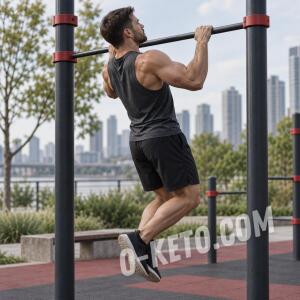
In a regular hang your hands carry the body, but the shoulders do not collapse. Before you start, draw the shoulders slightly down and brace the abdomen. End the set when the grip clearly weakens or the fingers begin to open. Leave a few seconds in reserve instead of chasing a failure record. When working one side at a time, begin with the weaker side and log every set.
How to progress with towels
A towel creates a changing handle and makes you squeeze harder. First loop one towel over the bar and hold it with both hands. Next use two towels and divide the load between them. Then hold one towel with the working hand while the other hand gives light help on a neighbouring towel or a low support. Thick fabric is usually harder than thin fabric, so compare progress on the same equipment.
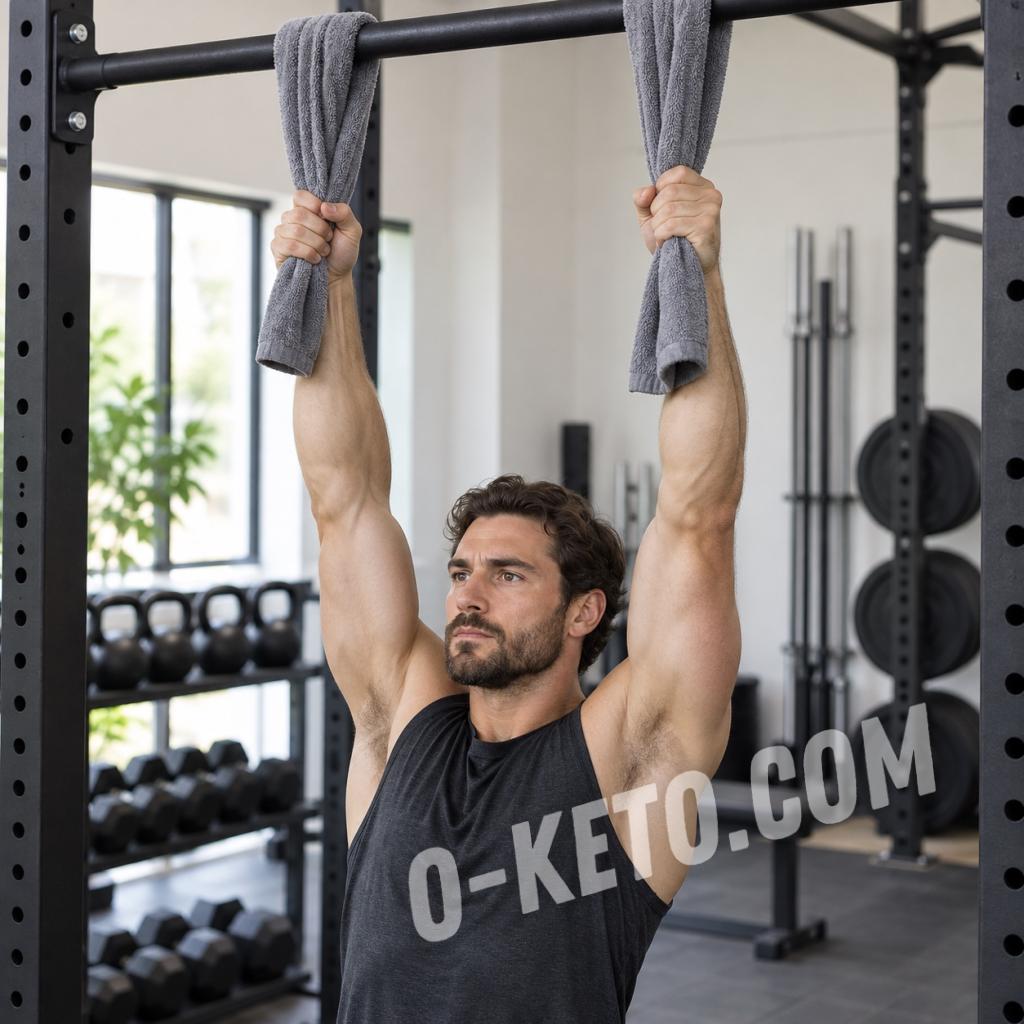
Do not swing or try to catch the fabric during a slip. Check every loop before the set and keep the landing area empty. At home, have someone nearby until the setup and dismount are familiar.
When to try an assisted one-arm hang
A one-arm hang places much more stress on the hand, elbow and shoulder. Move to it only after a controlled regular and towel hang. Begin with partial support: keep one toe on the floor or a low box, grip the bar with one hand and transfer weight to that arm for 3–5 seconds. Increase the load only while the shoulder stays down and the trunk does not twist.
Are finger push-ups necessary?
Finger push-ups are a separate and demanding drill. They can be added later, but they are not required for a stronger grip. Start against a wall or table and spread the load across several fingers. Avoid fingertip work on one or two fingers and avoid fast repetitions. Stop if the finger joints hurt, swell or become numb.
How to plan volume and recovery
For most people, one or two grip sessions per week are enough. Perform 2–4 sets of 10–30 seconds and rest for 2–3 minutes. Add only 2–5 seconds after several comfortable sessions. Record the grip, time, towel thickness and how the hands feel. If soreness lasts more than two days, reduce the volume or take another rest day.
Common mistakes and safety
Typical mistakes include jumping onto the bar, swinging, holding until the fingers suddenly open and rushing to one-arm work. Do not train on a wet bar or with a damaged towel. Stop for sharp pain, tingling, loss of sensation, dizziness or a feeling that the shoulder is unstable. After a hand, elbow or shoulder injury, agree on the progression with a clinician or physiotherapist.
Takeaway
Start with a supported hang, master a regular bar, then add two towels and an assisted one-arm variation. Short sets, consistent equipment and small increases give the forearms a clear training stimulus. Track seconds and movement quality, and treat recovery as part of the program.
Sources
- ACSM Position Stand: Resistance Training Prescription for Muscle Function, Hypertrophy, and Physical Performance in Healthy Adults.
- Resistance training prescription for muscle function, hypertrophy and physical performance in healthy adults: a systematic review and Bayesian network meta-analysis.
- Resistance training and health outcomes: an umbrella review of systematic reviews and meta-analyses.
- WHO Guidelines on Physical Activity and Sedentary Behaviour.


