
Cellulite is a dimpled or uneven skin texture that is especially common on the thighs and buttocks. It affects most women after puberty, including people with different body weights and fitness levels. It therefore cannot be reduced to a simple formula of “excess fat,” and one exercise cannot promise to remove it permanently.
The appearance is influenced by the arrangement of connective tissue septa under the skin, the amount of subcutaneous fat, skin elasticity, muscle, age, and hormonal changes. A realistic goal is usually to make the texture less noticeable rather than to demand perfectly smooth skin.
Why cellulite appears
Under the skin are fat lobules and fibrous septa that connect the skin with deeper tissues. Depending on their arrangement, the pressure from fat tissue, and the properties of the skin, the surface can look uneven. In women, the orientation of some septa and the typical distribution of fat may contribute, but the mechanism is multifactorial.
Genetics, age, changes in body weight, and hormonal changes may all affect how visible the texture is. This is why cellulite occurs in both lean and athletic people. It does not prove “toxins,” poor circulation, or an excess of one particular hormone.
Cellulite is not the same as excess weight
Extra fat can make dimpling more visible, so weight loss improves the appearance for some people. The result is not predictable: after weight loss, looser skin can make the texture more noticeable. Cellulite itself does not show how much a person should weigh.
Do not try to treat it with starvation, dehydration, or rigid elimination of individual foods. These measures do not remodel connective-tissue septa and may harm your health. If weight loss is medically appropriate, use a gradual plan that preserves protein, movement, and adequate nutrition.
Can exercise make the skin look smoother
Exercise does not remove the septa under the skin, but it can change the appearance of the area. Stronger muscles can improve the shape of the buttocks and legs and help maintain function. Regular activity also supports weight management. For some people, the texture becomes less noticeable even when body weight changes little.
Judge the plan by concrete outcomes rather than a promise to “burn cellulite”: are your legs stronger, are stairs easier, and do your clothes fit differently? Strength may improve before visible changes in shape. Take photos and measurements in the same lighting and position, because lighting alone can create a false impression of progress.
Which exercises to choose for the legs and glutes
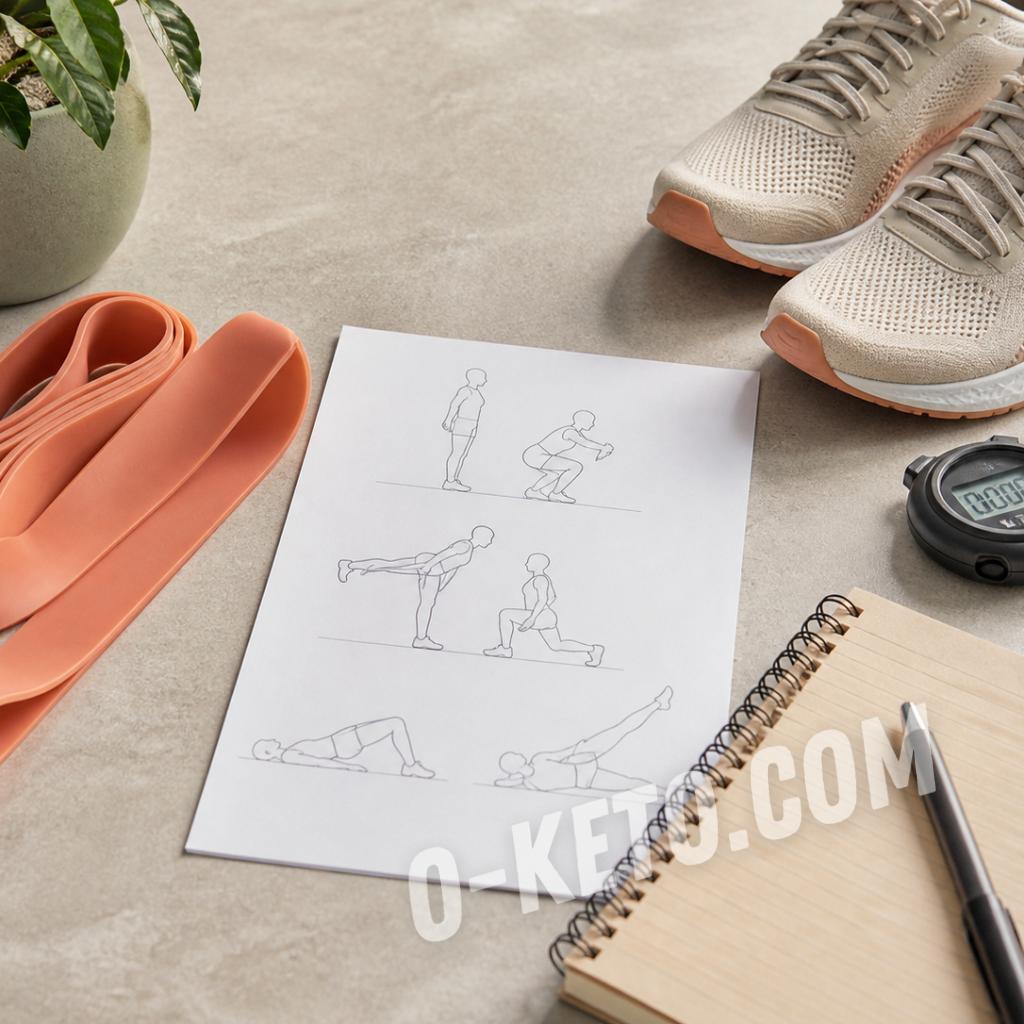
Build a program from movements you can perform confidently and gradually make harder. Options include squats to a comfortable depth, lunges or easier variations, glute bridges, hip extensions, step-ups, and band abductions. You do not need all of them: choose two or three lower-body movements and add exercises for the trunk.
Begin with a load that leaves several repetitions in reserve and does not disrupt technique. Strength-train two or three times per week and allow recovery. When the movement feels secure, gradually add resistance, repetitions, or sets. Joint pain, sharp back pain, numbness, or dizziness is a reason to stop and investigate, not to push harder.
What weight loss can do when it is needed
If excess body weight limits movement or weight loss is medically recommended, reducing fat tissue may make the texture less visible. Cellulite does not have to disappear with the kilograms, however. Combine a nutritious eating pattern with adequate protein, walking or other aerobic activity, and strength training to support muscle.
Do not judge the plan by the scale alone. Waist or hip measurements, strength, endurance, well-being, and clothing fit may change first. Rapid fluid loss can create a temporary visual effect, but it is not cellulite treatment.
Do massage, dry brushing, and creams work
Massage, lymphatic techniques, and dry brushing may temporarily change fluid distribution and the surface appearance. Evidence is not sufficient for lasting tissue remodeling. Vigorous treatment can cause irritation, bruising, and skin injury.
Caffeine, retinoid, and other active creams have been studied as cosmetic products, but the effect is usually limited and requires regular use. A cream cannot reliably change deep septa within a few days. Retinoids have precautions, and pregnancy or breastfeeding is a reason to discuss such products with a clinician.
What is known about cosmetic procedures
More visible cellulite may be treated with radiofrequency, laser, ultrasound, injectable procedures, and subcision, which releases selected fibrous septa under the skin. These methods differ in purpose, cost, number of sessions, and risks. Reviews find radiofrequency methods and subcision promising compared with many home remedies, but the evidence is uneven and results may not last.
Before a procedure, ask who will perform it, what diagnosis and severity are being considered, what complications are possible, and how long the effect is expected to last. Be cautious with promises of guaranteed results, “detoxification,” or one universal cure. Liposuction removes some fat but is not a reliable cellulite treatment and can make dimpling more noticeable in some cases.
How to make a realistic plan
First identify what bothers you: texture at rest, visibility when muscles are tightened, hip volume, or a feeling of weakness in the legs. Choose one measurable target and give the plan several months. For example, do two strength workouts each week, walk on other days, and assess changes with photos every four weeks.
If weight loss is appropriate, create a moderate energy deficit without starvation and keep strength training. If your weight is healthy and the concern is cosmetic, you do not need to lose weight to match retouched images. Cellulite is a common skin feature, not a measure of discipline or health.
When to see a clinician
Typical cellulite is symmetrical and does not cause marked pain. Seek medical advice if an uneven area appears suddenly, is accompanied by one-sided swelling, redness, severe tenderness, a lump, increased skin temperature, or rapid change. These signs should not automatically be blamed on cellulite.
A dermatologist or another qualified clinician should also assess you before an invasive procedure and when you have skin disease, a bleeding disorder, or take medicines that increase bleeding risk.
Conclusion
Cellulite has several contributing factors, so no single exercise, cream, or diet can guarantee that it will disappear. A realistic home approach combines regular strength and aerobic activity, non-extreme nutrition, and assessment using more than one sign. Cosmetic procedures can sometimes reduce the appearance, but they require professional assessment, an understanding of risk, and acceptance that the result may be temporary.
Sources
- A Clinical Guide to the Treatment of Cellulite and Comprehensive Review of the Etiology, Pathophysiology, and Utility of Intervention — Aesthetic Plastic Surgery, 2024
- Cellulite: An Update on Pathogenesis and Management — Dermatologic Surgery, 2023
- Insights Into the Pathophysiology of Cellulite: A Review — Dermatologic Surgery, 2020
- Cellulite treatments: What really works? — American Academy of Dermatology