



The coprogram is one of the most underrated tests. It is often perceived as a “general stool analysis,” but in practice, it shows how the entire digestive system works: from the stomach to the intestines. It is important not just to look at individual indicators but to understand the processes behind them.
General characteristics: what is immediately visible
The first part of the analysis is a macroscopic assessment. It already provides a lot of information about the functioning of the gastrointestinal tract:
- consistency – reflects the balance of water, bile, and intestinal function;
- shape – indicates the speed of food passage;
- color – related to bile and fat digestion;
- odor – indirectly reflects fermentation and putrefaction processes;
- reaction (pH) – shows the balance between fermentation and protein digestion.
A formed stool, brown color, and neutral or slightly acidic reaction are considered normal.
What deviations in external indicators indicate
- too soft or liquid stool – accelerated passage or absorption disorders;
- hard and dry – slowed motility;
- light or yellowish color – insufficient bile function;
- dark color – enhanced digestion or high bile concentration;
- sharp odor – intensified protein putrefaction processes.
Impurities: blood, mucus, and food remnants
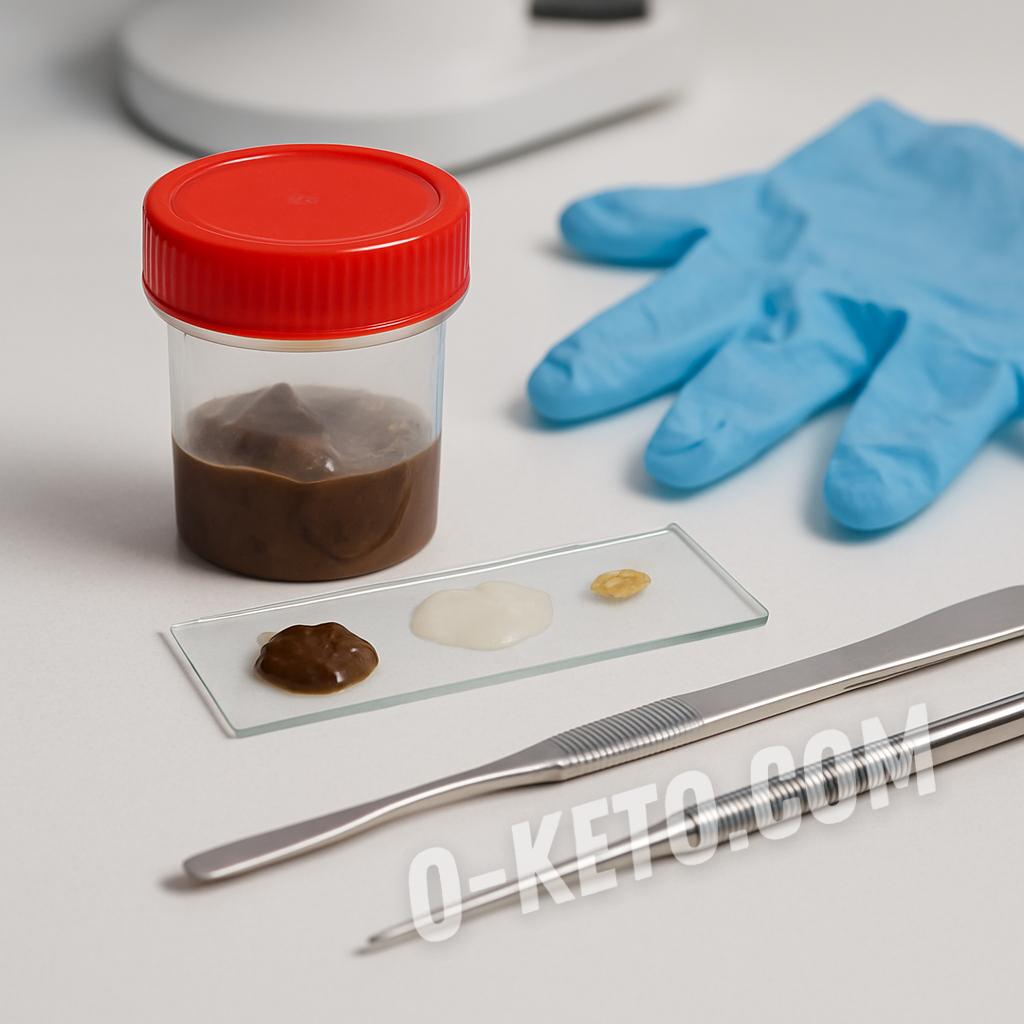
These indicators help understand whether there is damage to the mucosa and how completely food is digested:
- blood – a sign of mucosal damage;
- mucus – reflects intestinal irritation;
- remnants of undigested food – an indicator of insufficient digestion.
Proteins and muscle fibers
The presence of muscle fibers is an important marker of stomach and enzyme function:
- unaltered muscle fibers – a sign of insufficient stomach acidity;
- altered fibers in large quantities – insufficient pancreatic enzyme function;
- absence of fibers – an indicator of normal protein digestion.
Fats and their forms
Fat metabolism in the coprogram is reflected by several indicators:
- neutral fat – indicates a deficiency of pancreatic enzymes;
- fatty acids – indicate impaired fat digestion;
- soaps – reflect incomplete fat absorption and bile function.
Normally, these indicators are absent or minimal.
Carbohydrates and fiber
- intracellular starch – a sign of insufficient food breakdown;
- extracellular starch – indicates accelerated food passage;
- digestible fiber – allowed in small amounts.
Microflora and inflammation
The coprogram provides a basic understanding of the intestinal environment:
- leukocytes – an indicator of inflammation;
- erythrocytes – a sign of damage;
- iodophilic flora – an indirect marker of microbiota imbalance;
- clostridia – may increase with digestive disorders;
- yeast-like fungi – an indicator of disturbed intestinal environment.
How to combine indicators into a single picture
The most common mistake is to look at each parameter separately. The coprogram works as a system:
- muscle fibers + fats: assessment of stomach and pancreatic function;
- color + fats: assessment of bile function;
- pH + flora: balance of fermentation and putrefaction;
- mucus + leukocytes: presence of inflammation.
The main thing that the coprogram shows. This analysis allows understanding not the diagnosis but the functional state:
- how effectively food is digested;
- whether there are enzyme disorders;
- how bile functions;
- whether there are signs of inflammation;
- the condition of the intestinal environment.
That is why the coprogram is not a “secondary analysis,” but one of the key tools for assessing digestion.
Sources
- AGA Clinical Practice Update on the Epidemiology, Evaluation, and Management of Exocrine Pancreatic Insufficiency: Expert Review
- Steatorrhea
- Diagnostic Performance of Measurement of Fecal Elastase-1 in Detection of Exocrine Pancreatic Insufficiency: Systematic Review and Meta-analysis
- Diagnostic Accuracy of Fecal Elastase-1 Test for Pancreatic Exocrine Insufficiency: A Systematic Review and Meta-analysis
- Overview of Malabsorption: Merck Manual Professional Edition
- Stool Occult Blood Tests: Merck Manual Consumer Version


