


Coprogram
A stool study that helps estimate digestion, inflammation, mucus, fat content, fiber remnants and signs of malabsorption, but it always needs to be interpreted together with symptoms and other gastrointestinal tests.

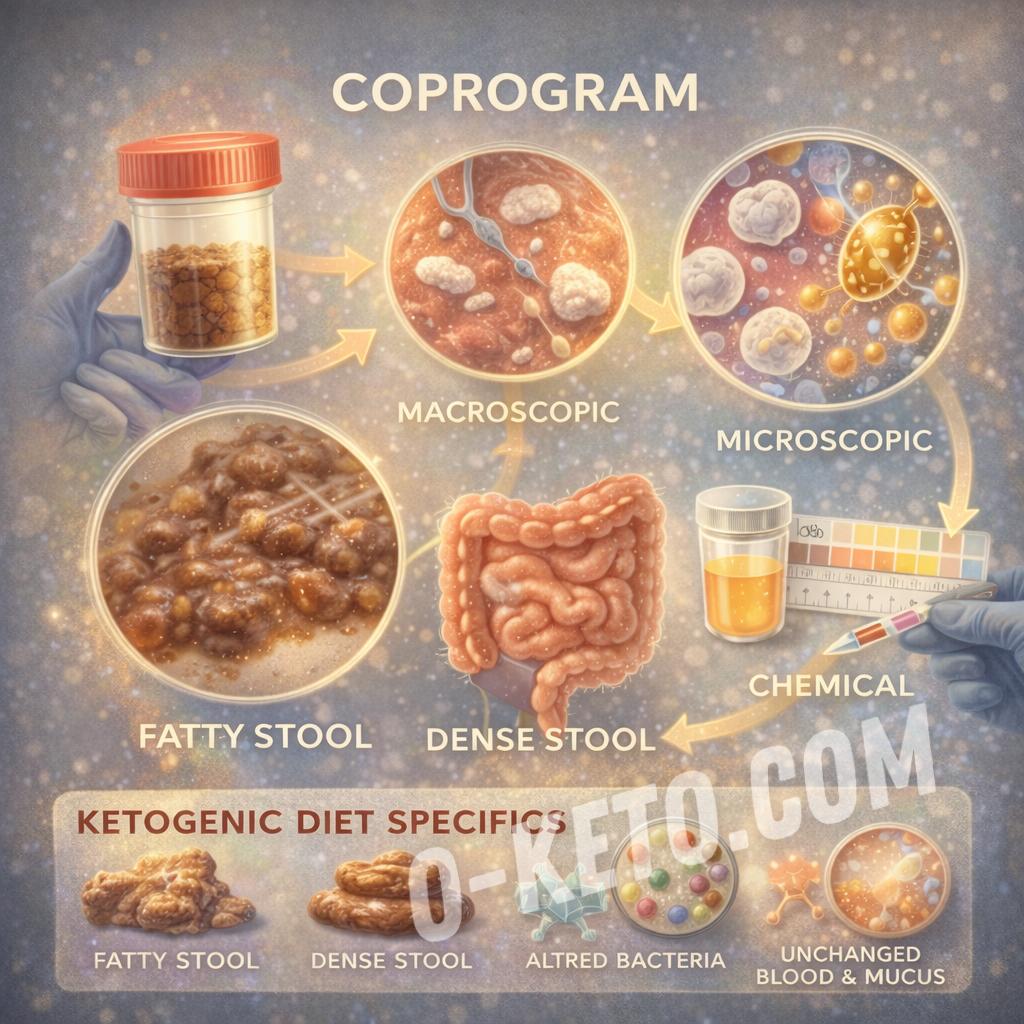
A coprogram is an expanded stool study used to estimate how food is being digested and whether there are clues pointing toward inflammation, mucus, excess fat, undigested fibers, malabsorption or irritation of the intestinal lining. It is not a universal test for every gastrointestinal disease and it does not replace colonoscopy, imaging or narrower markers such as fecal calprotectin. Still, as an initial overview it can provide useful direction, especially when a person has bloating, unstable bowel habits, abdominal discomfort, food intolerance, weight loss or concern about poor digestion.
What the test can show
The coprogram evaluates not a single number, but a pattern of features: consistency, color, pH reaction, mucus, muscle fibers, neutral fat, fatty acids, starch, plant fibers, leukocytes and several other findings. Each sign alone is not enough for diagnosis, but together they may suggest disturbed digestion in the stomach or small intestine, bile or pancreatic involvement, mucosal irritation or accelerated transit.
That is why the test is most useful as a directional tool when the goal is deciding where gastrointestinal evaluation should go next, rather than as a final answer by itself.
When it is especially useful
A coprogram may be appropriate in chronic bloating, unstable stool, suspected steatorrhea, possible malabsorption, discomfort after fatty meals, long-standing abdominal complaints, changes in stool character, low body weight or nutrient deficiencies. It can also be helpful after intestinal infections, in suspected enzyme insufficiency and as part of an initial digestive workup in both children and adults.
However, when stool contains blood, weight loss is significant, pain is severe, anemia is present, diarrhea wakes the person at night or fever persists, a coprogram alone is far from enough. Those situations need more targeted testing and direct clinical evaluation.
What limits interpretation
The result depends heavily on sample collection, recent diet, antibiotic exposure, enzymes, probiotics, laxatives, bile-related agents and how quickly the sample reached the laboratory. Some abnormalities reflect a temporary dietary background rather than stable disease. In addition, some findings are partly method-dependent and not perfectly standardized.
For that reason, one “abnormal” report should not be treated as a definitive diagnosis. Reproducibility and correlation with real symptoms usually matter more than one isolated form.
What a single coprogram cannot establish
A change in color, consistency, fat, muscle fibers, or plant residue does not by itself identify a specific diagnosis. Results are influenced by diet, intestinal transit, medicines, sample handling, and the methods used by a particular laboratory. Even individual findings need to be compared with symptoms, examination, and other tests.
A coprogram alone does not confirm food intolerance, small intestinal bacterial overgrowth, candidiasis, or “toxins in the gut.” Blood in the stool, unexplained weight loss, persistent fever, nocturnal diarrhea, severe pain, or anemia require medical assessment regardless of the coprogram result.
How it is read with other investigations
If the coprogram shows fat, undigested fibers or marked fermentative changes, clinicians may compare the pattern with pancreatic enzymes, liver markers, biliary context, fecal elastase and body-weight changes. If mucus or inflammatory clues appear, calprotectin, stool cultures, parasite testing or endoscopy may be needed. If the pattern suggests malabsorption, iron, B12, protein markers and other deficiency signals become relevant.
The test becomes useful when paired with history and neighboring investigations. Alone, it rarely explains exactly why the person feels unwell, but it often points toward the next rational step.
Why it does not replace a full GI workup
The mistake is expecting a precise diagnosis from every line of a coprogram. It cannot by itself confirm SIBO, celiac disease, Crohn disease, ulcerative colitis, pancreatic insufficiency or tumor pathology. It only shows indirect clues that need verification by more specific methods.
The most practical approach is to use the coprogram as an overview test of digestion and intestinal contents. Its value lies in highlighting mismatches, while final conclusions must rely on symptoms and more targeted investigations.
A coprogram is most useful when it is not treated as a magical diagnosis from stool alone, but as one step in a structured digestive workup. Used that way, it helps reduce chaotic guessing and makes the next investigation choice more rational.
Practically, this means the coprogram works best as a navigation tool: it does not close the diagnosis, but it helps reveal whether poor digestion, inflammation or transit disturbance is the dominant pattern. That alone makes the next step of investigation much more precise.
If you have any questions about the term "Coprogram", you can ask them to AI. Please note, a low-cost OpenAI model is used. It may answer questions about disease treatment with errors!

 1 / 4
1 / 4


 1 / 4
1 / 4 1 / 4
1 / 4
 1 / 4
1 / 4

 1 / 4
1 / 4 1 / 4
1 / 4