


Free T3
The active triiodothyronine fraction helps show whether tissues are receiving enough true thyroid signaling and should be interpreted with TSH, free T4, nutrient status, and the broader metabolic context.
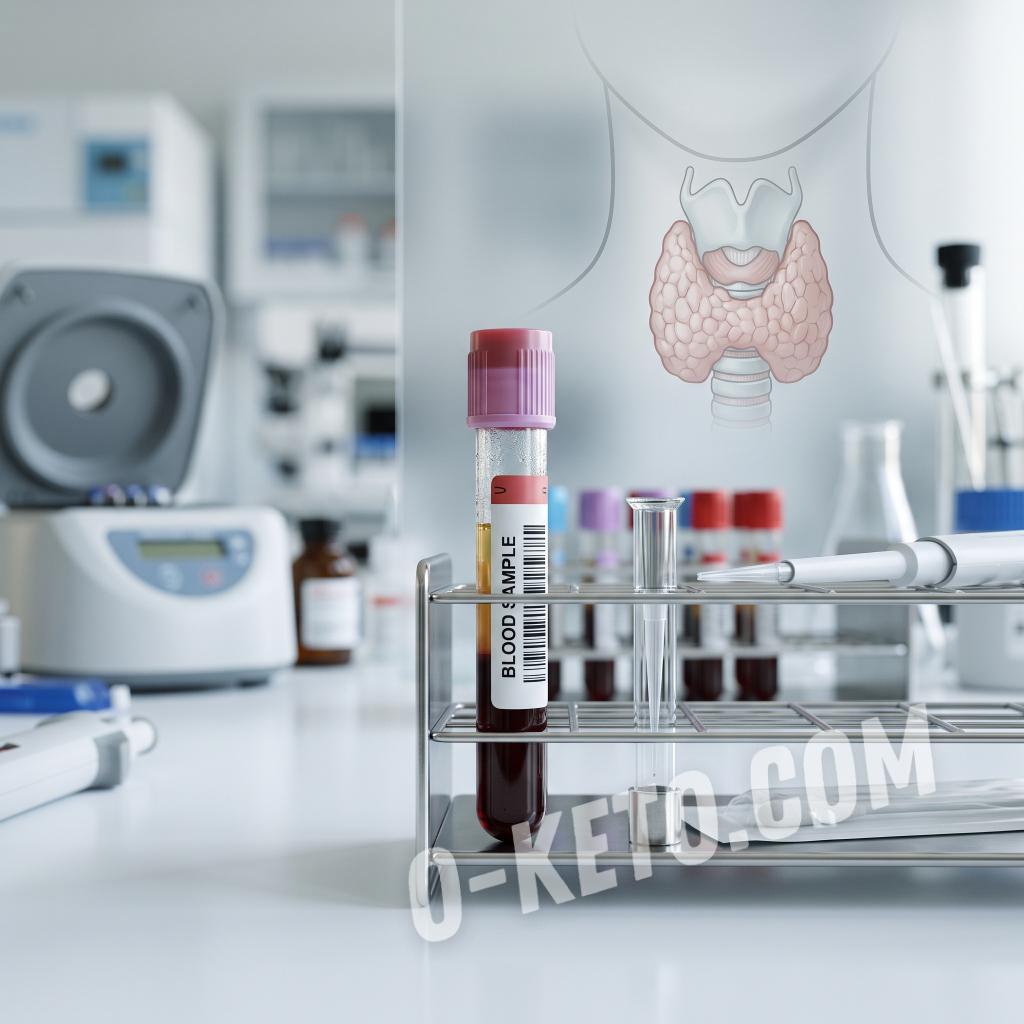
Free T3 is a blood test that measures the active fraction of triiodothyronine. Unlike T4, which largely functions as a reserve and transport hormone, T3 is the thyroid signal that more directly affects metabolic rate, heat production, pulse, bowel motility, energy turnover, nervous-system tone, and the subjective feeling of vitality or exhaustion. That is why this marker becomes especially useful when a person has symptoms suggestive of thyroid dysfunction but TSH alone does not explain the whole picture.
What the test shows
A free T3 test helps clarify whether the tissues are receiving enough active thyroid signaling. It is most informative not as a standalone number but as part of a triad with TSH and free T4. Sometimes TSH is already shifted while T3 is still being held in range. In other situations TSH may not look dramatic, yet free T3 is already low and better explains fatigue, feeling cold, reduced exercise tolerance, edema, constipation, poor concentration, and an overall sense of metabolic slowdown.
An elevated free T3 usually raises concern about a hyperthyroid shift, meaning a state in which the tissues are being overstimulated by thyroid hormones. A low free T3 can point either to insufficient thyroid hormone production or to impaired conversion of T4 into T3, where the reserve hormone is present but the active tissue response is inadequate. For that reason the test is especially useful in complex situations involving chronic stress, inflammatory burden, nutrient deficiencies, and impaired nutritional status.
When the test is especially useful
Free T3 is worth checking when hypothyroidism or hyperthyroidism is suspected, when there is autoimmune thyroid disease, hair loss, persistent fatigue, marked sleepiness, weight swings, internal tremor, tachycardia, altered bowel habits, poor cold tolerance, or unexplained heat intolerance. It is also relevant when TSH or free T4 are already abnormal but the symptoms still do not match the apparent severity of the laboratory picture.
Another practical scenario involves people with signs of a slowed metabolism in the setting of iron deficiency, chronic inflammation, severe calorie restriction, rapid weight loss, or multiple nutrient gaps. In such cases free T3 helps show how far the body has moved into an energy-conserving state and whether impaired conversion is part of the problem. That is why it should be interpreted together with protein status, iron, iodine, selenium, total energy availability, and the broader clinical context.
What can influence the result
Free T3 is affected by more than thyroid disease alone. The result may shift during acute inflammation, strong physiological stress, under-eating, aggressive dieting, protein deficiency, low iron, low iodine, low selenium, low zinc, thyroid hormone replacement, or antithyroid medication use. In active thyroiditis, part of the hormone can leak from injured thyroid tissue into the bloodstream, so the value may temporarily look higher than the person’s stable thyroid function would suggest.
It is also important not to overread a single test taken after an unusual week of poor sleep, illness, alcohol excess, marked calorie deficit, or very heavy training. In that setting the number may reflect short-term adaptation rather than a stable endocrine pattern. For a fair interpretation, the sample should ideally reflect the person’s ordinary life conditions and should be compared with neighboring thyroid and metabolic markers.
How to read it together with other markers
Free T3 should almost never be interpreted alone. The first key neighboring marker is TSH. If TSH is high and free T3 is low, the combination strengthens suspicion of a hypothyroid shift. If TSH is low and free T3 is high, the pattern supports hyperthyroidism or thyrotoxicosis. The second essential neighbor is free T4. Looking at TSH, free T4, and free T3 together helps distinguish between reduced synthesis, impaired conversion, and hormone spillover from inflammatory thyroid tissue.
Ferritin, serum iron, total protein, albumin, inflammatory markers, and symptoms also matter. A low free T3 in the setting of selenium, iodine, or iron deficiency may reflect a thyroid axis working under nutritional limitation rather than a problem isolated to the gland itself. That is why the test is most valuable as part of a system-level interpretation instead of a single-number verdict.
Why the test should not be read in isolation
A common mistake is to see a high or low free T3 and jump straight to a self-diagnosis without reviewing symptoms, TSH, free T4, diet, and overall metabolic state. In real life the same result can mean different things: in one person it reflects true thyroid disease, in another it reflects a phase of thyroiditis, and in a third it reflects stress-related or deficiency-related conversion problems. The clinical value of the test lies not in the abnormal number alone but in how that number fits into the larger pattern.
Free T3 becomes useful when it helps connect symptoms with physiology: whether the tissues are receiving enough active thyroid signaling, whether there is overactivation or metabolic slowing, and which neighboring deficiencies or states may be sustaining that picture. The most practical approach is to read it together with the rest of the thyroid profile and the clinical context instead of treating it as a standalone verdict.
If you have any questions about the term "Free T3", you can ask them to AI. Please note, a low-cost OpenAI model is used. It may answer questions about disease treatment with errors!


 1 / 4
1 / 4 1 / 4
1 / 4

 1 / 4
1 / 4 1 / 4
1 / 4
 1 / 4
1 / 4