


Hyperthyroidism
Excess thyroid hormone accelerates metabolism, increases cardiac strain, amplifies anxiety and weight loss, and should be assessed through TSH, free T4, free T3, the cause of thyrotoxicosis and its complications.



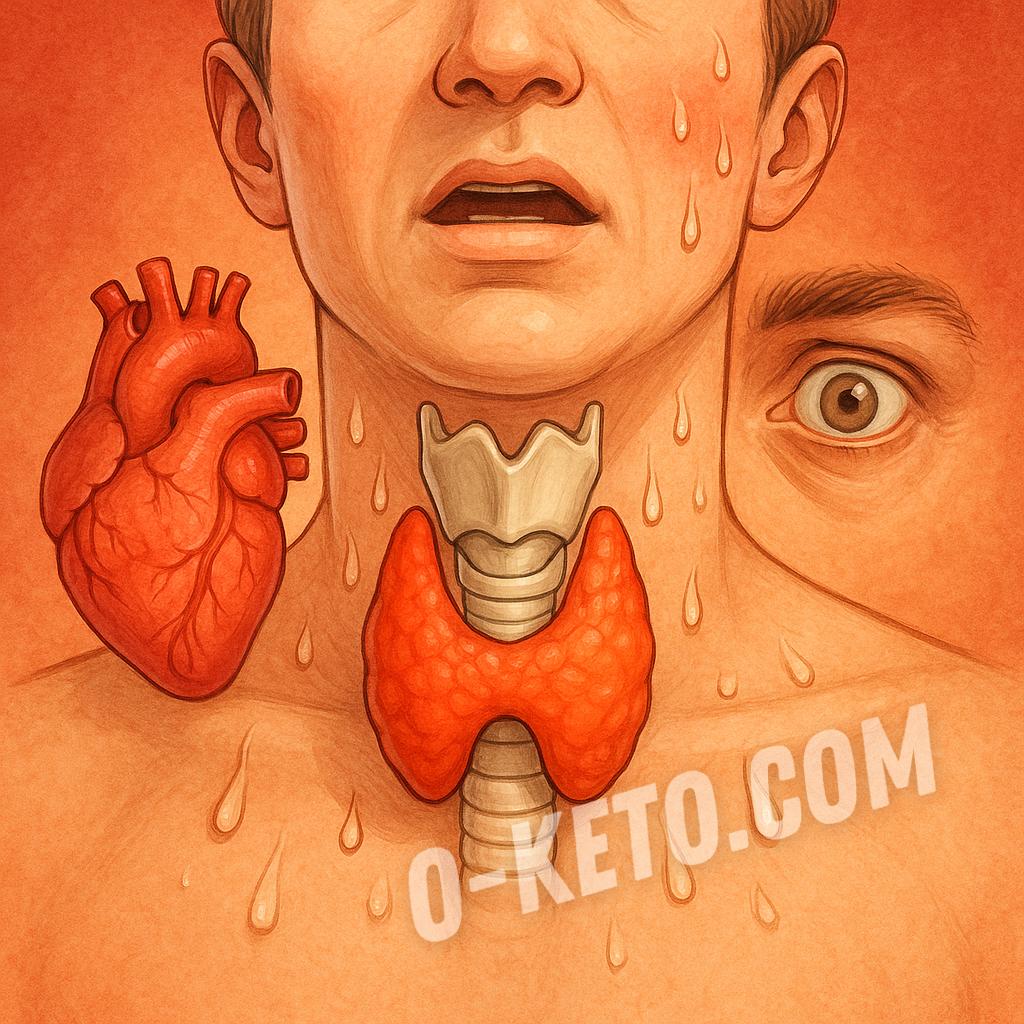
Hyperthyroidism is a state in which thyroid hormone activity is higher than the body needs, so metabolism runs too fast. The heart beats harder and faster, the nervous system becomes more excitable, heat tolerance worsens and weight may fall despite a normal or increased appetite. In practice it is helpful to distinguish true hyperthyroidism, where the thyroid gland produces excess hormone, from thyrotoxicosis as the broader clinical and biochemical effect of too much thyroid hormone in the bloodstream from any source.
Typical symptoms
Common complaints include palpitations, tremor, inner restlessness, irritability, anxiety, sweating, heat intolerance, unintentional weight loss, muscle weakness, more frequent stools and disturbed sleep. Menstrual changes may appear in women. In older adults the picture can be less dramatic and may present more as fatigue, arrhythmia or unexplained weight loss. If the condition persists, bone loss and cardiovascular strain become more important.
These symptoms are not unique to thyroid disease. Similar complaints can occur with anxiety disorders, stimulant excess, severe sleep deprivation, anemia or overtreatment with thyroid medication. That is why symptoms alone are not enough.
Main causes
Graves disease is one of the most common causes, driven by antibodies that overstimulate the thyroid. Toxic nodules, multinodular toxic goiter, thyroiditis with leakage of stored hormone, excessive thyroid medication and less common iodine-related or endocrine causes are also possible. The distinction matters because treatment is different in inflammatory thyroiditis, Graves disease and medication-induced thyrotoxicosis.
Supplements or medications containing high iodine loads can complicate interpretation, especially when people self-treat “thyroid support” without proper laboratory follow-up. That can delay a correct diagnosis.
How the labs are read
The classic profile is low TSH with elevated free T4 and/or free T3, but real-life interpretation is more nuanced. Early disease may show T3 thyrotoxicosis, where T3 is already elevated while T4 is less impressive. Thyroiditis can move through phases. Biotin, pregnancy, severe illness and certain drugs may also distort results or the assay itself.
To understand the cause, clinicians may add TSH receptor antibodies, thyroid peroxidase antibodies, ultrasound and sometimes scintigraphy. Heart rhythm, blood pressure, liver markers and bone health can also become relevant in prolonged or severe thyrotoxicosis.
Nutrition and metabolic context
Food is not a stand-alone treatment for hyperthyroidism, but it influences tolerance and recovery. Because metabolism is accelerated, loss of body weight and lean mass can progress quickly, so adequate energy and protein intake matters. Large caffeine loads, stimulant-heavy pre-workouts and excess alcohol often worsen palpitations and tremor. High-dose iodine supplementation deserves caution until the mechanism of thyrotoxicosis is clear.
Low-carbohydrate eating does not explain the typical biochemical pattern of suppressed TSH with elevated free hormones. Whatever the diet style, the practical priorities are cardiac rhythm, muscle preservation, sleep quality and safe medical treatment when hormone excess is confirmed.
When urgent evaluation is needed
Urgent medical care is needed with severe palpitations, chest pain, shortness of breath, fever, confusion, marked weakness, rapid weight loss, arrhythmia episodes or a combination of thyrotoxicosis with infection and dehydration. Even outside emergencies, untreated hyperthyroidism should not be ignored because it may lead to atrial fibrillation, loss of bone density and progressive exhaustion.
The most useful strategy is not to dismiss everything as stress or a “fast metabolism,” but to confirm the biochemical pattern and identify the source of excess hormone. That is what makes treatment accurate and safe.
Another practical point is the link between hyperthyroidism, eye symptoms and reduced exercise tolerance. Bulging eyes, dryness, double vision or marked weakness in the hips and shoulders are not minor stress reactions and deserve proper endocrine evaluation. The longer hormone excess continues, the more likely it is to affect sleep, work capacity and everyday safety rather than remaining only a laboratory abnormality.
If you have any questions about the term "Hyperthyroidism", you can ask them to AI. Please note, a low-cost OpenAI model is used. It may answer questions about disease treatment with errors!


 1 / 4
1 / 4
 1 / 4
1 / 4
 1 / 4
1 / 4
 1 / 4
1 / 4 1 / 4
1 / 4 1 / 4
1 / 4
 1 / 4
1 / 4