


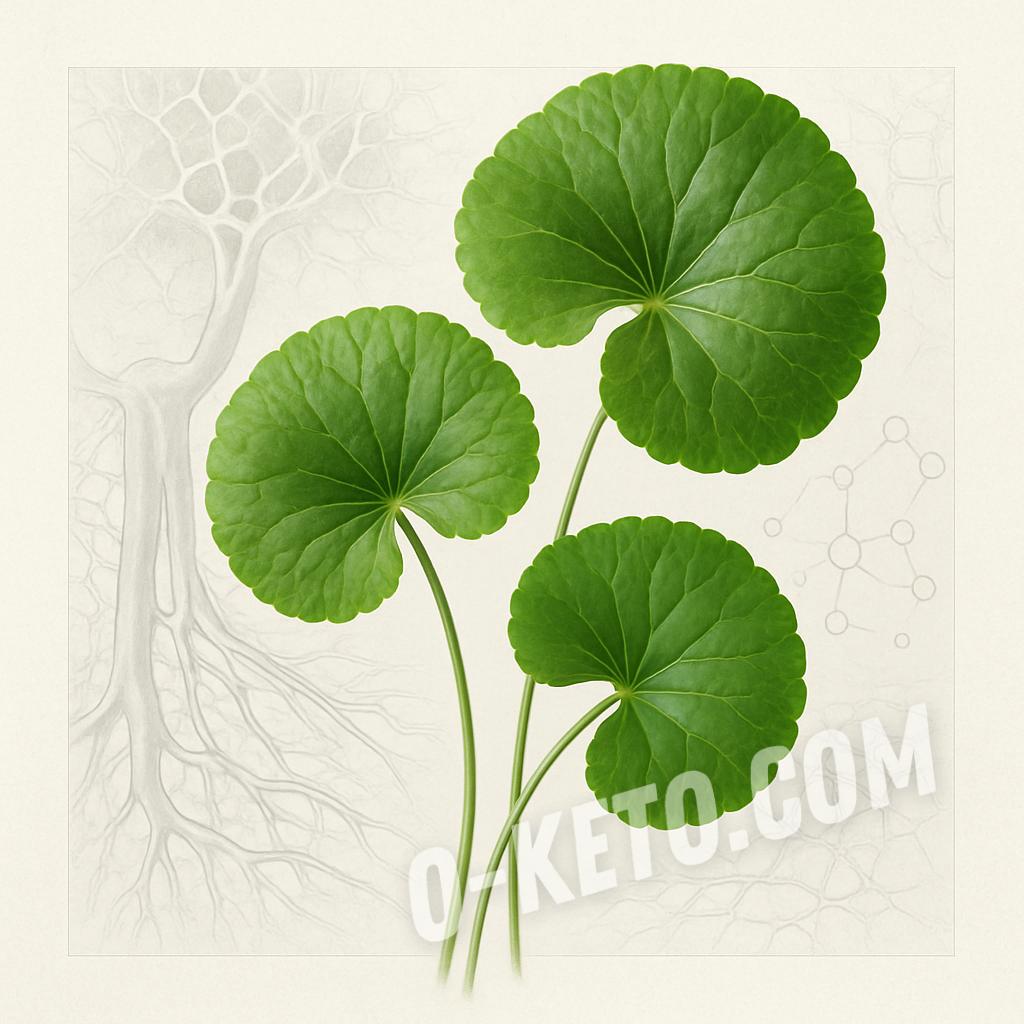

Centella triterpenes are the core active compounds of Centella asiatica, better known as gotu kola. This group includes asiaticoside, madecassoside, asiatic acid, and madecassic acid. These molecules explain much of the plant’s association with microcirculation, connective tissue, skin recovery, and gentle support for cognitive endurance.
Why they matter
When gotu kola products are compared for quality, the meaningful question is often not just the plant name but the amount of total triterpenes or selected glycosides. Some labels show total triterpenes, while others highlight asiaticoside and madecassoside separately. That matters because leaf tea, powdered herb, and a standardized extract are not equally concentrated in active compounds.
Where they occur
On this site the practical source is gotu kola. Concentrated extracts can carry much higher triterpene levels than plain leaf or powder, so product comparison becomes far more useful when the label provides total triterpene content or a clear standardization for the key glycosides.
Practical benchmarks
There is no official daily requirement for centella triterpenes. This page uses a practical milligram benchmark so products can be compared and readers can see whether they are looking at a simple herb form or a more potent extract. For long-term use, moderate dosing and predictable standardization usually matter more than chasing the loudest number on a label.
What to consider
Gotu kola should not be reduced to one effect only. For one person it is a gentle support tool during mental fatigue, while for another it is part of longer work on connective tissue and microcirculation. The triterpene value on this page is therefore mainly a quality marker for the extract rather than a stand-alone dosing target.