


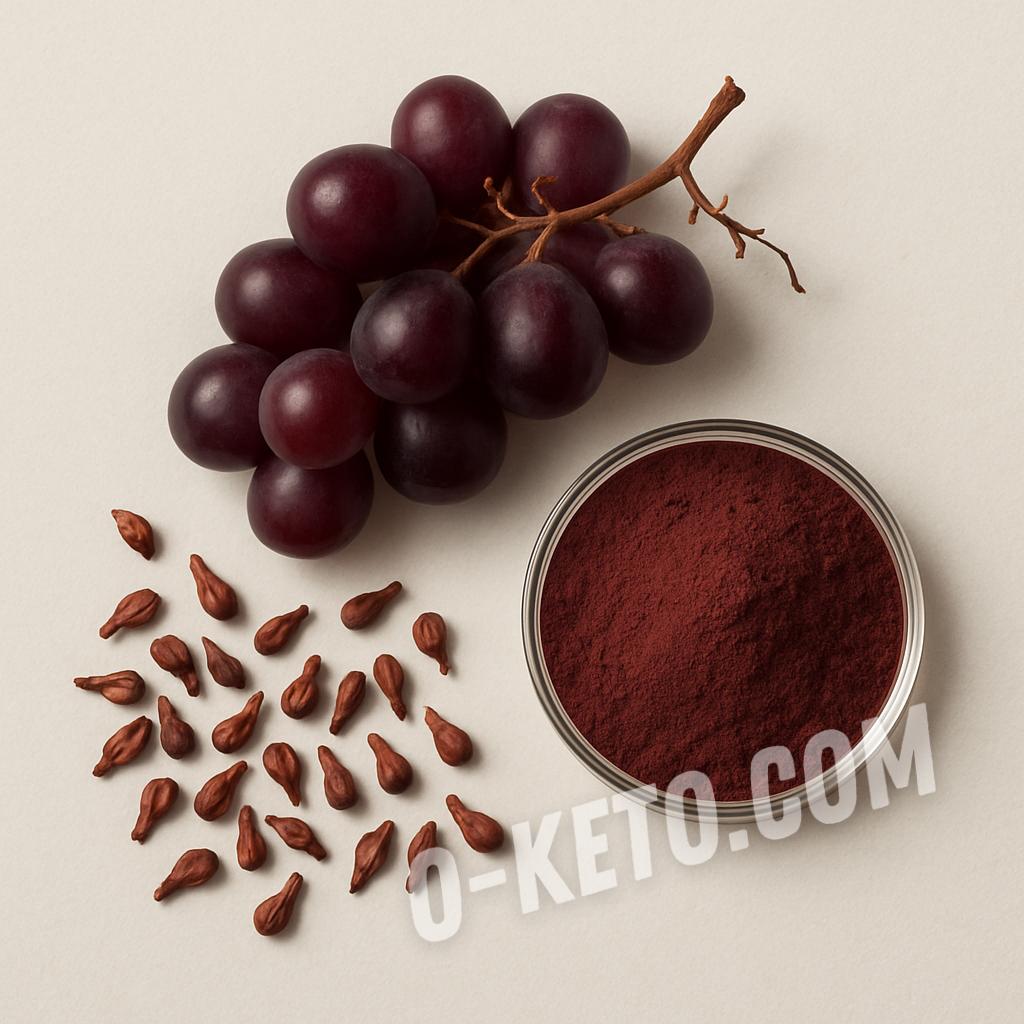

Proanthocyanidins are a large family of plant polyphenols within the flavan-3-ol group. In practice they are most closely associated with grape seeds, cocoa, cranberry, blueberry, and several other berries, where they contribute to the antioxidant profile of the raw material. For this nutrient page, the practical point is that these compounds are often used as the main quality marker when comparing grape seed extracts and other concentrated polyphenol products.
What they do
Proanthocyanidins participate in antioxidant defense, help buffer oxidative stress, and are often discussed in relation to vascular tone, endothelial support, and microcirculation. That does not make them a universal solution for every vascular complaint. A more accurate view is that they are one of the useful polyphenol groups that can support a broader nutrition or supplement strategy when oxidative and vascular load matters.
Where they occur
The most concentrated source on this site is usually grape seed extract, especially when the label clearly states standardization for OPCs or total proanthocyanidins. Ordinary foods contain them too, but in much smaller and more variable amounts that depend on cultivar, growing conditions, processing, and extraction method.
Practical benchmarks
There is no official daily requirement for proanthocyanidins. This page uses a practical milligram benchmark so products can be compared and readers can see whether an extract is weak or concentrated. For grape seed extracts, the decisive point is usually the standardized proanthocyanidin fraction rather than the gross capsule weight.
What to watch
If the label does not disclose OPC or proanthocyanidin content, product comparison becomes much less meaningful. It is also important not to confuse grape seed extract with grape seed oil, because they play very different roles. People with sensitive digestion often do better starting with moderate amounts and checking tolerance first.