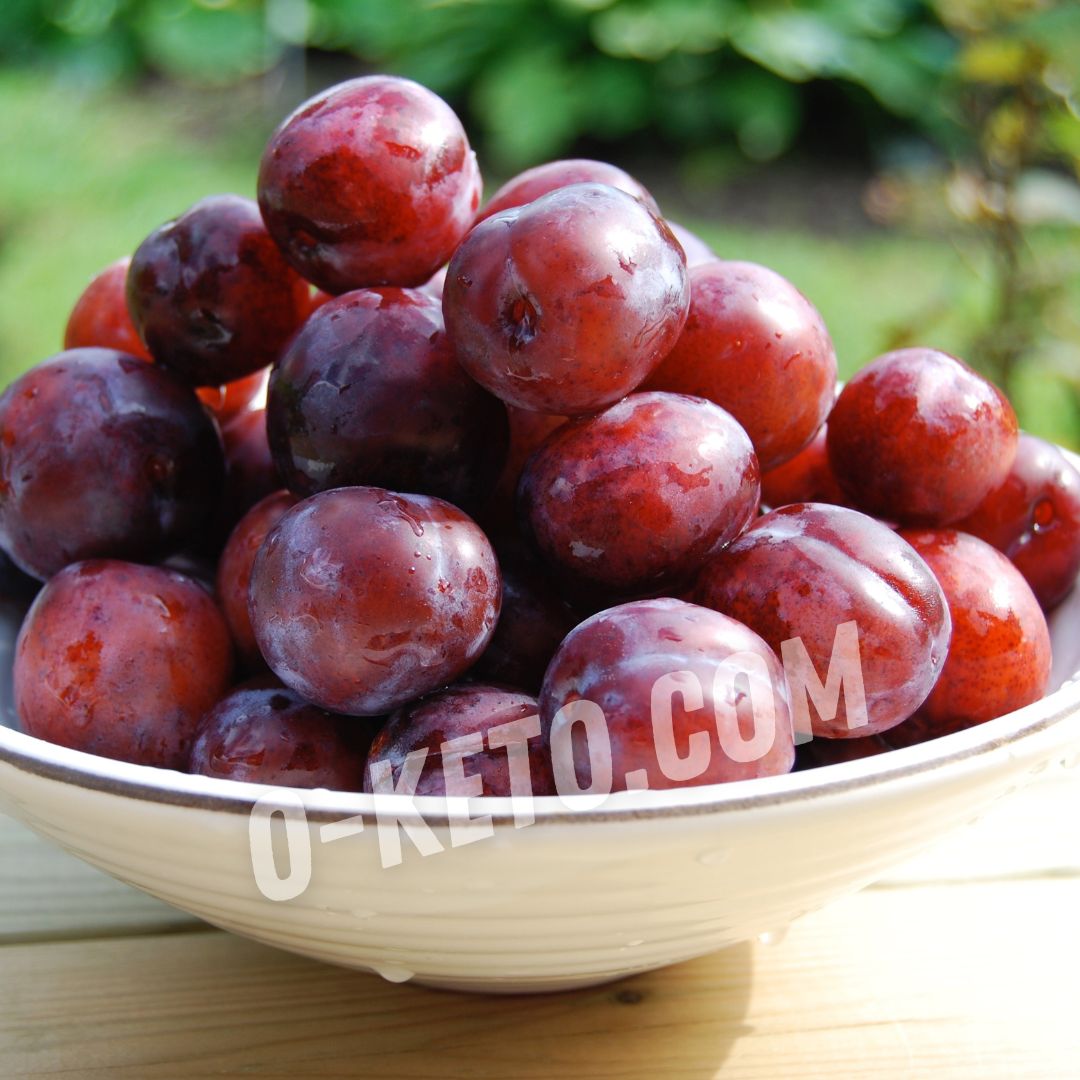

Plum is a juicy stone fruit from the rose family. Varieties differ widely: some plums are small and tart, while others are large, honeyed, and dessert-like. The skin may be blue, purple, red, yellow, or greenish, and the flavor depends on variety and ripeness. In cooking, plums are used fresh, in sauces, salads, sugar-free desserts, and as a tart accent for meat.
For keto and LCHF, plum is not an unlimited food. It contains sugar, and sweet ripe fruit is easy to eat without noticing the portion. At the same time, the flavor is strong enough for small amounts: a few slices in a salad, a little plum sauce with duck or pork, or half a fruit in cottage-cheese cream. This works better than eating a separate plate of fruit.
Health benefits of plums
Plum pectin, sorbitol, organic acids, and polyphenols are studied in relation to digestion, bowel function, and antioxidant protection. The proposed benefits include:
- support for regular bowel movements through water, fiber, and sorbitol;
- an additional contribution of polyphenols to antioxidant protection;
- the nutritional contribution of potassium, vitamin K, and organic acids.
Prunes contain less water, so sorbitol, natural sugars, and carbohydrates become more concentrated. Fresh plums and dried fruit therefore provide different serving sizes and require different amounts to deliver a similar flavor.
Nutritional value
Per 100 g, fresh plums usually contain about 46 kcal, roughly 0.3 g of protein, 0.1 g of fat, and around 11 g of carbohydrates, much of it from sugars. The glycemic index is often listed around 24, and the glycemic load per 100 g around 6. These numbers suggest a moderate load, but they do not remove the need to count carbohydrates.
Plums contain vitamin C, vitamin K, B vitamins, potassium, magnesium, iron, organic acids, pectin, and polyphenols. In practical eating, the most important feature is the balance of acidity, sweetness, and fiber. Plum can make a low-carb dish more interesting, but it should not become the main fruit dessert on strict keto.
Place in keto and LCHF
On strict keto, plum is usually limited to 30-50 g, especially if the same day already includes berries, nuts, dairy, or vegetables with carbohydrates. That portion gives flavor without taking the whole daily limit. One large sweet plum may be too much for a menu built around 20-30 g of net carbohydrates.
In a more flexible LCHF diet, plum can appear seasonally in larger amounts if it fits the overall plan. It is better paired with protein and fat: cottage cheese, unsweetened Greek yogurt, cheese, nuts, duck, pork, or pâté. Then plum acts as an accent rather than a quick sweet snack.
How to use
Fresh plum can be sliced thinly into a salad with arugula, cheese, and nuts, added to cottage cheese or yogurt, served with meat, or mixed with herbs, olive oil, and vinegar. For a sauce for pork or duck, warm plum with a little water, salt, pepper, thyme, and butter, then blend it or leave it slightly chunky.
For sugar-free desserts, plum pairs well with cream, mascarpone, almonds, cinnamon, and vanilla. In purees and sauces, however, the portion is harder to judge by eye, so fruit is best weighed before cooking. Dried plums and prunes are separate products: their sugars are much more concentrated, and they are usually inconvenient for strict keto.
How to choose
A good plum should be fragrant and firm, without mold, cracks, wet spots, or sour fermentation smell. A light whitish bloom on the skin is normal; it is the natural waxy coating. Very firm fruits will be more tart and dense, while very soft ones should be used soon for sauce or cream.
If buying frozen plum, check that the pieces are not covered with thick ice and not stuck in one heavy block. In prepared purees, sauces, and fillings, read the ingredients: sugar, syrup, apple puree, and starch quickly turn a moderate fruit accent into a sweet addition.
Limits and storage
Plums may cause discomfort in people sensitive to acidic fruits or larger amounts of fructose. Start with a small portion if you rarely eat stone fruit. If you monitor glucose strictly, test your own response to the specific variety and portion.
Store ripe plums in the refrigerator and wash them right before eating, not in advance. Unripe fruit can be left at room temperature briefly. Cut plums darken and release juice quickly, so use them the same day. For sugar-free storage, freeze halves or slices in small portions.
Substitutes
If you need a sweet-tart fruit accent, use cherry plum, a little apricot, raspberry, red currant, cranberry, lingonberry, or lemon with berries. For meat sauce, cherry plum and sugar-free cranberry are the closest options. For cottage cheese and yogurt, berries are often easier because their portion is simpler to control in low-carb meals.