


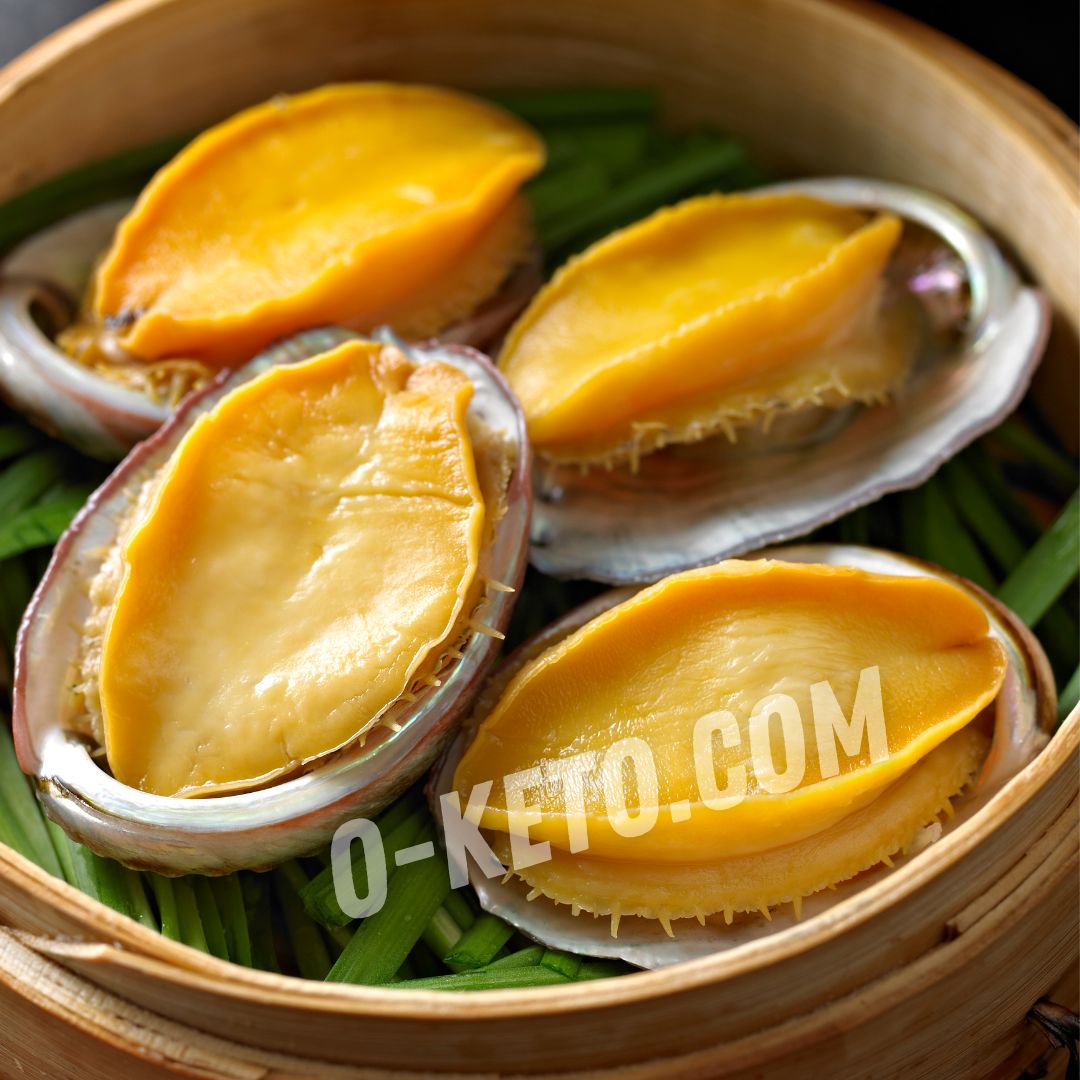

Abalone, also called sea ear, is an edible marine mollusk with dense muscle tissue and a delicate flavor. In Asian, Australian, New Zealand and coastal cuisines it is valued for its firm texture, sea aroma and rarity. It is eaten fresh, stewed, quickly pan-fried, added to soups, served canned or dried for broths.
Its nutrition fits low-carb eating well: per 100 g, common values are about 90 kcal, 18 g of protein, 1 g of fat and 0 g of carbohydrates, with a glycemic index of 0. Vitamin B12, vitamin E, zinc, selenium and other minerals may also be present. However, it is not a fatty seafood, so on keto it is usually paired with butter, sauce or another fat source.
Nutrition
Abalone is a protein food with minimal carbohydrates. It is lighter in calories than fatty fish, but denser in texture than many shellfish. It contains plenty of protein and little fat, so by itself it may be too lean for a keto plate.
Minerals and vitamin B12 make it an interesting seafood in a varied diet. But its value is not in promises of special effects; it is in the combination of protein, marine flavor and almost zero carbohydrates. Freshness, origin and cooking method matter most.
Is It Keto-Friendly?
Abalone fits keto well when prepared without sweet sauces, starch breading, noodles, rice or thick glazes. In plain form it has almost no carbohydrates, but restaurant abalone dishes often contain oyster sauce with sugar, starch, sweet rice wine or sweet marinades.
For keto, simple preparations are better: butter, garlic, lemon, olive oil, herbs, sugar-free soy sauce, ginger and a little chili. If abalone is canned, check the liquid: syrup and sweet sauce are worse than water, salt or natural juices.
How to Use It
The main task is not to make the mollusk tough. Abalone is either cooked very quickly in thin slices or simmered gently for a long time. The middle path often gives a rubbery texture. Before frying, the meat is sometimes lightly pounded to soften the fibers.
Practical options include:
- thin slices in butter with garlic;
- gentle stewing in broth with ginger and herbs;
- an addition to cucumber, avocado and sesame salad;
- seafood soup without noodles or starch;
- canned abalone with lemon and olive oil.
How to Choose and Store
Fresh abalone should smell cleanly of the sea, without ammonia or rotten notes. The meat should be firm and moist, without slime or gray spots. For frozen abalone, intact packaging and no thick ice layer are important because heavy ice may suggest thawing and refreezing.
Fresh mollusk spoils quickly, so it should be cooked on the day of purchase or kept strictly chilled. Canned abalone is stored according to the date on the can; after opening it should be moved to a closed container and used quickly.
Limits and Substitutes
Abalone is a mollusk, so it is unsuitable for people with shellfish allergy. Legal origin also matters: harvesting is restricted in some regions, so a clear supplier is preferable.
Depending on the dish, it can be replaced with scallops, squid, octopus, whelk or firm white fish, but the texture will differ. If a low-carb seafood base is needed, shrimp, mussels, scallops or fish work; if firm texture is the goal, squid and octopus are closer.
Portion and Common Mistakes
A serving of abalone is usually small: it is expensive and dense, more often used as an accent than as a large protein base. The main mistake is cooking it too long over high heat. The mollusk quickly becomes tough, and even a good sauce cannot fully repair the texture. Another mistake is serving it with no fat; for keto, butter, avocado, cream sauce or olive oil sauce work better.
Canned, Dried and Fresh Abalone
The product form changes how it should be handled. Fresh abalone needs the most careful cooking and a short time in the pan when sliced thinly. Canned abalone is already softer and convenient for cold serving, soup or quick warming, but the liquid should be checked. Dried abalone is usually soaked and cooked gently for a long time for broths and special dishes.
For keto, fresh or canned abalone without a sweet liquid is easiest to control. If a restaurant sauce is used, it is worth checking whether it contains sugar or starch: the mollusk itself has almost no carbohydrates, but a thick glaze can change the whole dish.


