


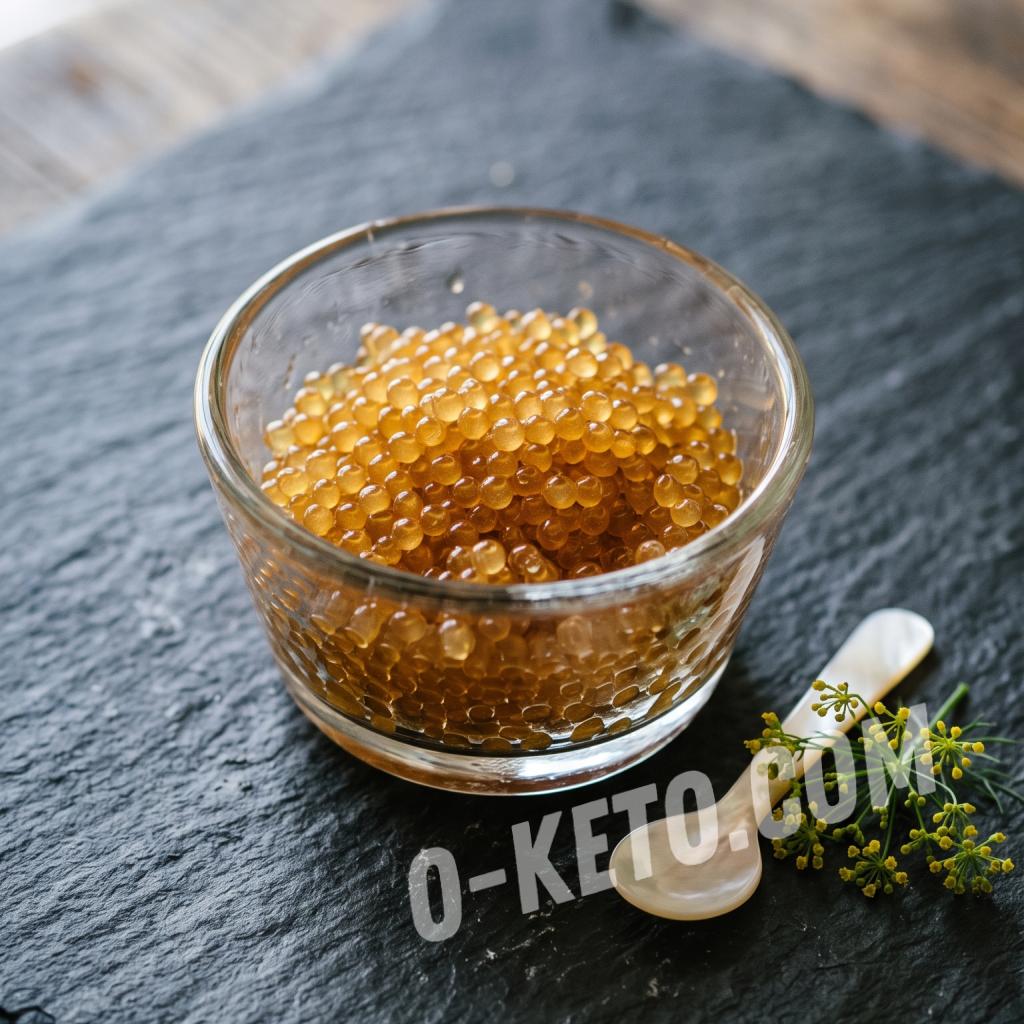

Zander roe is the roe of pike-perch, a freshwater predatory fish valued for delicate flesh and a relatively clean, restrained flavor. As a food product, this roe is usually milder and less oily than salmon roe, while still remaining nutrient-dense and distinctly savory. It is used for lightly salted preparations, chilled appetizers, and small concentrated servings where texture and salinity matter as much as volume.
For a keto diet, zander roe is generally a good fit when it is a simple roe product without sugar, flour, or sauce-heavy processing. It contains little to no carbohydrate, while most of its energy comes from protein and fat. The main practical limits are usually salt load, portion size, and the quality of handling rather than carbohydrate content.
What kind of product it is
Zander is a freshwater fish with a fairly lean, refined flesh compared with some oilier fish species. Its roe reflects that character. The taste is usually gentler than strongly marine caviar products, and the texture can work well in lightly salted spreads, cold plates, and carefully portioned appetizers. Depending on the preparation method, it may be sold raw for processing, lightly salted, pasteurized, or packed as a finished snack product.
The exact nutrient profile can vary with maturity, season, salting level, and moisture loss during processing. Because of that, general reference numbers should be treated as a nutritional baseline rather than a guarantee for every jar or homemade batch. Ready-to-eat products can differ substantially, especially in sodium and water content.
Nutrition and keto context
Zander roe is a high-protein product with moderate fat and essentially no meaningful carbohydrate. That makes it convenient for keto and LCHF meals when used in realistic portions. It brings flavor intensity, umami, and nutrient density without the starch burden that comes with bread-based canapes or grain-heavy side dishes.
Like other fish roe products, zander roe can contribute more than just protein. Roe often provides choline, selenium, phosphorus, vitamin B12, folate, and a range of amino acids, with some contribution from omega-3 fatty acids depending on species and handling. This does not make it a mandatory “superfood,” but it does make it more nutritionally interesting than a purely decorative salty topping.
How to choose it
When buying zander roe, the ingredient list matters. A simple product with roe, salt, and minimal additional handling is usually easier to assess than a processed spread with oil, sugar, starch, stabilizers, and flavoring agents. Keto suitability often declines not because of the roe itself, but because of what manufacturers add around it.
Texture and freshness also matter. Good roe should not smell sour, stale, or unpleasantly oxidized. It should not look unnaturally dried out or mashed into a dense dull mass. If the product is chilled, cold-chain handling becomes part of the quality assessment.
How it is used
Zander roe is usually best in small, deliberate servings rather than as a bulk protein source. It works well with eggs, butter, cream cheese, cucumber, dill, green onion, and low-carb serving bases. It can be used for appetizer plates, holiday snacks, and compact savory bites where the roe remains the focus rather than being hidden under sweet or starchy toppings.
For keto use, it makes sense to avoid the classic pairing with wheat bread, sugary sauces, or conventional pancakes. Lower-carb serving ideas include cucumber slices, lettuce cups, egg halves, cheese crisps, or keto bread made from alternative flours.
Limits and practical cautions
The main concerns with zander roe are salt concentration, product quality, and food safety. People who need to control sodium closely may need smaller portions. Extra caution is also reasonable with home-salted roe if sourcing, storage, or pasteurization are uncertain. This is not a product where careless handling is worth the risk.
The practical keto conclusion is simple: zander roe usually fits well because carbohydrate load is minimal, but it should still be treated as a concentrated salty delicacy rather than as an unlimited snack. Quality, handling, and portion size matter more here than any abstract label of luxury or rarity.


