


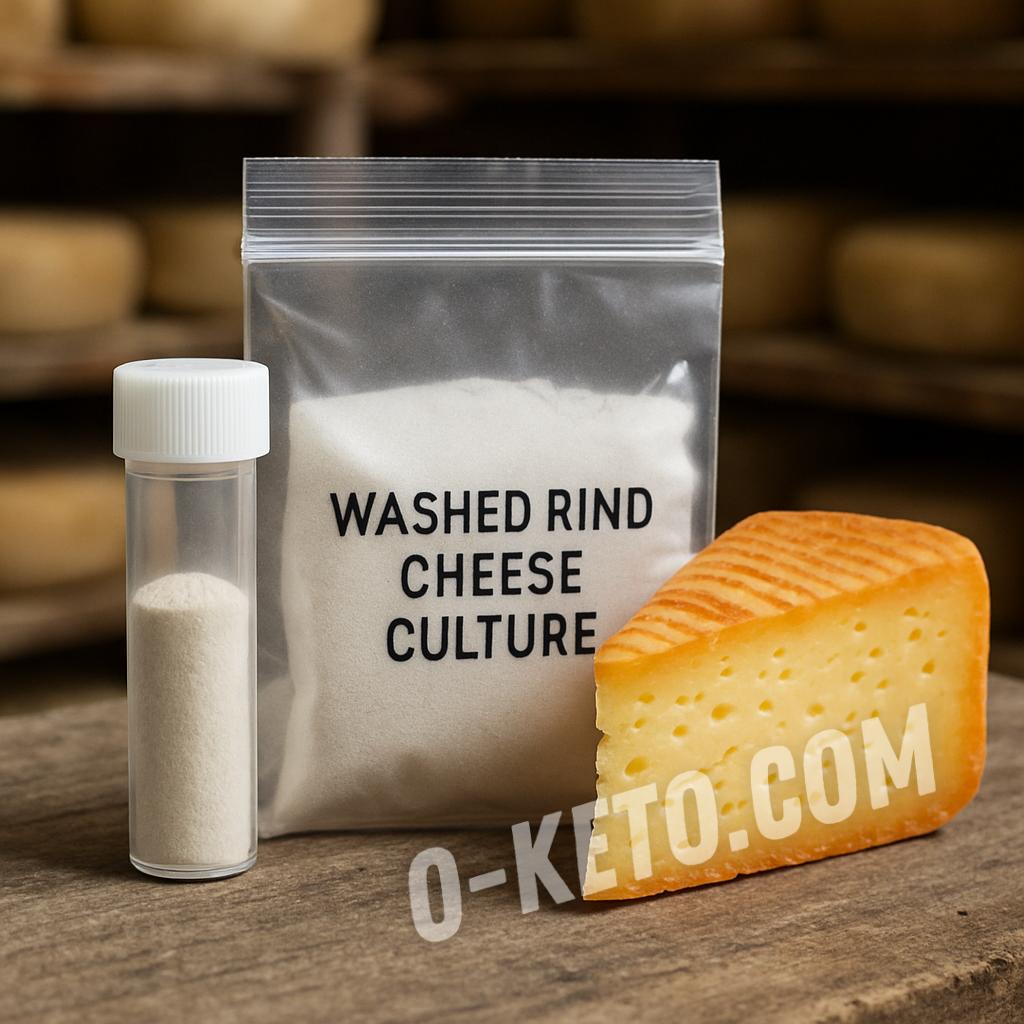

Brevibacterium linens is a culture for washed-rind cheeses and orange-red smear ripening. It is not a regular food ingredient or a spice, but a live or freeze-dried culture used in very small amounts to guide fermentation, ripening, surface development or storage behavior.
Brevibacterium linens is associated with orange rind color, pronounced aroma and flavor development in cheeses such as Munster, Limburger, Tilsit and other washed-rind styles. Good growth requires a prepared surface, humidity, salt, temperature and regular washing.
What it is
These cultures are sold as technological ingredients: powder, granules, vials or sachets with selected strains. Their purpose is predictable microbiological action, not protein, fat or carbohydrate contribution. The full culture name matters because strains within the same species can differ in activity, aroma, growth speed and suitable conditions.
Nutrition and keto
For keto and LCHF, such cultures are normally not counted as a source of calories or macros. The dose per batch is too small for a nutrition table to be meaningful. The finished cheese, sausage or other product is determined by milk, meat, fat, salt, fermentation sugars and the real serving size. If the carrier contains sugar, dextrose or maltodextrin, check the label and evaluate it in the context of the whole batch.
How to use
Use the culture only according to the supplier instruction or a tested process sheet. Dosage, temperature, humidity, salt, pH, fermentation time, ripening time and compatibility with other cultures all matter. Do not replace one culture with another only because the name looks similar.
How to choose and store
Choose products with exact culture or strain names, expiry date, storage conditions and clear dosage. Most cultures are sensitive to heat and moisture; store them refrigerated or frozen if required, close quickly after opening and avoid wet spoons or contaminated tools.


