


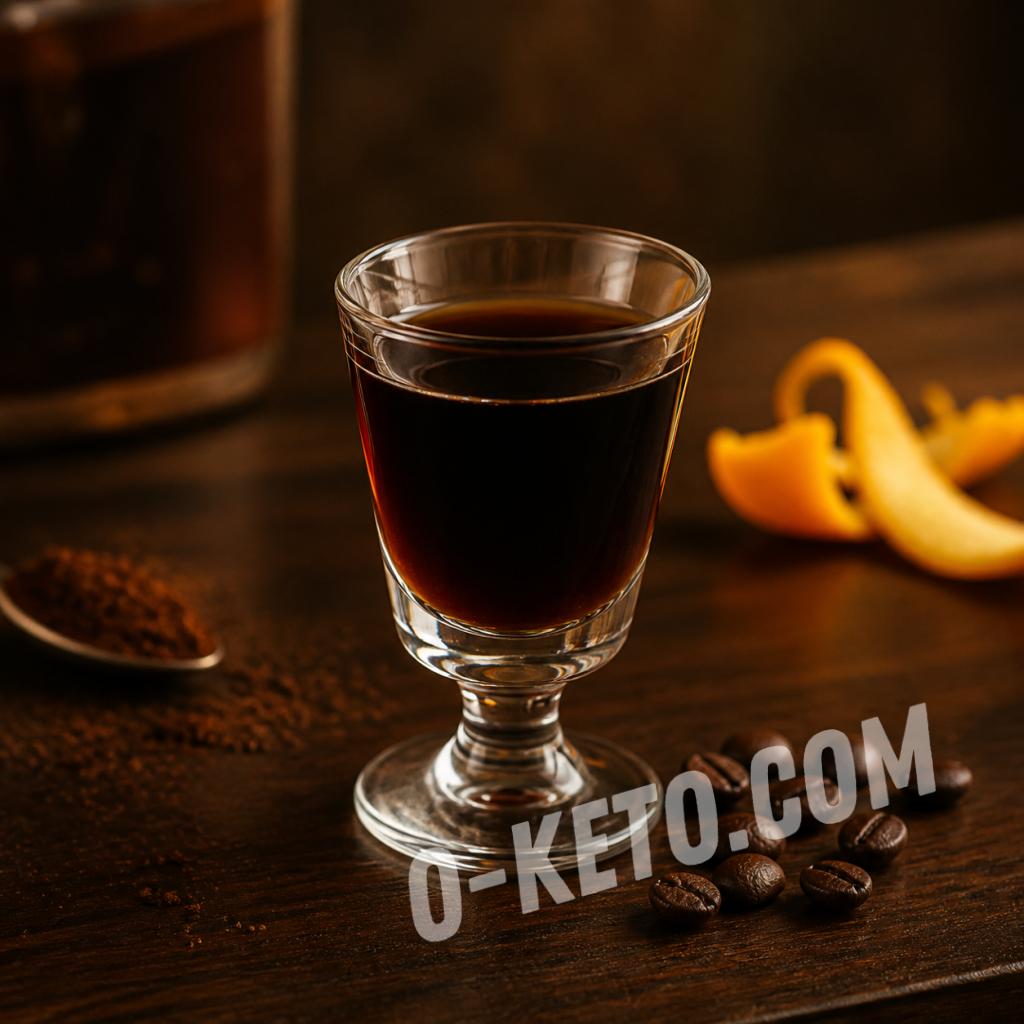

Coffee liqueur is a sweet alcoholic drink flavored with coffee. It is made from a spirit or distillate, coffee infusion or extract, sugar and water; some formulas also contain cream, caramel, vanilla or spices. Strength and sweetness vary widely, so the same name does not guarantee the same composition.
Composition and flavor
In clear and dark coffee liqueurs, roasted beans, sugar and alcohol create the main profile. Some taste like chilled espresso with a bitter edge, while others are much sweeter and suggest caramel or vanilla. Cream versions have a separate dairy base and require stricter refrigeration after opening.
A reference coffee liqueur without cream has almost no protein or fat and a high carbohydrate share from sugar. Caffeine may be present, but the amount is not always declared and depends on extraction. Do not transfer the nutrition panel from one brand to another: homemade coffee liqueur, a 53-proof commercial drink and a cream liqueur are different products.
How to use it
Coffee liqueur is served in small portions neat, over ice, or added to coffee, desserts and cocktails. It pairs with cream, milk, chocolate, vanilla, cinnamon and citrus zest. In a hot drink, add it after taking the cup off the heat so the aroma is better preserved, although the alcohol remains part of the recipe.
In baking and creams, treat it as a liquid sweetener as well as a flavoring. Extra sugar may no longer be necessary. When it is used to soak cake layers, calculate the total volume and the portion first: sweetness can hide how much carbohydrate and alcohol the dessert contains.
How to choose it
Check the strength, sugar or carbohydrate declaration, presence of cream and the after-opening instructions. For a non-dairy drink, a clear list such as water, spirit, coffee, sugar and flavoring is easier to assess. Syrup-heavy, condensed-milk and cream liqueurs should not be compared with a black coffee liqueur using one nutrition panel.
A strength of 53 proof is approximately 26.5% alcohol by volume. This is a full alcoholic drink, not simply coffee with a trace of spirit. For cocktails, decide how much sweet liqueur belongs in one serving before mixing the rest of the ingredients.
Keto and carbohydrates
The reference 53-proof coffee liqueur provides about 47 g of carbohydrate per 100 g, almost all as sugars. Standard sweet coffee liqueur is therefore poorly suited to a strict keto diet. Even a 30–35 ml pour can contribute a noticeable carbohydrate load; the alcohol content also needs to be considered separately from the macro panel.
The phrase “coffee flavored” does not mean sugar-free. Unsweetened versions exist, but their sweeteners and additives must be checked on the specific bottle. For a low-carbohydrate cocktail, people generally use unsweetened coffee and a measured suitable flavoring rather than treating sweet liqueur as a neutral ingredient.
Limitations
This alcoholic drink is unsuitable for children, pregnancy, medical conditions requiring abstinence and anyone advised by a clinician to avoid alcohol completely. Alcohol can interact with medicines and can worsen appetite and sleep control. Cream liqueurs also contain dairy and spoil faster after opening.
Storage
Keep an unopened coffee liqueur bottle in a cool, dark place unless the manufacturer says otherwise. Strong heat and direct light can change the aroma and color. After opening, close the bottle tightly and follow the label instructions; cream liqueur commonly requires refrigeration.
Check the smell, color and texture before serving. Sugar crystals can appear after temperature changes in a sweet drink, but a sour, rancid or curdled dairy smell means the product should be discarded. Do not transfer the liqueur to an unlabelled container, because the opening date and ingredient information can be lost.
Substitutes
For coffee flavor without alcohol, use strong chilled coffee, coffee extract or a sugar-free decaffeinated syrup. In desserts, replace the liqueur with coffee, vanilla and a little cocoa. The substitute changes sweetness, moisture and aroma, so add it gradually and adjust the recipe after tasting.


