


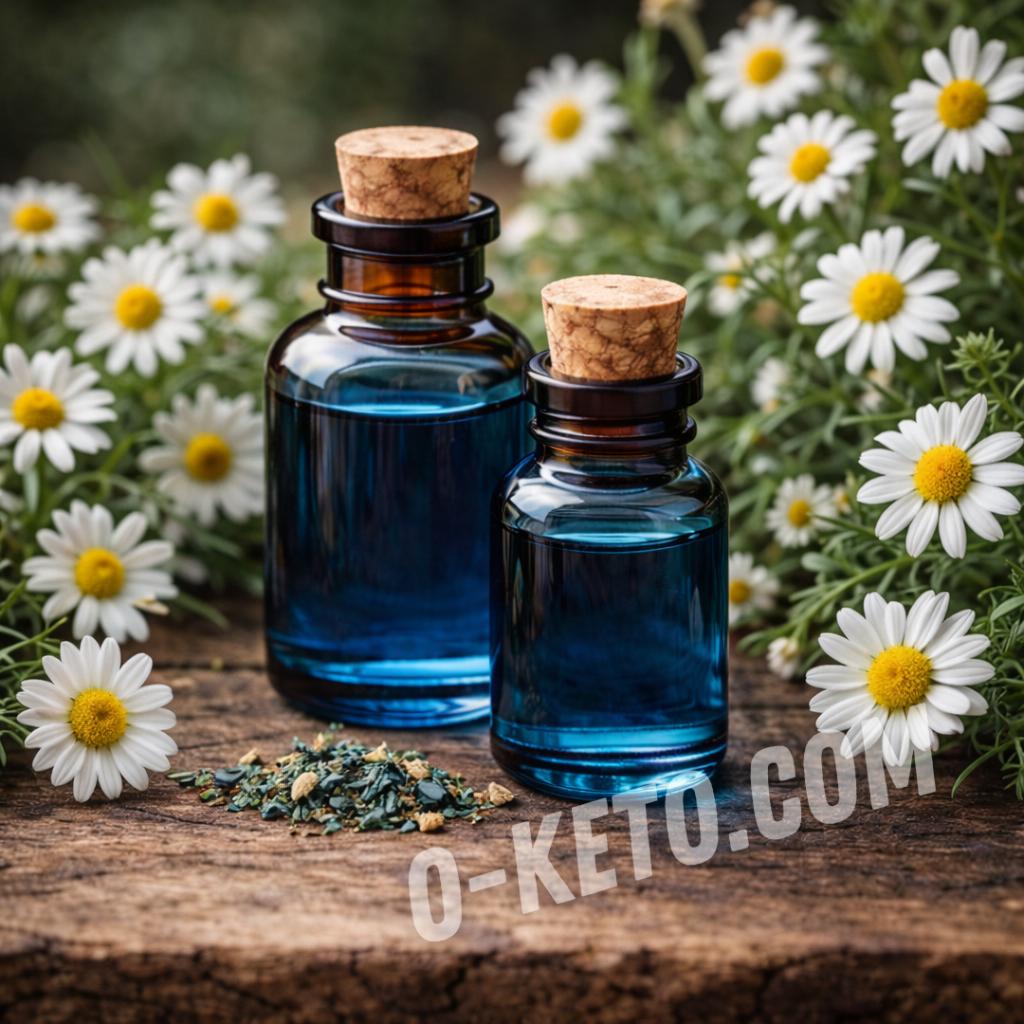

German chamomile essential oil (Matricaria recutita) is considered one of the mildest yet therapeutically significant essential oils. It is obtained through steam distillation from the fresh flowers of the plant, resulting in a characteristic blue color of the oil due to the formation of chamazulene. The aroma of German chamomile is warm, herbal, slightly sweet, with a pronounced calming effect, making this oil particularly valuable when dealing with inflammation, pain, and nervous tension.
Historically, chamomile has been used as a universal remedy for calming, healing, and relieving spasms. In modern aromatherapy and natural medicine, German chamomile oil is regarded as one of the key means for supporting the skin, digestive system, and psycho-emotional balance.
Chemical Composition and Action Features
German chamomile essential oil has a unique composition that fundamentally distinguishes it from Roman chamomile and other species. The key active substances are chamazulene, alpha-bisabolol and its oxides, as well as sesquiterpenes.
The main physiological properties of the oil are:
- pronounced anti-inflammatory action;
- anti-allergic effect;
- calming influence on the nervous system;
- spasmolytic action;
- support for tissue regeneration.
Chamazulene and bisabolol make the oil particularly effective in acute and chronic inflammatory processes, including those affecting the skin and mucous membranes.
Impact on the Nervous System and Emotional State
German chamomile is considered one of the best oils for relieving internal tension, anxiety, and irritability. Unlike stimulating oils, it acts gently, reducing the reactivity of the nervous system and helping the body transition into a state of recovery.
The oil is used for:
- anxiety and internal restlessness;
- sleep disturbances;
- emotional overload;
- in children and individuals with heightened sensitivity.
Chamomile blends well with lavender, neroli, frankincense, rosewood, and immortelle, enhancing their sedative and stabilizing effects.
Application in Skin Care
In cosmetology, German chamomile essential oil is valued as a remedy for sensitive, inflamed, and reactive skin. It helps reduce redness, itching, and irritation, as well as accelerates the recovery of the skin barrier.
Main areas of application include:
- skin care for dermatitis and eczema;
- support for skin with allergic reactions;
- post-sun and aggressive procedure skin care;
- working with couperose and redness.
The oil is used in minimal concentrations, added to creams, serums, masks, and oils for the face and body.
Support for the Digestive System
One of the classic applications of German chamomile is addressing spasms and inflammation of the gastrointestinal tract. In aromatherapy, it is used externally, in massage blends for the abdomen, as well as through inhalations.
It is used for:
- spastic pain;
- bloating and discomfort;
- stress-related reactions from the gastrointestinal tract.
Contraindications and Precautions
German chamomile essential oil is considered safe for external use, but standard precautions should be followed.
Main contraindications include:
- allergy to plants in the Asteraceae family;
- pregnancy without specialist consultation;
- individual sensitivity.
Recommendations for Safe Use
For proper application, it is recommended to:
- use the oil only in diluted form;
- conduct a skin test before the first use;
- not use internally without a specialist;
- avoid exceeding dosages.
German chamomile essential oil is one of the most versatile and therapeutically valuable oils. It is suitable for addressing inflammation, pain, stress, and sensitive skin, providing gentle yet profound support to the body during physical and emotional strain.


