


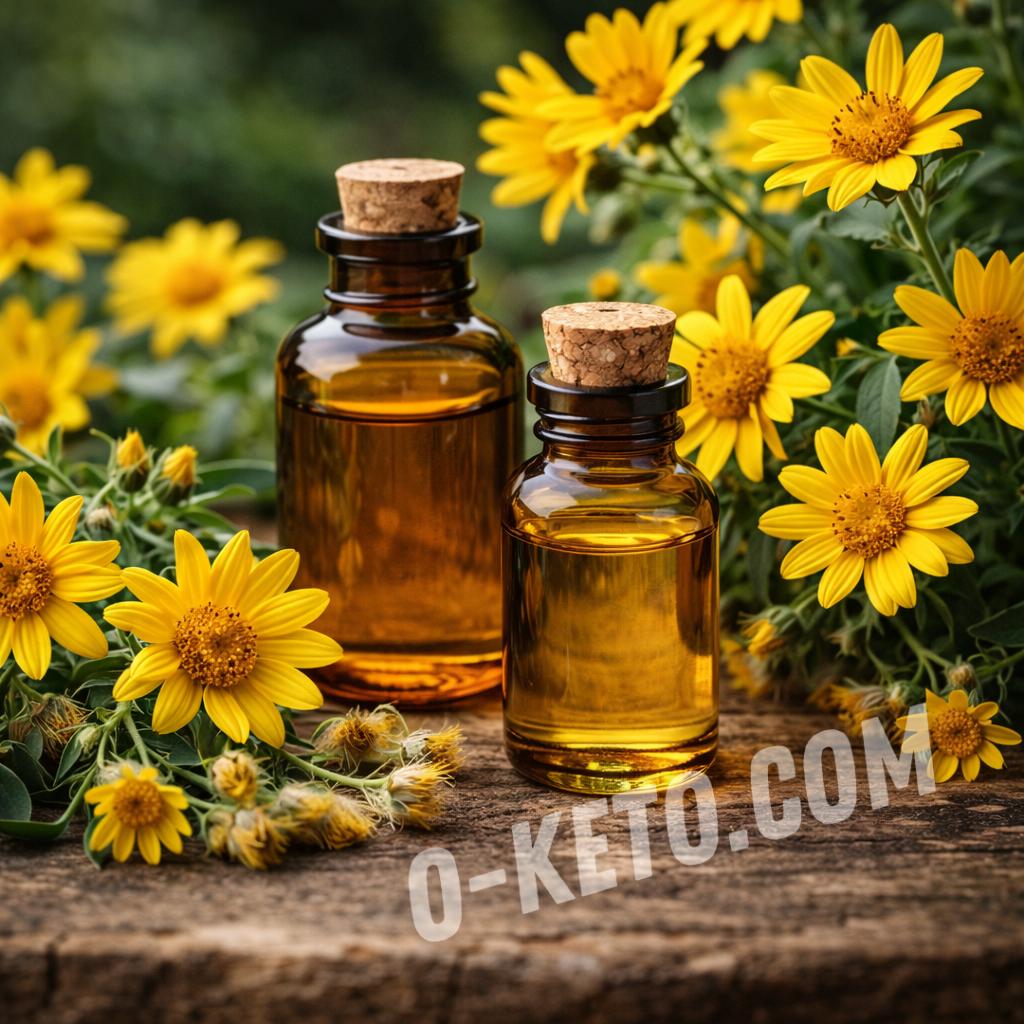

Arnica base oil is not an essential oil, but a macerate: arnica flowers are infused in a neutral vegetable oil so fat-soluble plant compounds move into the carrier. This product is used externally, in massage and skin care. It is not added to food, even if the carrier oil itself could be edible.
Arnica is known as a plant used in external products after exertion, bruising, and local discomfort, but finished arnica oil should not be treated as a home replacement for medical care. In everyday use, its role is careful care of intact skin and use in massage blends where glide, softness, and measured application matter.
What this oil is
Arnica macerate is made with sunflower, olive, almond, or another vegetable oil as the base. Quality depends on both parts: the arnica flowers and the carrier oil. Products from different manufacturers may therefore vary in color, smell, thickness, and skin feel.
Arnica contains sesquiterpene lactones, flavonoids, triterpenes, and phenolic compounds. Only part of the fat-soluble fraction moves into a macerate, so base oil is milder than concentrated extracts. That is convenient for massage, but it does not make the product suitable for every situation.
Keto and food use
Arnica base oil has no food role in a keto diet. It is not used as a fat source, not added to salads, and not used for cooking. Even if the base is olive or sunflower oil, the presence of arnica places the product in external care, not food.
If a keto recipe needs fat, ordinary olive oil, avocado oil, butter, ghee, coconut oil, or animal fat is a better choice depending on the dish. Arnica oil belongs on the skin-care shelf, not in the kitchen.
How to use it
The oil is applied in a thin layer to intact skin and spread gently with the hands. It can be used alone or mixed with other carrier oils. For massage after training, long walking, or everyday physical load, it is more appropriate than strong aggressive rubbing.
If it is combined with essential oils, the total concentration of active components should stay low. It is better to test a small skin area first and wait a day. If burning, itching, rash, or strong redness appears, the product is not suitable.
In body care, this oil is often applied after a shower or after light warming of the muscles, when the skin is dry and clean. For sports massage, it can be blended with a neutral carrier to reduce the intensity of arnica and make the glide more comfortable. On the face, it should be used cautiously and only if the carrier oil is well tolerated.
How to choose
The label should clearly say that the product is a macerate or infused oil, not arnica essential oil. The carrier oil, expiration date, and external-use directions should be visible. If the composition is unclear or the package promises sound too strong, a more transparent product is the better choice.
Good base oil should not smell rancid. The color may be yellowish or greenish-golden depending on the carrier and plant material. A mild herbal smell is normal, but a harsh irritating aroma is not required for quality.
Limitations
Arnica oil should not be applied to open wounds, mucous membranes, fresh burns, weeping areas, or damaged skin. It is not used internally. People allergic to plants in the Asteraceae family, including chamomile, calendula, and ragweed, should be especially cautious.
During pregnancy, breastfeeding, strong skin reactions, after surgery, or with intense pain, it is better not to experiment with arnica without professional advice. Use for children also requires caution: their skin is thinner, and reactions may be stronger.
Storage
The macerate should be stored tightly closed in a cool dark place. Carrier oils turn rancid over time, especially if the bottle stands in light or near heat. It is best to dispense the oil with clean dry hands or a pump so water and dirt do not enter the bottle.
If the smell becomes stale, bitter, or unpleasantly oily, the product should be replaced. For external care, the freshness of the oil matters as much as the composition: a spoiled carrier can irritate skin and ruin the whole blend.


