


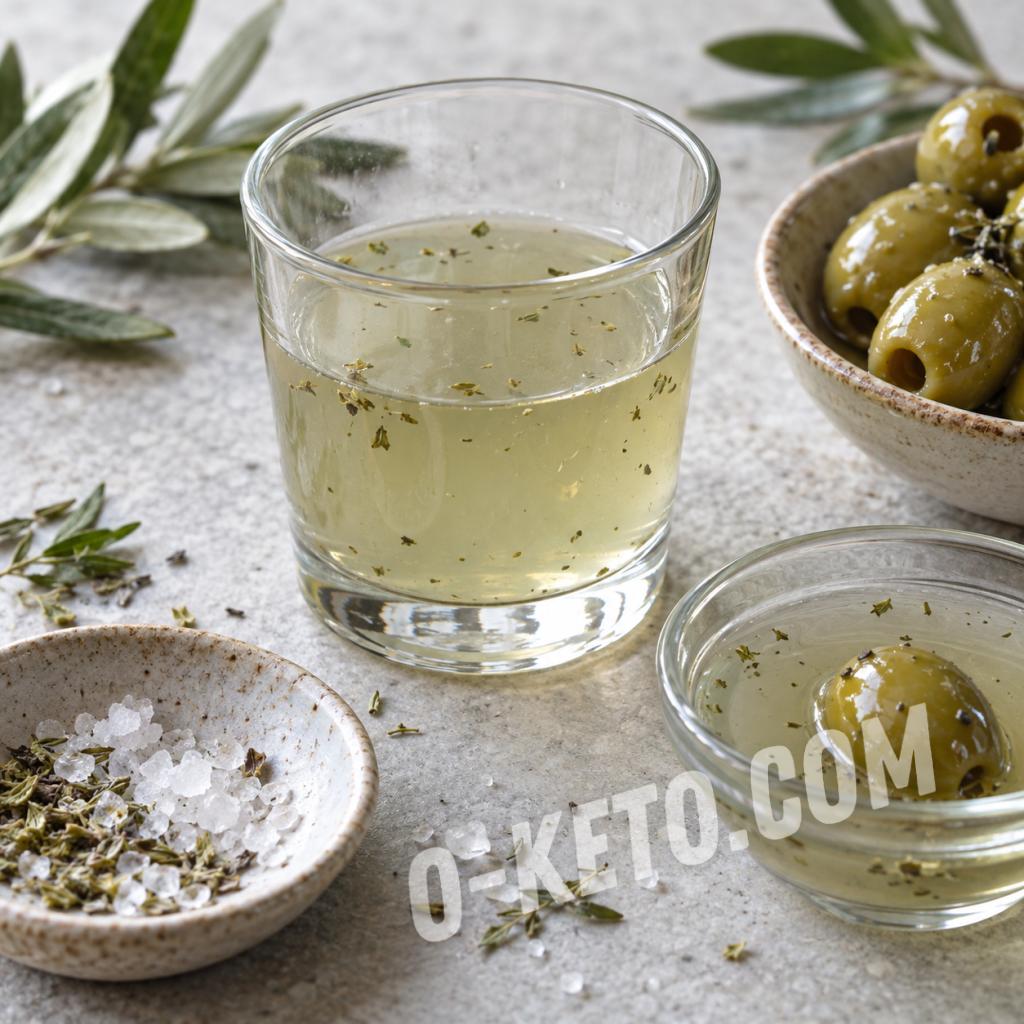

Olive brine is the salty liquid used to process or store table olives. It is neither a type of olive oil nor always a vinegar marinade: brine may be part of olive fermentation, used to keep the fruit in storage, or supplemented with food acids during packaging. Taste, cloudiness, aroma and composition depend on olive variety and ripeness, processing method, salt concentration and the producer’s recipe.
Why olives are kept in brine
Fresh olives are usually too bitter to eat. They are processed to remove some bitter phenolic compounds and then held in water and salt, sometimes with added acids; during natural fermentation, microorganisms can produce lactic acid and change the flavour of the fruit. Not every jar follows the same process. Green table olives may be fermented, treated with alkali, acidified, or made using a combination of methods. Liquid from a jar therefore cannot automatically be treated as a fermented food with a standard set of live bacteria.
In packaged olives, the liquid keeps the fruit covered and allows salt and soluble compounds to move between the flesh and its storage medium. It may contain water, sodium chloride, lactic, citric or acetic acid, spices and permitted preservatives. Some producers use blends of salts containing potassium or calcium. Brine from a jar of stuffed or seasoned olives can include extra ingredients, so the full list matters when managing an allergy or a dietary restriction.
Composition and nutrition
There is no single reference nutrition table that represents every olive brine. Unlike olive flesh, the liquid is not a standard food portion: producers vary the starting solution, salinity, acidity, seasonings and contact time. During storage, sodium and other soluble minerals move between the liquid and the olives; measurements in brine and in the fruit are related, but they are not interchangeable. The most useful practical figure is salt or sodium, if the producer reports it for the liquid itself.
Values on a label for drained olives cannot be reliably assigned to their brine. The liquid may contain small amounts of acids, sugars and minerals, but these depend on processing and do not form a universal profile. For that reason, this card does not invent zero calorie or macronutrient values. Use a brand’s own label when one is available, and treat the composition as unknown when the package gives no separate figures for the liquid. This matters especially when tracking salt and sodium.
Salt and thoughtful portions
Brine tastes salty, but its exact concentration can vary several-fold, and some products use reduced sodium or partially replace table salt with other mineral salts. Taste alone cannot measure sodium: acidity, spices and olive aroma all change how salty a liquid seems. If a clinician has advised you to limit sodium, count brine as part of salty food and do not use it as an “electrolyte drink” without checking your plan.
A small amount can add a salty, sharp olive flavour, but there is no need to drink it by the glass. People with hypertension, heart or kidney failure, oedema, or a prescribed low-salt diet should follow their clinician’s guidance and the label for the specific jar. This does not mean every product must be avoided; recipe, portion and individual needs matter. If the package lists salt only for the olives and does not measure the liquid separately, do not guess the sodium content of the brine.
Using it in the kitchen
Olive brine works as a salty, acidic seasoning when a dish benefits from an olive note. Add it a teaspoon at a time to vinaigrette, salad dressing, a chicken or fish marinade, or a yoghurt, sour-cream or tahini sauce. Start small and taste before adding salt: the brine may already provide enough, and its flavour will become more concentrated if the sauce is reduced.
In cold dishes it pairs well with lemon zest, mustard, herbs and olive oil. A few drops can tie together chopped vegetables, beans or egg, but brine does not replace olive oil: it lacks the oil’s fat, body and rounded flavour. For hot dishes, add the liquid near the end when you want a fresh acidic note; prolonged boiling intensifies saltiness and may make the aroma harsh. Cloudiness can be natural in some fermented brines, but a slimy texture or unpleasant smell is a reason to discard the product.
Olive brine on a ketogenic diet
The liquid itself generally contributes few carbohydrates if it contains no sugar, syrup or sweetened marinade, but “generally” is no substitute for checking the label. Jar recipes differ, so read both the ingredients and any salt or carbohydrate information. In ketogenic cooking it is best understood as a small flavouring ingredient, not as a source of nutrients. Salt does not become automatically beneficial just because a diet is low in carbohydrate; needs depend on health, fluid losses, the rest of the diet and professional advice.
When using brine in a recipe, count it as a liquid seasoning and reduce salt elsewhere if needed. For strict carbohydrate tracking, choose a product without sweeteners and use the package figures when available. Plain liquid from a jar of unsweetened olives is usually easier to fit than a sweet marinade, but the answer applies only to that specific ingredient list.
Buying, opening and storage
Choose a jar with olives fully covered by clear or naturally slightly cloudy liquid and with an intact lid and package. Check the ingredient list: salt, water, acids, spices, garlic, pepper, sugar and preservatives can change compatibility and taste. If you specifically want a fermented product, look for that information on the package; tartness alone does not prove how fermentation was done. For a low-salt diet, select a product whose producer declares reduced salt and do not rely on dilution as an exact calculation.
Before opening, follow the storage directions on the jar. After opening, refrigerate it and keep the olives covered with their brine; use a clean fork or spoon so crumbs and leftover food do not enter the container. Do not top up the jar with water, oil or a new brine, because this changes acidity and salinity and can affect preservation. The usable period after opening depends on the product, so follow the producer’s directions rather than a universal number of days. Discard the jar if mould appears, the lid bulges, the liquid turns ropy, gas develops or a foul smell appears. When in doubt, do not taste it.
Sources
López-López A., Moreno-Baquero J. M., Garrido-Fernández A. “Relationships between Na, K, and Ca mineral nutrients in brine and table olive flesh. Nutritional labelling implications,” LWT, 2023.
“Table Olives Fermented in Iodized Sea Salt Brines: Nutraceutical/Sensory Properties and Microbial Biodiversity,” Foods, 2020.
The nutrition and composition of a particular olive brine depend on its producer’s label; no universal table covers all formulations.


