


Cortisol fasting
Morning fasting cortisol assesses the hypothalamic-pituitary-adrenal system at a specific moment. It is useful when cortisol deficiency or excess is suspected, but it should not be read as a simple stress score.

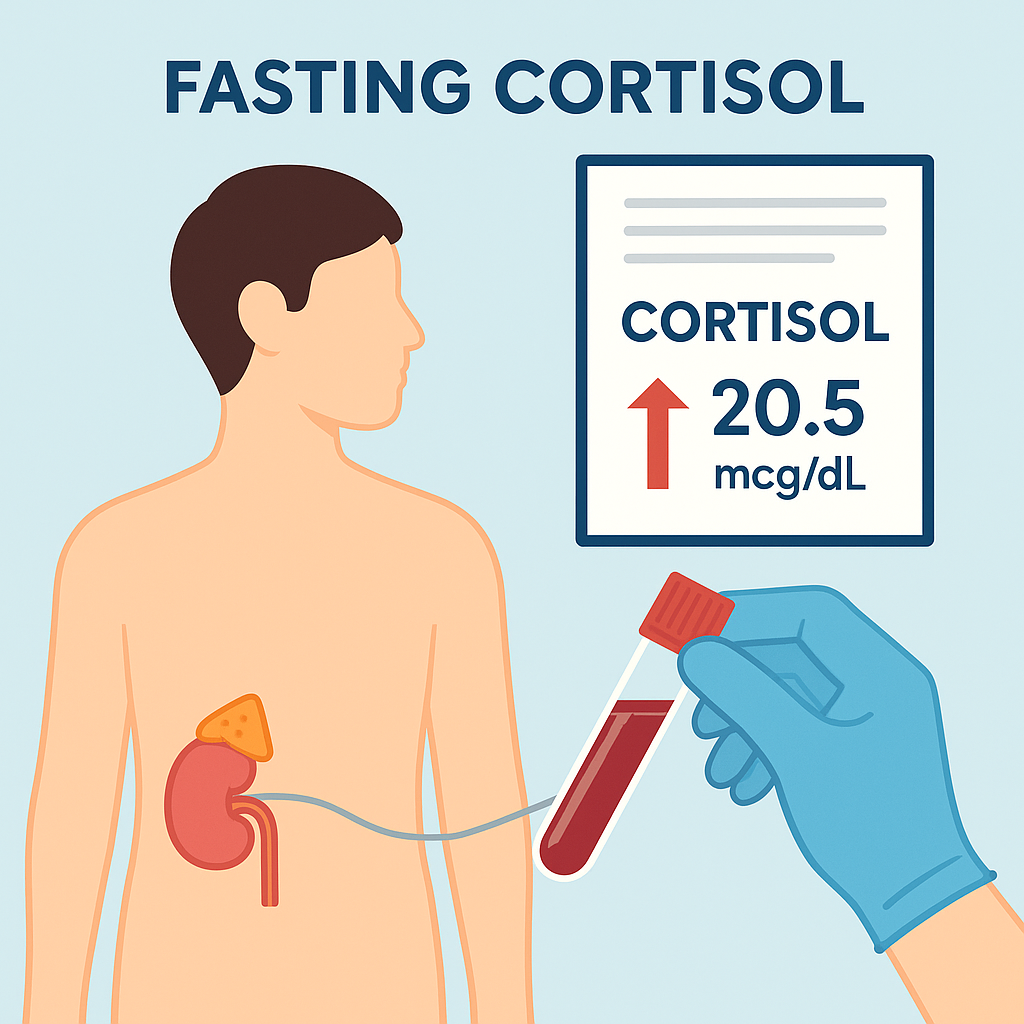
Fasting cortisol is usually measured in the morning because cortisol follows a strong daily rhythm: higher in the morning and lower in the evening. The test does not measure personality or “adrenal fatigue”; it measures cortisol at a specific time in the hypothalamic-pituitary-adrenal system.
Cortisol helps maintain blood pressure, stress response, glucose availability, inflammatory regulation and adaptation to illness. It should not be treated simply as a bad hormone. Problems can involve excess, deficiency, a disturbed rhythm or medication effects.
When the test is meaningful
Morning cortisol is used when adrenal insufficiency, pituitary disorders, consequences of long-term glucocorticoid use or other endocrine conditions are considered. Symptoms needing medical evaluation may include marked weakness, low blood pressure, fainting, skin darkening, unexplained weight loss, nausea, salt craving or repeated low-glucose episodes.
When cortisol excess is suspected, one morning blood value is often not enough. Cushing syndrome evaluation uses tests that assess rhythm or suppression: late-night salivary cortisol, 24-hour urinary free cortisol, dexamethasone suppression testing and other protocols. The choice depends on symptoms, medications and pre-test probability.
Why timing matters
Cortisol changes across the day. In most people it peaks in the early morning and then gradually falls. A result drawn at 8 a.m. cannot be compared directly with one drawn in the afternoon or evening. Shift work, disrupted sleep, jet lag and night waking can shift the rhythm.
Even a morning test should be interpreted with wake time in mind. Cortisol has an awakening response and may rise temporarily after getting up. A person who woke at 5 a.m. and tested at 10 a.m. is not in the same situation as someone who woke shortly before the blood draw.
What affects the result
Poor sleep, acute pain, infection, intense training, psychological stress, pregnancy, alcohol, caffeine, hypoglycemia, dehydration and acute illness can all influence cortisol. Medications matter as well: glucocorticoids in tablets, inhalers, creams and injections, estrogens, some antiseizure drugs, opioids and drugs affecting steroid metabolism.
A common trap is hidden steroid exposure. A person may not think of an inhaler, skin cream or joint injection as a hormone, but these can affect the pituitary-adrenal axis. Before testing, all medications and forms should be listed honestly, not only tablets.
Keto, fasting and stress response
Severe calorie restriction, too little salt, dehydration and excessive training during keto can increase stress response. Sometimes this is described as “keto does not work”, while the real issue is a combination of under-eating, poor sleep, coffee, electrolyte deficit and high load.
Well-built LCHF with enough protein, salt, energy and sleep should not make cortisol chronically high. If low-carb eating is accompanied by anxiety, early waking, palpitations, glucose drops or constant fatigue, the assessment should include diet, thyroid status, iron, infections, medications and emotional load, not cortisol alone.
What to compare it with
Cortisol is interpreted with ACTH, electrolytes, glucose, blood pressure, sodium, potassium, symptoms and sampling time. Suspected deficiency may require stimulation testing. Suspected excess requires late-night or 24-hour tests. Treating “low” or “high” cortisol with supplements on one’s own is unsafe because endocrine disease or steroid-therapy effects may be missed.
If the result is low or high
Low morning cortisol can be a laboratory coincidence, a result of late sampling, steroid exposure or a sign of inadequate adrenal function. A high result can reflect the stress of the day, pain, illness, poor sleep, depression, alcohol, obesity or endocrine disease. The direction of change matters less than reproducibility, symptoms and additional testing.
The popular idea of raising cortisol with adaptogens or lowering it with supplements oversimplifies the problem. True adrenal insufficiency needs medication and medical supervision. Cushing syndrome is not solved by supplements. In functional stress, sleep, nutrition, sleep-apnea treatment, lower overload, caffeine correction and adequate calories are often more relevant.
If you have any questions about the term "Cortisol fasting", you can ask them to AI. Please note, a low-cost OpenAI model is used. It may answer questions about disease treatment with errors!


 1 / 4
1 / 4 1 / 4
1 / 4 1 / 4
1 / 4 1 / 4
1 / 4 1 / 4
1 / 4
 1 / 4
1 / 4
