


Why does high cortisol lead to an increase in VLDL?
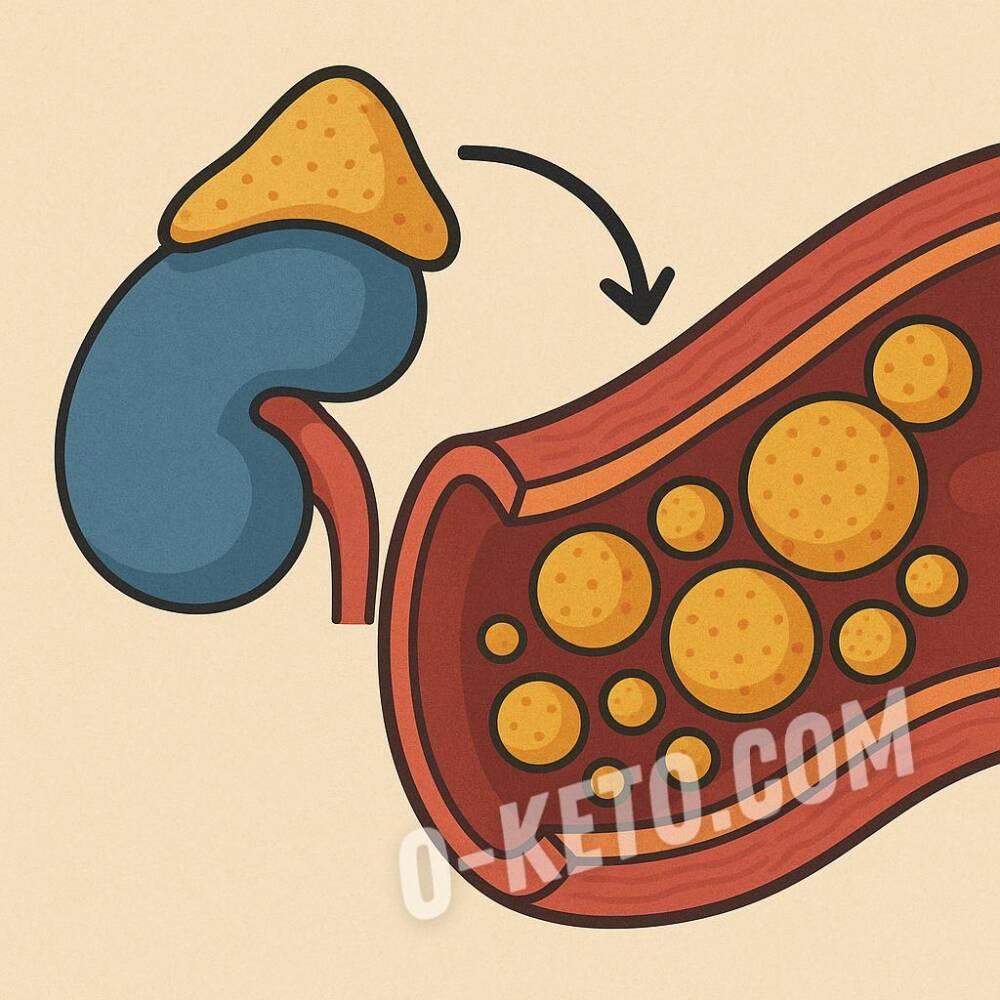

Against the backdrop of very high cortisol, the level of very low-density lipoproteins increases due to enhanced triglyceride synthesis in the liver, decreased utilization, and insulin resistance.
With chronically elevated cortisol levels (for example, due to stress, hypercortisolism, or the intake of glucocorticoids), changes in lipid metabolism are observed in the body, particularly an increase in very low-density lipoproteins (VLDL). This occurs through the following mechanisms:
Activation of lipogenesis in the liver
Cortisol stimulates gluconeogenesis — the synthesis of glucose from non-carbohydrate sources, especially amino acids and glycerol. However, it also indirectly increases fatty acid synthesis in the liver:
- There is an increased mobilization of free fatty acids from adipose tissue (through the activation of hormone-sensitive lipase).
- The liver "takes in" these fatty acids and processes them into triglycerides.
- Triglycerides are packaged into VLDL and released into the bloodstream.
As a result: an increase in VLDL concentration and hypertriglyceridemia.
Insulin resistance and suppression of lipoprotein lipase (LPL)
Cortisol disrupts tissue sensitivity to insulin. Insulin resistance leads to the following consequences:
- The activity of lipoprotein lipase (LPL) — a key enzyme that breaks down VLDL in tissues — decreases.
- VLDL remain in the bloodstream longer and in greater quantities.
- Additionally, the uptake of lipids by tissues is impaired, exacerbating hyperlipidemia.
Transition from VLDL to LDL
When VLDL circulate longer than usual, they gradually lose triglycerides (under the action of LPL and hepatic triglyceride lipase) and transform into low-density lipoproteins (LDL), which increases the atherogenicity of the blood. Thus, high cortisol is a factor in increasing not only VLDL but also, in the long term, LDL.
Additional changes caused by cortisol:
- Increased blood glucose → glycation of lipoproteins → worsened recognition by receptors.
- Increased acute phase proteins of inflammation, including CRP, which enhances atherogenesis.
- Decreased HDL (high-density lipoproteins), especially during chronic stress.
Conclusion
High cortisol triggers a cascade of metabolic shifts leading to increased levels of VLDL due to enhanced triglyceride synthesis in the liver, decreased utilization, and insulin resistance. This condition is highly atherogenic and increases the risk of cardiovascular diseases.
Correction of cortisol levels, stress management, adequate sleep, and metabolic support (for example, through omega-3, magnesium, B vitamins, and adaptogens) are important elements in the prevention of stress-induced hyperlipidemia.
List of YouTube videos on the topic "Why does high cortisol lead to an increase in VLDL?":