


Why are fats beneficial in a low-carbohydrate diet and harmful in a high-carbohydrate diet?
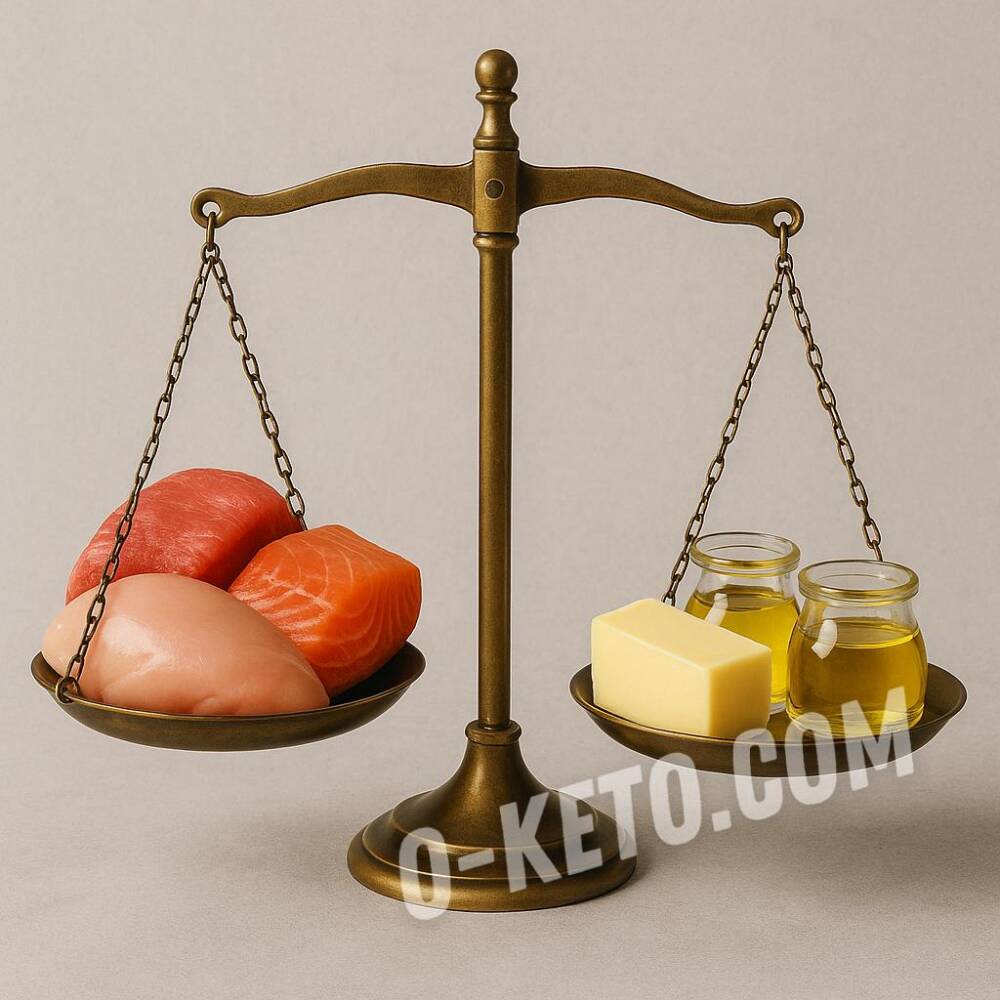
In a low-carbohydrate diet, the ratio of proteins to fats should be maintained at 1 to 2. In a high-carbohydrate diet, this ratio will lead to atherosclerosis and obesity. In this case, the only source of fuel for the body is carbohydrates. Fats are not burned but accumulate.
The ratio of proteins and fats 1:2 in a low-carbohydrate diet. When a person follows a low-carbohydrate diet (for example, keto), the main source of energy shifts from glucose to fatty acids and ketone bodies. In this state:
- Carbohydrates are virtually absent, insulin levels decrease;
- The body actively breaks down fats (lipolysis) for energy;
- The liver produces ketones from fats, which replace glucose for the brain, muscles, and other tissues.
In such conditions, fats become fuel, while proteins serve as building material and a backup energy substance (through gluconeogenesis). A ratio of 1:2 (proteins:fats) is considered physiologically justified:
- Excess proteins will be converted into glucose, which will interfere with ketosis;
- Fats should be more abundant to ensure sufficient ATP levels, especially from saturated fatty acids;
- At the same time, protein intake should not be less than normal to prevent the breakdown of one's own muscles and immune proteins.
Why such a ratio leads to atherosclerosis and obesity on a high-carbohydrate diet. When the diet is high in carbohydrates, with simultaneous high intake of fats (especially saturated), metabolism reacts quite differently:
- Insulin is high – carbohydrates raise blood glucose levels, to which the body responds by releasing insulin. Insulin: blocks fat breakdown (inhibits lipolysis), promotes fat synthesis (lipogenesis), stimulates fat accumulation in tissues.
- Fat is not burned – it accumulates, as the body prefers to burn glucose first.
- Atherogenic lipoproteins are formed – especially in conditions of excess glucose and insulin. VLDL (very low-density lipoproteins) and LDL (low-density lipoproteins) are synthesized more actively. These particles are more easily oxidized and damage the endothelial cells of blood vessels. The formation of atherosclerotic plaques begins.
- Obesity – especially visceral, increases, as fat is easily deposited with an excess of energy coming from carbohydrates and fats simultaneously.
Biochemical essence. In a low-carbohydrate diet: fats = fuel, proteins = structure + a little glucose (through gluconeogenesis). In a high-carbohydrate diet: glucose = main fuel, while fats are "excess," if not burned, they accumulate.
Therefore, the ratio of proteins and fats should be adapted to the proportion of carbohydrates in the diet.
- A low-carbohydrate diet requires more fats, fewer proteins (within normal limits), and almost zero carbohydrates.
- A high-carbohydrate diet requires limiting fats (especially saturated) to avoid metabolic conflict and fat accumulation.