


How to identify adrenal fatigue?
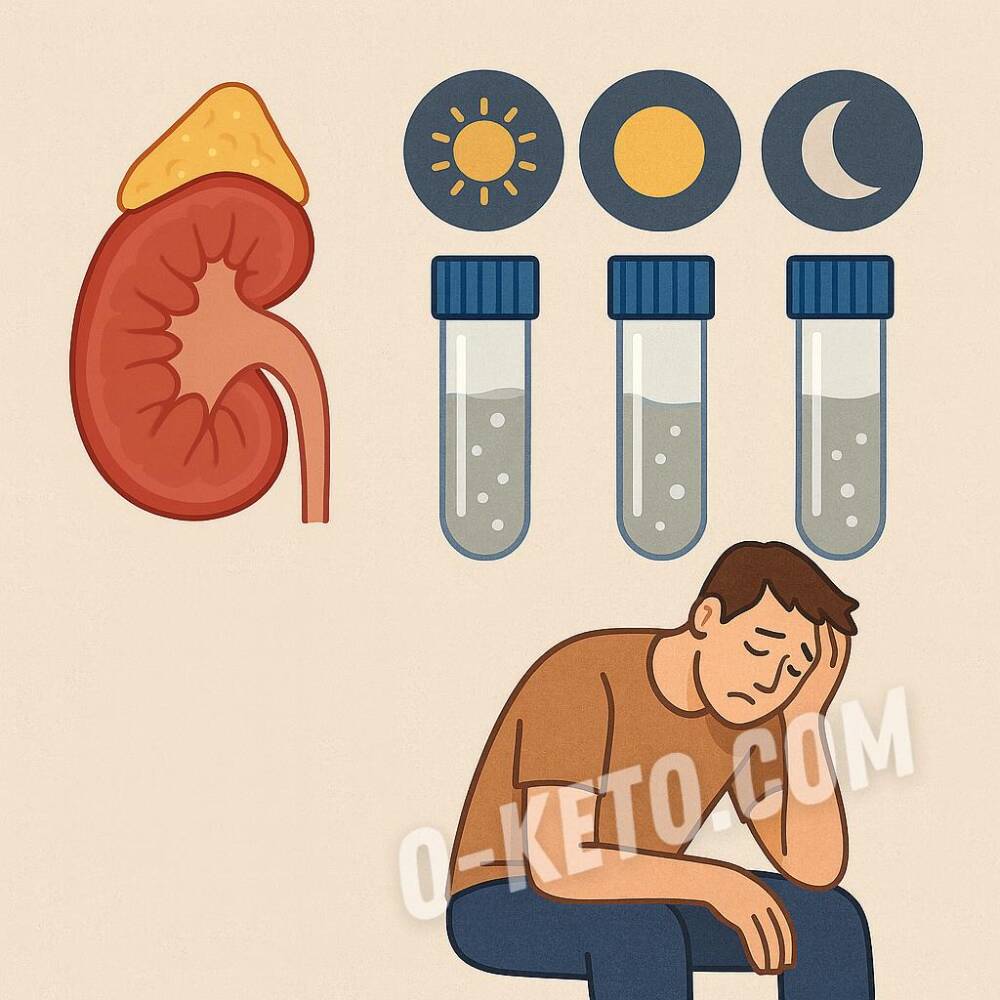

Adrenal exhaustion is indicated by a low cortisol level throughout the day. That is, you need to take a saliva test for cortisol immediately after waking up, at noon, at 4-5 PM, and before bedtime.
Adrenal exhaustion, or so-called adrenal fatigue, can be suspected if cortisol levels are low throughout the day, not just in a single measurement.
Cortisol and its Daily Rhythm
Cortisol is a glucocorticoid hormone produced by the adrenal cortex in response to a signal from the pituitary gland (ACTH). It plays a key role in:
- Regulating blood sugar
- Responding to stress
- Controlling inflammation
- Maintaining blood pressure and water-salt balance
Normally, cortisol has a pronounced circadian rhythm:
- In the morning (within the first hour after waking) - maximum concentration, which helps to "turn on" the body.
- By noon - a decrease, but still an active level.
- In the evening and at night - minimal values, allowing the body to enter the recovery phase.
What Happens During Adrenal Exhaustion
When the body is subjected to prolonged stress (physical, psychological, inflammatory), the adrenal glands operate in overload mode, constantly releasing cortisol.
Over time:
- Reserves of cholesterol and vitamins needed for hormone synthesis (especially B5, C, and cholesterol) are depleted.
- The adrenal glands lose sensitivity to signals from the pituitary gland.
- Overall cortisol production decreases - both in the morning and in the evening.
As a result, a person experiences:
- chronic fatigue, especially in the morning;
- tendency towards hypoglycemia (craving for sweets);
- weakness after stress or physical exertion;
- increased sensitivity to pain and colds;
- anxiety, apathy, or depression;
- low blood pressure, especially upon standing.
Why Measure Cortisol Throughout the Day
A single cortisol measurement (for example, in the morning) does not provide a complete picture. Only a profile (3-4 measurements) can show:
- whether the daily rhythm has been preserved;
- how pronounced the morning peak is;
- whether there is an excessively early or late drop;
- whether there is a flat profile - when the level is consistently low throughout the day.
Such a "flat" cortisol graph indicates adrenal exhaustion, which requires adjustments in lifestyle, nutrition, nutrients, and if necessary - support for the ACTH axis.
How the Test is Usually Conducted
The most accurate and accessible method is a saliva test for cortisol at 3-4 time points:
- immediately after waking;
- at noon;
- at 4-5 PM;
- before bedtime.
Blood tests are also possible, but saliva is preferred as it reflects bioavailable cortisol.
List of YouTube videos on the topic "How to identify adrenal fatigue?":