


Adrenal glands
The adrenal glands produce cortisol, aldosterone and androgens and are linked with stress, blood pressure and electrolytes.
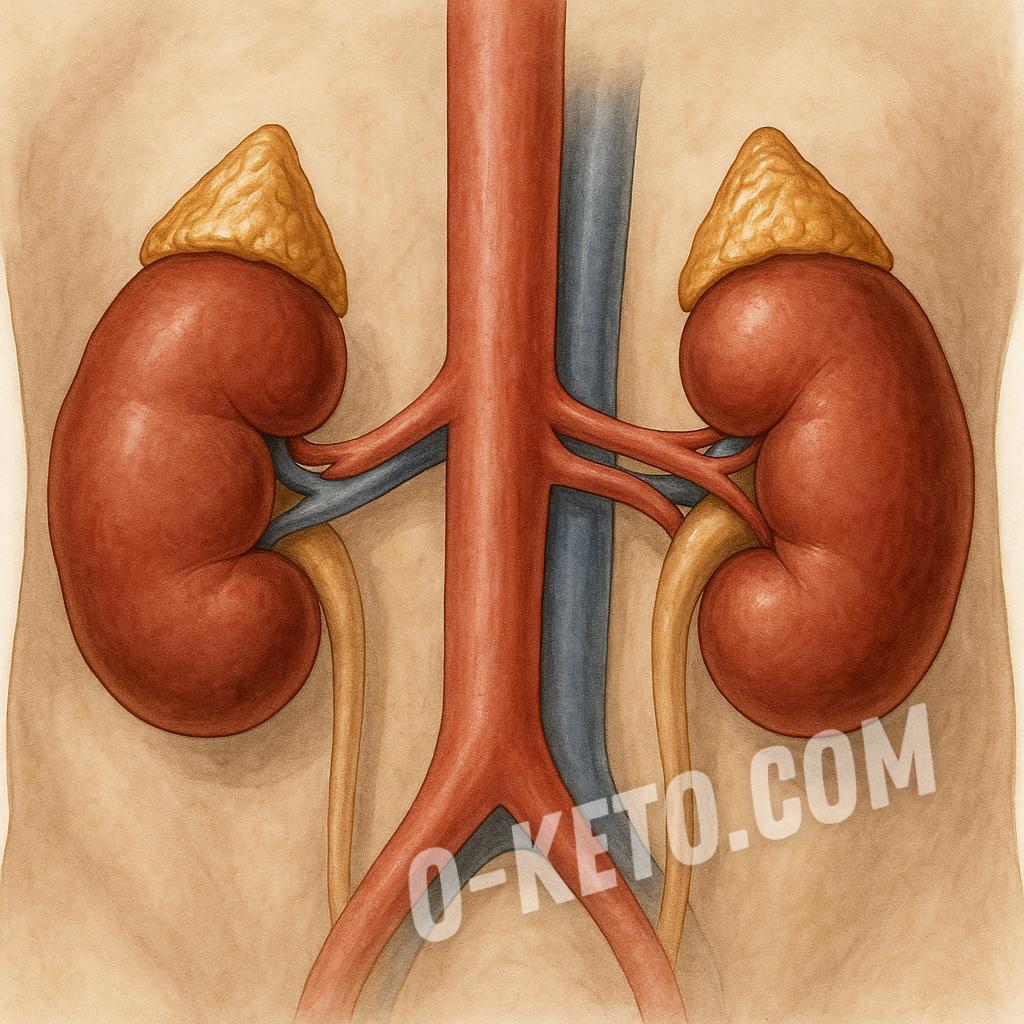
The adrenal glands are paired endocrine glands located above the kidneys. The cortex produces cortisol, aldosterone and some androgens, while the medulla produces adrenaline and noradrenaline. Through these hormones, the adrenals participate in stress response, blood pressure, glucose regulation, sodium and potassium balance, inflammation and energy mobilization.
Popular nutrition often talks about “adrenal fatigue”, but this is not a formal medical diagnosis. Real disorders such as Addison’s disease, Cushing’s syndrome, primary hyperaldosteronism or tumors require laboratory evaluation and medical care.
When The Topic Of Adrenals Becomes Practical
With adrenal questions, it is more useful to talk about blood pressure, pulse, sodium, potassium, stress tolerance, weight loss, hypoglycemia and properly indicated hormone tests than about vague “adrenal fatigue.” Keto and LCHF can shift fluid and salt balance, so early weakness on a diet should not automatically be labeled adrenal disease.
Urgent medical review is needed when weakness comes with falling blood pressure, vomiting, dehydration, darkening of the skin, persistent hypoglycemia or possible adrenal insufficiency. In that setting, adaptogen talk should not replace diagnosis.
If you have any questions about the term "Adrenal glands", you can ask them to AI. Please note, a low-cost OpenAI model is used. It may answer questions about disease treatment with errors!


