


"Mental and Elemental Nutrients: A Physician’s Guide to Nutrition and Mental Health," Carl S. Pfeiffer, 1975
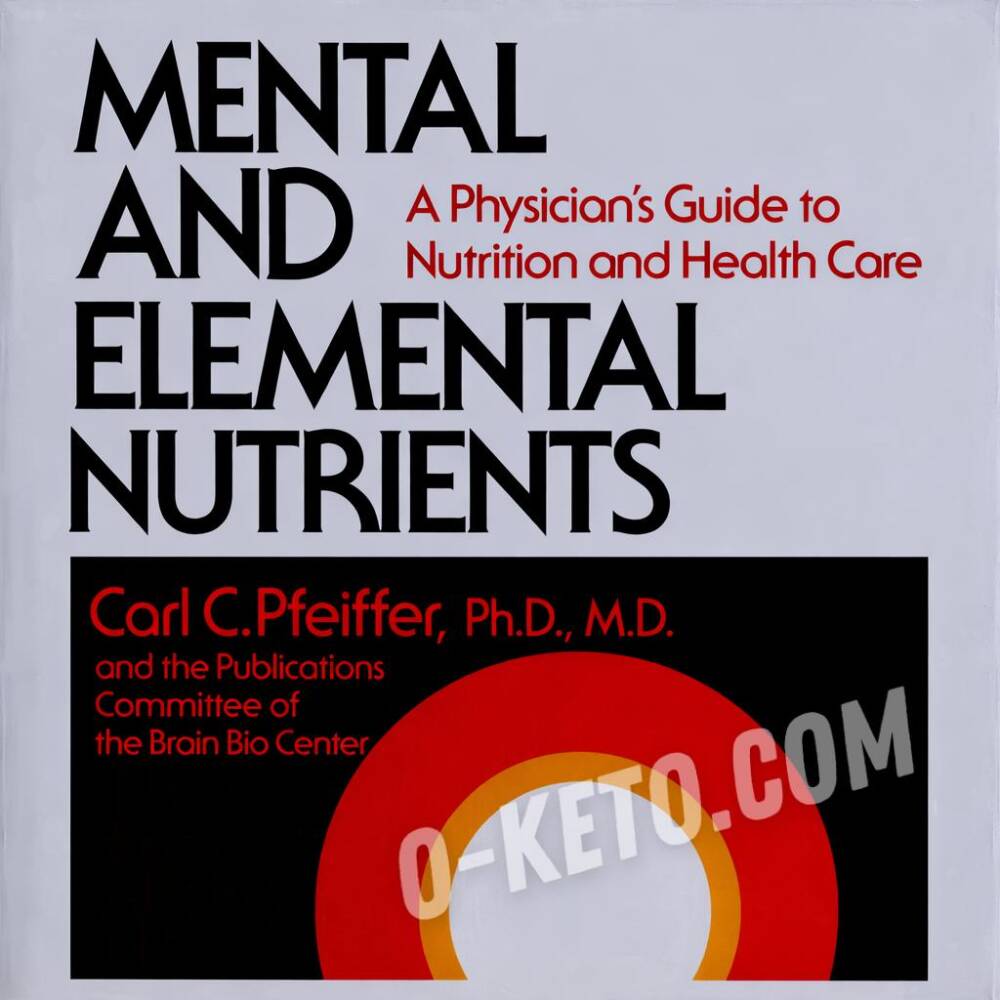
The book is dedicated to the biochemical and nutritional foundations of mental health and examines psychiatric disorders as a result of individual metabolic disturbances, deficiencies of vitamins, minerals, and amino acids, as well as toxic loads.
Pfiffer systematically demonstrates the role of zinc, copper, manganese, magnesium, B vitamins, vitamin C, and other nutrients in the regulation of neurotransmitters, detoxification, and the functioning of the nervous system, introducing concepts of biochemical individuality, pyroluria, methylation disorders, and micronutrient imbalances.
The author concludes that dietary correction and targeted nutritional therapy can not only alleviate symptoms but also eliminate the biochemical causes of anxiety, depression, schizophrenia, behavioral and cognitive disorders, forming the basis of the orthomolecular approach in psychiatry.

29.01.2026. "The Proof: Successes with Cellular Nutrients Confirm Vitamin Research Findings," Matthias Rath, 2012
The book is a collection of documented testimonies from patients with various oncological diagnoses who used the approach of cellular...

27.01.2026. "Road Map to Health," Matthias Rath, 2007
The book is a manifesto of orthomolecular and cellular medicine, in which Matthias Rath asserts that the main chronic diseases of mod...

This book is a manifesto of orthomolecular medicine, written by a practicing physician and a student of Linus Pauling's ideas. Kunin...

In this book, Abram Hoffer — one of the founders of orthomolecular psychiatry — summarizes over half a century of experience working...

24.01.2026. "Progesterone in Orthomolecular Medicine," Raymond Peat, 1993
In this work, Raymond Peat considers progesterone not as a "reproductive hormone," but as a universal protective and regulatory facto...

This book is a comprehensive collection of works and clinical observations by 65 leading specialists in the field of orthomolecular m...

In this book, one of the founders of orthomolecular psychiatry elaborates on the biochemical concept of schizophrenia and an approach...

This book is a systematic and practical introduction to orthomolecular medicine — an approach based on the use of optimal, rather tha...

20.01.2026. Orthomolecular Medicine: Healing Cancer, Abram Hoffer, Linus Pauling, 2004
The book is dedicated to the orthomolecular approach in the treatment of oncological diseases and considers cancer not only as a loca...

19.01.2026. "Ortho-Molecular Nutrition: New Lifestyle for Super Good Health," Abram Hoffer, Morton Walker, 1978
This book is one of the key practical expositions of the orthomolecular approach to health, based on the idea that for the normal fun...
Part One. Nutritional Background
Mental health is viewed as a direct reflection of the biochemical state of the body. The main emphasis is on individual differences in metabolism, the role of proper nutrition in the formation of neurotransmitters and enzyme systems, as well as the fact that chronic mental disorders are almost always accompanied by hidden nutritional deficiencies and detoxification disorders. The inadequacy of "averaged" norms and the necessity of a personalized biochemical approach are emphasized.
Part Two. The Vitamins
Vitamins are presented as key regulators of brain, nervous system, and mental health functions. Special attention is given to B vitamins (B6, B3, B12, folate) in the context of neurotransmitter synthesis, methylation, and energy metabolism. It is shown that even moderate deficiencies can lead to anxiety, depression, psychosis, cognitive decline, and behavioral disorders, while therapeutic doses of vitamins can restore biochemical balance.
Part Three. Essential Trace Elements — New Vistas
Trace elements are considered fundamental factors in mental health. The imbalances of zinc, copper, manganese, magnesium, and iron are examined in detail, along with their influence on the dopamine, serotonin, and norepinephrine systems. New concepts at that time, such as pyroluria and copper-dependent mental states, are introduced. It is concluded that correcting mineral balance is often the key to sustainable improvement in mental health, rather than a supplementary measure.
Part Four. Toxic Effects of Heavy Metals
Heavy metals are viewed as powerful neurotoxins capable of disrupting enzyme function, displacing vital trace elements, and distorting brain neurochemistry. The effects of lead, mercury, cadmium, and other metals on cognitive functions, behavior, mood, and the development of mental disorders are described in detail. It is emphasized that toxic load is often masked as "psychiatric diagnoses," and without the removal of metals, any therapy remains ineffective.
Part Five. Clinical Problems
The clinical sections link specific mental and behavioral disorders with certain biochemical types and nutritional deficiencies. Depression, anxiety disorders, schizophrenia, behavioral disorders, learning difficulties, and adaptation issues are discussed. The main conclusion is that successful treatment requires identifying individual deficiencies in vitamins, minerals, methylation disorders, and toxic factors, rather than symptomatically suppressing the manifestations of the disease.
List of Tables
Tables systematize key relationships between nutrients, trace elements, toxins, and mental symptoms. They are used as a practical tool for physicians: helping to correlate clinical manifestations with probable biochemical disorders and choose targeted nutritional correction strategies.