


Orthomolecular Medicine: Healing Cancer, Abram Hoffer, Linus Pauling, 2004
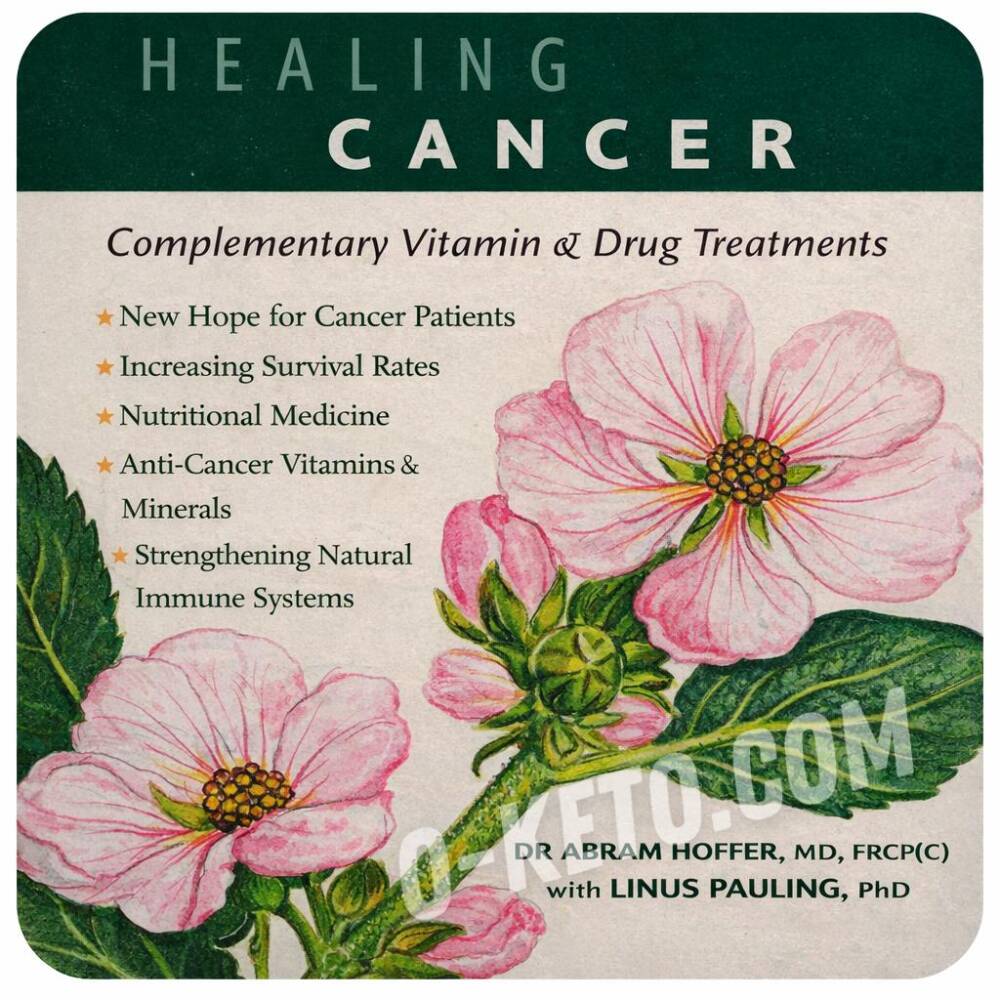
The book is dedicated to the orthomolecular approach in the treatment of oncological diseases and considers cancer not only as a local tumor but as a systemic disorder of metabolism, immunity, and cell growth regulation. The authors thoroughly justify the role of high (therapeutic) doses of vitamins, amino acids, and other nutrients — primarily vitamin C, niacin, and antioxidants — in supporting antitumor protection, reducing the toxicity of chemotherapy and radiation therapy, and improving the quality and duration of patients' lives.
The book is based on clinical observations, biochemical mechanisms, and a critique of the purely pharmacological approach, emphasizing that nutrition and nutritional correction should be the foundation of comprehensive cancer therapy.
The authors' conclusion is unequivocal: orthomolecular medicine does not oppose oncology but expands its possibilities, shifting the focus from suppressing symptoms to restoring the physiological balance of the body.

29.01.2026. "The Proof: Successes with Cellular Nutrients Confirm Vitamin Research Findings," Matthias Rath, 2012
The book is a collection of documented testimonies from patients with various oncological diagnoses who used the approach of cellular...

27.01.2026. "Road Map to Health," Matthias Rath, 2007
The book is a manifesto of orthomolecular and cellular medicine, in which Matthias Rath asserts that the main chronic diseases of mod...

This book is a manifesto of orthomolecular medicine, written by a practicing physician and a student of Linus Pauling's ideas. Kunin...

In this book, Abram Hoffer — one of the founders of orthomolecular psychiatry — summarizes over half a century of experience working...

24.01.2026. "Progesterone in Orthomolecular Medicine," Raymond Peat, 1993
In this work, Raymond Peat considers progesterone not as a "reproductive hormone," but as a universal protective and regulatory facto...

This book is a comprehensive collection of works and clinical observations by 65 leading specialists in the field of orthomolecular m...

In this book, one of the founders of orthomolecular psychiatry elaborates on the biochemical concept of schizophrenia and an approach...

This book is a systematic and practical introduction to orthomolecular medicine — an approach based on the use of optimal, rather tha...

19.01.2026. "Ortho-Molecular Nutrition: New Lifestyle for Super Good Health," Abram Hoffer, Morton Walker, 1978
This book is one of the key practical expositions of the orthomolecular approach to health, based on the idea that for the normal fun...

18.01.2026. Nutrition and Mental Illness: An Orthomolecular Approach, Carl C. Pfeiffer, 1988
In the book, the author systematically presents the orthomolecular approach to mental disorders, considering them as a consequence of...
Preface
Cancer is viewed as a disease closely related to biochemical disorders and nutrient deficiencies, rather than just a localized tumor. The authors emphasize that standard treatment methods often overlook nutrition and the metabolic needs of the body, causing patients to lose resources for recovery. The orthomolecular approach is proposed as a scientifically grounded supplement aimed at restoring optimal internal environments, enhancing tissue resilience, and reducing therapy side effects.
New Hope for Cancer Patients
It is shown that cancer patients often have significant deficiencies in vitamins, minerals, and amino acids, which worsen prognosis and treatment tolerance.
High therapeutic doses of specific nutrients (primarily vitamin C, niacin, antioxidants) can support immunity, reduce inflammation, and slow tumor growth. The focus is on clinical examples where improved nutrition and nutritional support led to increased duration and quality of life, even in the later stages of the disease.
Clinical Nutrition for Treating and Preventing Cancer
This chapter is dedicated to the practical principles of clinical nutrition in cancer. It emphasizes the role of optimal, rather than minimal, doses of nutrients for maintaining normal cellular metabolism, DNA repair, and antioxidant protection. The authors link chronic deficiencies, oxidative stress, and inflammation with an increased risk of oncology and assert that proper nutrition can not only improve the course of the disease but also reduce the likelihood of its development. Nutrition is viewed as a fundamental therapeutic tool, without which treatment remains incomplete.
Clinical Studies of the Value of Orthomolecular Treatment
Data from clinical studies and observations are presented, showing that orthomolecular therapy can positively affect survival, well-being, and tolerance of standard treatment in cancer patients. The emphasis is not so much on "cure" but on improving the metabolic state of the body, reducing toxicity, and supporting the immune system. The authors highlight that even with ambiguous results regarding tumor response, the quality of life for patients consistently improved.
Case Histories
Clinical cases of patients with various forms of cancer are described, where the use of high doses of vitamins and nutrients was accompanied by a reduction in symptoms, increased energy, improved appetite, and slowed disease progression. These stories are used to demonstrate the individual response of the body and the importance of a personalized approach, rather than as a universal promise of cure.
Controversy
The conflict between orthomolecular medicine and orthodox oncology is discussed. Criticism from official medicine is associated with a narrow understanding of evidence, economic interests, and the neglect of nutritional biochemistry. The authors argue that resistance to the new approach is often based not on data but on dogmas, and emphasize the need to expand the medical paradigm rather than deny it.
Appendices
The appendices contain supplementary information: nutrient application schemes, additional explanations of biochemical mechanisms, as well as practical recommendations for doctors and patients. This section serves as an applied continuation of the main part of the book.