


Nutrition and Mental Illness: An Orthomolecular Approach, Carl C. Pfeiffer, 1988
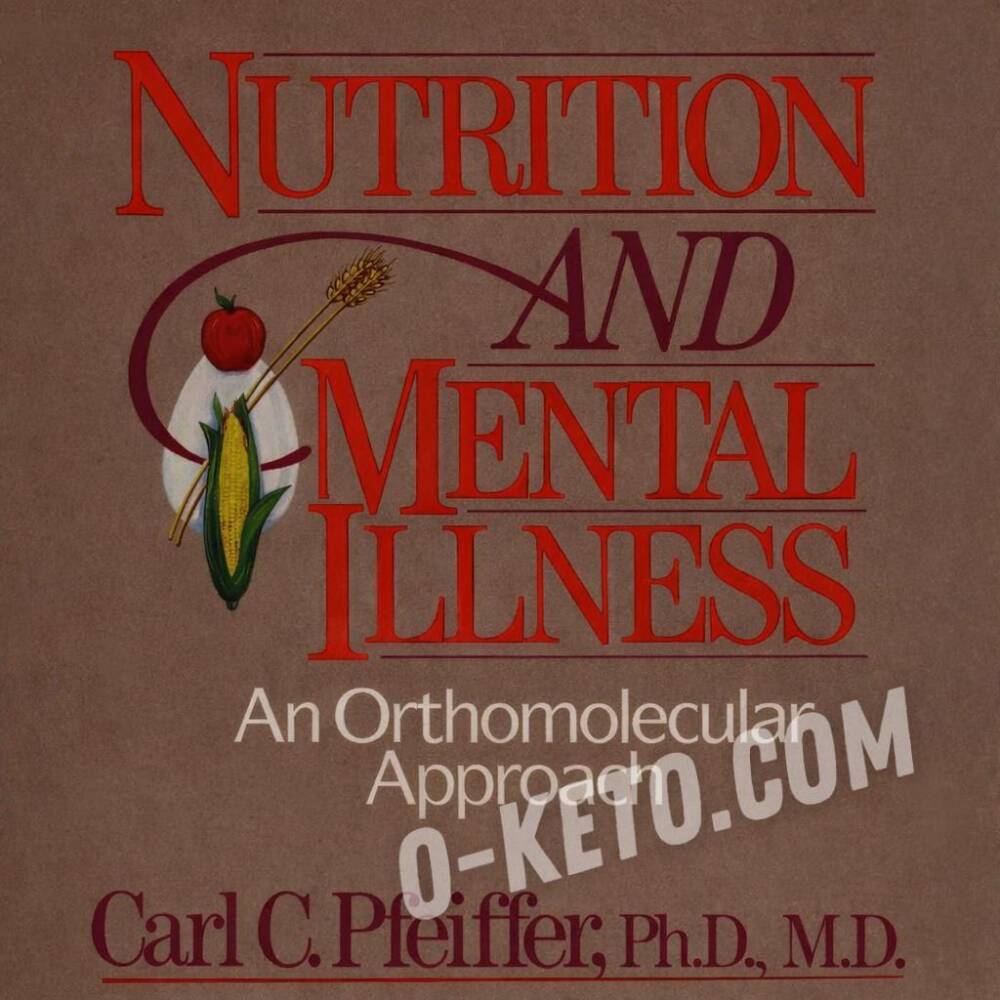
In the book, the author systematically presents the orthomolecular approach to mental disorders, considering them as a consequence of biochemical imbalances, nutrient deficiencies, and metabolic disturbances, rather than exclusively as "psychological" or genetically predetermined conditions.
Pfeiffer thoroughly examines the role of B vitamins, zinc, copper, magnesium, manganese, amino acids, and fatty acids in brain function, describes clinical types of patients (including pyroluria, methylation disorders, copper/zinc imbalances), as well as the impact of toxins and heavy metals.
The book relies on clinical experience and laboratory diagnostics, emphasizing the individualization of therapy and the priority of correcting nutrition and nutrient status.
The author's concluding position is that many mental disorders can be significantly alleviated or corrected with precise biochemical diagnostics and targeted nutritional support, which should be regarded as a foundation rather than an addition to treatment.

29.01.2026. "The Proof: Successes with Cellular Nutrients Confirm Vitamin Research Findings," Matthias Rath, 2012
The book is a collection of documented testimonies from patients with various oncological diagnoses who used the approach of cellular...

27.01.2026. "Road Map to Health," Matthias Rath, 2007
The book is a manifesto of orthomolecular and cellular medicine, in which Matthias Rath asserts that the main chronic diseases of mod...

This book is a manifesto of orthomolecular medicine, written by a practicing physician and a student of Linus Pauling's ideas. Kunin...

In this book, Abram Hoffer — one of the founders of orthomolecular psychiatry — summarizes over half a century of experience working...

24.01.2026. "Progesterone in Orthomolecular Medicine," Raymond Peat, 1993
In this work, Raymond Peat considers progesterone not as a "reproductive hormone," but as a universal protective and regulatory facto...

This book is a comprehensive collection of works and clinical observations by 65 leading specialists in the field of orthomolecular m...

In this book, one of the founders of orthomolecular psychiatry elaborates on the biochemical concept of schizophrenia and an approach...

This book is a systematic and practical introduction to orthomolecular medicine — an approach based on the use of optimal, rather tha...

20.01.2026. Orthomolecular Medicine: Healing Cancer, Abram Hoffer, Linus Pauling, 2004
The book is dedicated to the orthomolecular approach in the treatment of oncological diseases and considers cancer not only as a loca...

19.01.2026. "Ortho-Molecular Nutrition: New Lifestyle for Super Good Health," Abram Hoffer, Morton Walker, 1978
This book is one of the key practical expositions of the orthomolecular approach to health, based on the idea that for the normal fun...
Mental Illness—Not All in the Mind
Mental disorders are viewed as a result of biochemical disturbances rather than solely psychological or social factors.
The author emphasizes the key role of deficiencies in vitamins, minerals, and metabolic disorders in the formation of symptoms of anxiety, depression, and psychosis. The brain is presented as an organ that directly depends on the quality of nutrition and chemical balance, rather than an abstract "carrier of the psyche."
Understanding Mental Illness
This lays the foundation for the orthomolecular approach: mental symptoms are classified by biochemical types. Pfeiffer explains why identical diagnoses can have completely different causes and why standard medication often does not work. The emphasis is placed on the necessity of laboratory diagnostics and individual selection of nutrients.
Anxiety and Phobias—The Copper Connection
Anxiety disorders and phobias are directly linked to an excess of copper and a relative deficiency of zinc. Increased copper enhances the excitation of the nervous system, raises norepinephrine levels, and reduces the ability to adapt to stress. Correcting the copper-zinc balance is considered a key therapeutic tool in chronic anxiety.
High Histamine Can Cause Depression
Depression in some cases is explained by high levels of histamine associated with methylation disorders. Such patients are often sensitive, perfectionistic, and prone to obsessive thoughts. The author emphasizes that antidepressants do not address the root cause, while supporting methylation (B6, folates, B12, methionine) can have a pronounced effect.
B6 and Zinc—The Missing Link
This chapter is dedicated to the key role of zinc and B vitamins (primarily B6) in regulating neurotransmitters and emotional stability. Zinc deficiency is associated with depression, irritability, sleep disturbances, and reduced stress resilience. It is emphasized that without replenishing these nutrients, full recovery of the psyche is impossible.
Brain Allergies
Mental and neurological symptoms can be a result of food and chemical allergic reactions affecting the brain. The author shows that chronic inflammation caused by hidden food intolerances can manifest as depression, anxiety, aggression, and impaired concentration and behavior. Excluding trigger foods and reducing allergenic load often leads to significant improvement in condition without psychotropic medications.
The Dangers of Daily Bread
Regular consumption of bread and wheat products is considered a factor provoking neuropsychic disorders in sensitive individuals. Gluten and related proteins can cause inflammation, nutrient absorption disorders, and autoimmune reactions that affect brain function.
Pfeiffer emphasizes that giving up "daily bread" often reduces anxiety, depressive symptoms, and cognitive disorders.
Hypoglycemia—The Sugar Blues
Hypoglycemia is described as one of the key but often ignored causes of irritability, anxiety, depression, and panic states. Sharp fluctuations in glucose levels disrupt the brain's energy supply and provoke the release of stress hormones. The author insists on stabilizing nutrition, reducing sugar and refined carbohydrates as a basic condition for mental balance.
Minerals, Mood Swings, and Manic Depressive Disorders
Bipolar and affective disorders are linked to mineral imbalances, primarily zinc, copper, lithium, magnesium, and manganese. These elements are directly involved in regulating neurotransmitters and the excitability of the nervous system. Pfeiffer emphasizes that without correcting the mineral profile, medication remains symptomatic and unstable.
Diet, Crime, and Delinquency
This chapter shows the connection between nutrition, brain biochemistry, and antisocial behavior. Nutrient deficiencies, hypoglycemia, toxic load, and food allergies can reduce impulse control and increase aggression. The author presents arguments that improving nutrition and nutritional status can reduce crime and deviant behavior, especially in children and adolescents.
How to Age Without Senility
Age-related cognitive decline is viewed not as inevitability but as a consequence of accumulated nutrient deficiencies and toxic damage. The author emphasizes the role of B vitamins, antioxidants, minerals, and complete protein in maintaining neuronal metabolism. With proper nutritional support, brain aging can occur without dementia and significant intellectual decline.
Drugs—The Treatment That Leads Nowhere
Psychotropic medications are criticized as means that suppress symptoms but do not eliminate causes. Pfeiffer shows that medications often exacerbate nutritional deficiencies, disrupt metabolism, and create dependency on treatment. The conclusion is drawn that without correcting brain biochemistry, drug therapy leads patients into a dead end.
Why Nutrition is the Way Forward
Nutrition and nutritional therapy are presented as a fundamental direction for the future of psychiatry. The author explains why restoring biochemical balance can achieve sustainable and reproducible results. Nutrients act on the primary mechanisms of disease rather than secondary manifestations.
There is an Alternative to Hospitalization
Hospitalization is viewed as a last resort, often traumatizing the patient and not addressing root problems. Pfeiffer describes the possibility of outpatient and home recovery through individually tailored nutrition, supplements, and lifestyle correction. This approach reduces the risk of chronicity and social isolation.
Optimum Nutrition for Mental Health
Optimum nutrition for mental health is not about minimal standards but therapeutic doses of nutrients tailored to specific biochemical types. The author emphasizes the importance of protein, B vitamins, zinc, magnesium, fatty acids, and antioxidants for stable brain function and emotional regulation.
Nutrition Programs for Specific Diseases
Examples of targeted nutritional programs for depression, anxiety disorders, schizophrenia, bipolar states, and cognitive impairments are provided. The necessity of personalization, laboratory control, and phased correction, rather than universal schemes, is emphasized.
Conclusion—Have Faith in Tomorrow's Medicine
In conclusion, the author formulates the philosophy of future medicine based on biochemistry, prevention, and respect for human physiology. Pfeiffer calls for a shift in focus from symptom suppression to restoring health through nutrition, nutrients, and understanding individual characteristics, asserting that real progress lies in this direction.