
"Orthomolecular Treatment of Chronic Disease: 65 Experts on the Therapeutic Use of Vitamins, Minerals, Amino Acids, and Other...
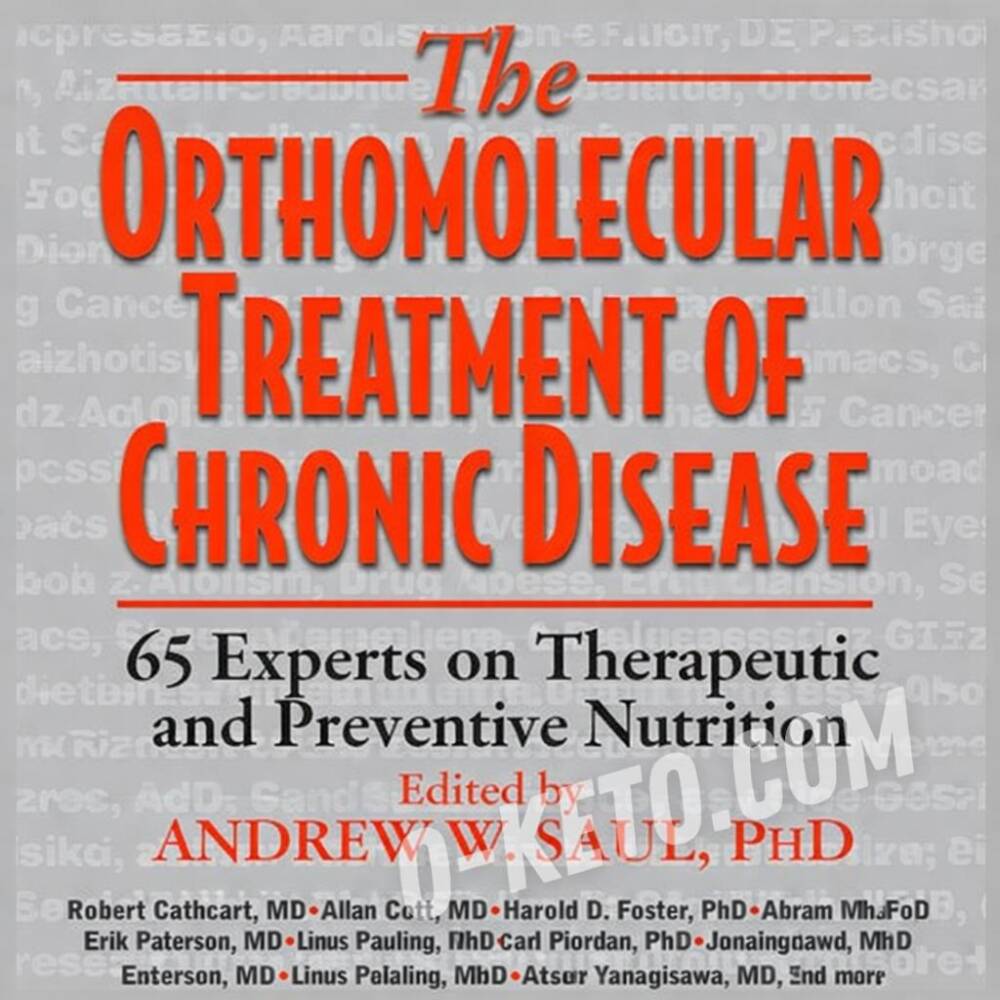
This book is a comprehensive collection of works and clinical observations by 65 leading specialists in the field of orthomolecular medicine and brings together nearly half a century of research, largely published in the Journal of Orthomolecular Medicine.
The authors consistently advocate the idea that many chronic and "incurable" diseases — from mental disorders, cardiovascular and oncological diseases to infections, addictions, and neurodegenerative conditions — are largely related to deficiencies and the individual body's need for nutrients that exceed standard RDA. The book demonstrates how high (therapeutic) doses of vitamins, minerals, amino acids, and fatty acids can act as a safe and effective alternative or complement to pharmacotherapy, providing numerous clinical cases, mechanistic explanations, and the historical context of the medical establishment's resistance to new paradigms.
The authors' final conclusion is that the orthomolecular approach —...
In this book, Abram Hoffer — one of the founders of orthomolecular psychiatry — summarizes over half a century of experience working...
24.01.2026. "Progesterone in Orthomolecular Medicine," Raymond Peat, 1993
In this work, Raymond Peat considers progesterone not as a "reproductive hormone," but as a universal protective and regulatory facto...
In this book, one of the founders of orthomolecular psychiatry elaborates on the biochemical concept of schizophrenia and an approach...
This book is a systematic and practical introduction to orthomolecular medicine — an approach based on the use of optimal, rather tha...
20.01.2026. Orthomolecular Medicine: Healing Cancer, Abram Hoffer, Linus Pauling, 2004
The book is dedicated to the orthomolecular approach in the treatment of oncological diseases and considers cancer not only as a loca...
19.01.2026. "Ortho-Molecular Nutrition: New Lifestyle for Super Good Health," Abram Hoffer, Morton Walker, 1978
This book is one of the key practical expositions of the orthomolecular approach to health, based on the idea that for the normal fun...
18.01.2026. Nutrition and Mental Illness: An Orthomolecular Approach, Carl C. Pfeiffer, 1988
In the book, the author systematically presents the orthomolecular approach to mental disorders, considering them as a consequence of...
16.01.2026. "Mental and Elemental Nutrients: A Physician’s Guide to Nutrition and Mental Health," Carl S. Pfeiffer, 1975
The book is dedicated to the biochemical and nutritional foundations of mental health and examines psychiatric disorders as a result...
The book is a carefully curated collection of texts in which Linus Pauling articulates his key ideas — from fundamental chemistry and...
13.01.2026. "Healing the Mind the Natural Way: Nutritional Solutions to Psychological Problems," Pat Lazarus, 1995
The book is dedicated to the orthomolecular approach to mental health and advocates the idea that most psychological and psychiatric...
PART ONE: FOUNDATIONS OF ORTHOMOLECULAR THERAPY
The foundation of orthomolecular therapy is the idea that chronic diseases develop not only due to pathogens or genetics but as a result of prolonged, systemic nutrient deficiencies and individual biochemical mismatches. The human body is evolutionarily adapted to significantly higher levels of vitamins and minerals than those accepted in official norms, and modern living conditions create a state of “pandeficiency” — multiple hidden deficiencies of many substances at once.
The authors criticize the paradigm of “vitamins only for the prevention of deficiency diseases” and show that vitamins in therapeutic doses can act as metabolic regulators and medicines, but with a fundamentally different safety profile. The concept of nutrient dependency is introduced: for some individuals, the need for certain vitamins and minerals is several times higher than average and cannot be met by ordinary nutrition.
Particular attention is paid to the critique of blind application of RDA and evidence-based medicine in its formalized form. It is emphasized that double-blind studies and peer review often exclude clinically effective methods if they do not fit into the dominant pharmacological model. The clinical experience of doctors and repeatable practical results are considered a full-fledged source of scientific knowledge.
This section thoroughly examines the biochemical foundations of nutrient action: redox reactions, the role of antioxidants, the pharmacokinetics of vitamins, and individual differences in absorption and metabolism. Using vitamin C, niacin, and other key substances as examples, it is shown that the effect depends not on the “presence” of the nutrient but on achieving optimal concentrations in tissues.
The key conclusion of the section is that orthomolecular therapy is a fundamental, physiologically justified approach aimed at restoring normal cell biochemistry. Without eliminating nutrient deficiencies and dependencies, any medical interventions remain symptomatic and cannot lead to sustainable recovery.
PART TWO: PIONEERS OF ORTHOMOLECULAR MEDICINE
This section is dedicated to the people who shaped orthomolecular medicine as a separate direction, often in the face of resistance from academic and clinical medicine. They are united by practical clinical experience and a willingness to rely on biochemistry and observable results rather than established dogmas.
The central figure is Linus Pauling, who introduced the term “orthomolecular” and showed that optimal concentrations of molecules — primarily vitamins — can determine health and longevity. His work on vitamin C laid the foundation for understanding that therapeutic doses can influence infections, cardiovascular diseases, oncology, and aging processes.
Particularly highlighted is the role of Abram Hoffer, whose many years of clinical observations in psychiatry demonstrated the connection between mental disorders and deficiencies of niacin, vitamin C, zinc, methylation disturbances, and oxidative balance. His approach showed that severe mental states can be reversible with the correction of nutrient status.
The section also introduces other key figures — doctors and scientists who applied megadoses of vitamins, amino acids, and minerals in cardiovascular, infectious, oncological, and neurological diseases. Their clinical stories show that many “incurable” conditions respond well to nutrient correction with early and systematic intervention.
The overall meaning of the section is that orthomolecular medicine arose not as a theory but as a result of decades of practice. These pioneers demonstrated that health can be restored by working with the fundamental biochemistry of the body, even when standard medicine considers possibilities exhausted.
PART THREE: ORTHOMOLECULAR TREATMENT
This section presents orthomolecular medicine as a practical clinical tool applicable to a wide range of chronic and severe diseases. The focus is on specific protocols, dosages, and clinical results, rather than abstract theories. Diseases are viewed as a consequence of disrupted biochemistry, and therapy is seen as restoring the optimal nutrient environment of the cell.
Numerous examples demonstrate the effectiveness of high-dose nutrient therapy in mental disorders, oncology, cardiovascular diseases, infections, radiation injuries, addictions, and neurodegenerative processes. Special emphasis is placed on vitamin C, B vitamins (primarily niacin and B6), magnesium, zinc, selenium, essential fatty acids, and amino acids as key regulators of inflammation, oxidative stress, and neurotransmitter balance.
It is shown that therapeutic doses of nutrients often allow for a reduction or complete replacement of medication load, decreasing side effects and improving the overall condition of patients. At the same time, the compatibility of the orthomolecular approach with traditional treatment is emphasized: nutrients are viewed not as an “alternative” but as a basis, without which pharmacotherapy works less effectively and safely.
The question of safety is considered separately. The authors show that with the correct selection of forms and doses, nutrients have a significantly wider therapeutic window compared to drugs, and side effects are generally reversible and easily manageable. The clinical experience of decades of megadose application serves as the main argument for their safety.
The key conclusion of the section is that orthomolecular treatment is a personalized strategy focused on the causes of disease rather than on suppressing symptoms. Restoring nutrient balance allows the body to independently initiate regeneration and adaptation mechanisms, making it possible to improve conditions even in chronic and progressive diseases.
List of YouTube videos on the topic ""Orthomolecular Treatment of Chronic Disease: 65 Experts on the Therapeutic Use of Vitamins, Minerals, Amino Acids, and Other...":


