


A Physician’s Handbook on Orthomolecular Medicine, Roger J. Williams, Dwight K. Kalita, 1971
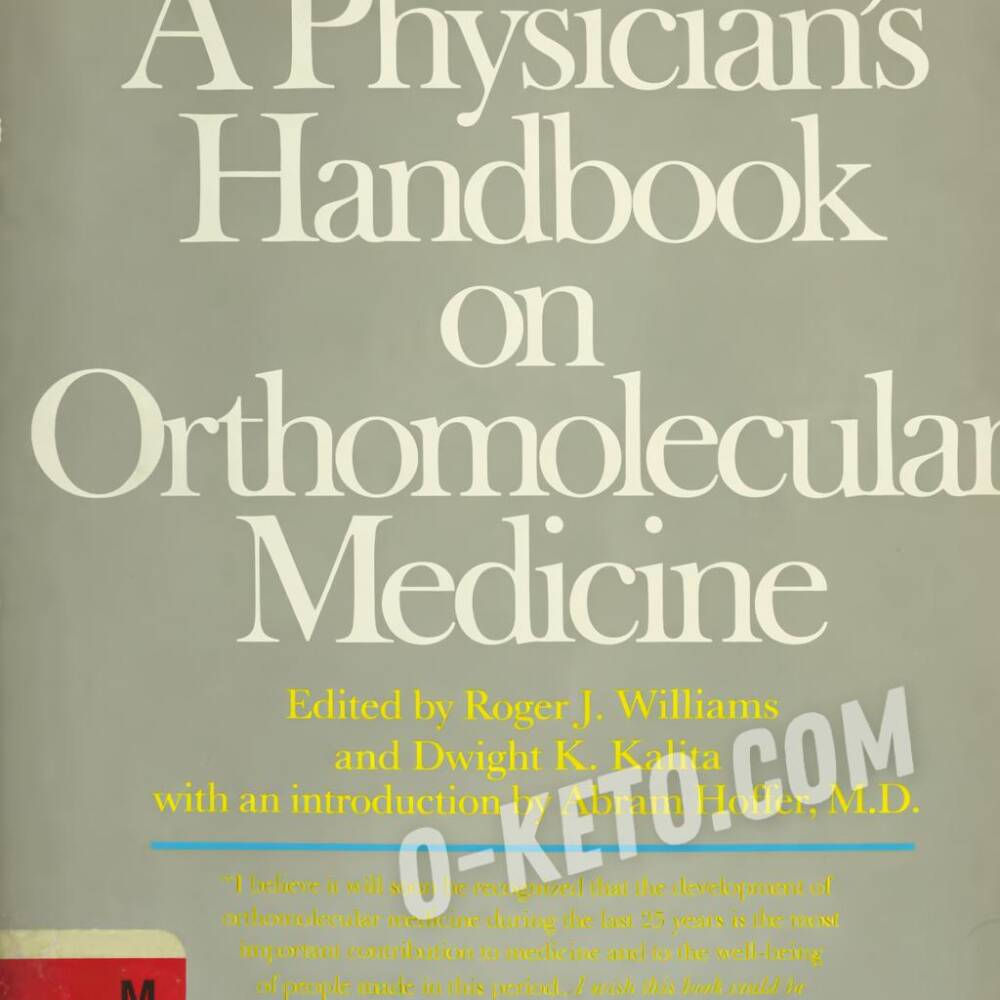

The book is a systematic introduction to medical orthomolecular medicine — an approach based on correcting the biochemistry of the body using optimal (rather than minimally acceptable) concentrations of vitamins, minerals, amino acids, and other substances natural to the body.
The authors demonstrate that individual biochemical differences between people are the norm, not the exception, and it is these differences that explain varying sensitivities to diseases, medications, and nutrition.
The book thoroughly examines the role of hidden and subclinical deficiencies, disruption of enzyme systems, and the impact of stress, toxins, and nutrition on the development of chronic diseases — from mental disorders to cardiovascular and endocrine issues.
The authors conclude that restoring health should begin not with suppressing symptoms, but with restoring an optimal nutritional environment for cells, where therapeutic doses of nutrients can be a key therapeutic tool rather than just an auxiliary one.

29.01.2026. "The Proof: Successes with Cellular Nutrients Confirm Vitamin Research Findings," Matthias Rath, 2012
The book is a collection of documented testimonies from patients with various oncological diagnoses who used the approach of cellular...

27.01.2026. "Road Map to Health," Matthias Rath, 2007
The book is a manifesto of orthomolecular and cellular medicine, in which Matthias Rath asserts that the main chronic diseases of mod...

This book is a manifesto of orthomolecular medicine, written by a practicing physician and a student of Linus Pauling's ideas. Kunin...

In this book, Abram Hoffer — one of the founders of orthomolecular psychiatry — summarizes over half a century of experience working...

24.01.2026. "Progesterone in Orthomolecular Medicine," Raymond Peat, 1993
In this work, Raymond Peat considers progesterone not as a "reproductive hormone," but as a universal protective and regulatory facto...

This book is a comprehensive collection of works and clinical observations by 65 leading specialists in the field of orthomolecular m...

In this book, one of the founders of orthomolecular psychiatry elaborates on the biochemical concept of schizophrenia and an approach...

This book is a systematic and practical introduction to orthomolecular medicine — an approach based on the use of optimal, rather tha...

20.01.2026. Orthomolecular Medicine: Healing Cancer, Abram Hoffer, Linus Pauling, 2004
The book is dedicated to the orthomolecular approach in the treatment of oncological diseases and considers cancer not only as a loca...

19.01.2026. "Ortho-Molecular Nutrition: New Lifestyle for Super Good Health," Abram Hoffer, Morton Walker, 1978
This book is one of the key practical expositions of the orthomolecular approach to health, based on the idea that for the normal fun...