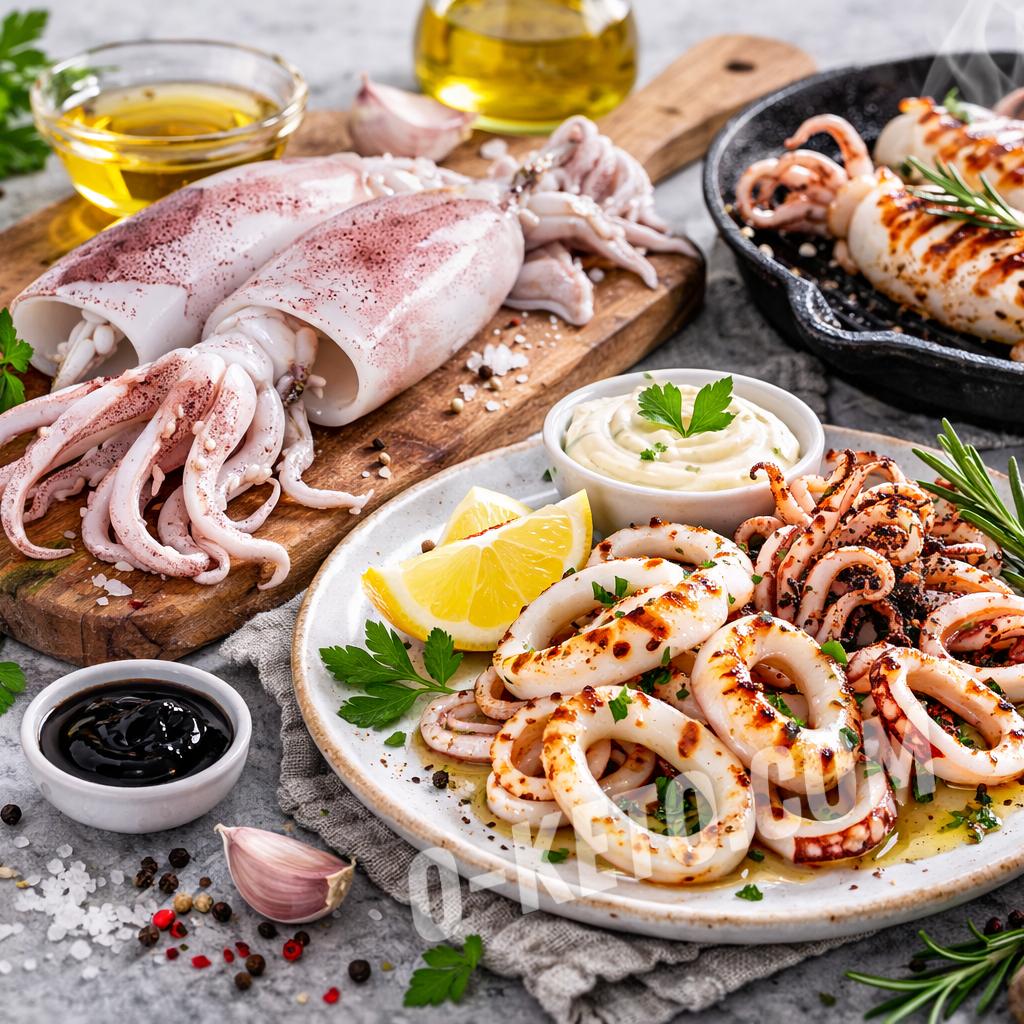

Squids and cuttlefish are close relatives from the cephalopod family. Their meat is valued for its tender texture and delicate taste, but if cooked improperly, it quickly becomes “rubbery.”
The key principle is to either cook very quickly (1-2 minutes) or to stew for a long time (30+ minutes). Intermediate cooking times of 10-15 minutes almost guarantee a tough result.
Nutritional value and who needs caution
Squid is not only convenient for quick cooking; it is also a concentrated source of protein. One hundred grams of cooked squid usually provide about 15.6 g of protein, 92 kcal, 1.4 g of fat and 3.1 g of carbohydrate. The same serving contains about 65 mg of choline, along with meaningful amounts of vitamin B12, selenium and copper. Values vary with species, size and cooking method, so use the package or food database for the specific product as the main reference.
Squid contains omega-3 fats, but it does not replace oily fish as a source of EPA and DHA: the cited food data give about 0.5 g of omega-3 per 100 g. Squid is therefore most useful as a moderate-calorie protein food, while salmon, herring and mackerel are better choices when a higher amount of long-chain omega-3 is the goal.
Squid is molluscan shellfish and can cause food allergy. Tropomyosin is one important allergen; it is heat-stable, so cooking does not make squid safe for someone with a confirmed allergy. If squid has caused a reaction, do not test other shellfish one by one at home: cross-reactivity is possible, and an allergist should plan the evaluation.
The practical conclusion is simple: choose squid by its label, freshness and intact freezing, account for allergy, and select the heating method afterward. Nutritional values help place the product in a diet, but they do not replace safe handling and time control.
How to choose squids
Size matters. The smaller the squid, the more tender the meat. In culinary terms, smaller varieties are preferred.
Fresh squids:
- skin is light, without dark spots and slime;
- smell is fresh, marine;
- bodies are firm, not flabby;
- eyes are clear, without cloudiness.
Fresh squids are more often sold near fishing areas. They have a slight advantage in texture, although they freeze well.
Frozen squids:
- thin glaze without large ice chunks;
- no snow crumbs in the packaging;
- after thawing, the smell is mild, without sharpness.
They can be cooked in all ways except for raw consumption in sushi and sashimi.
Preparing squids
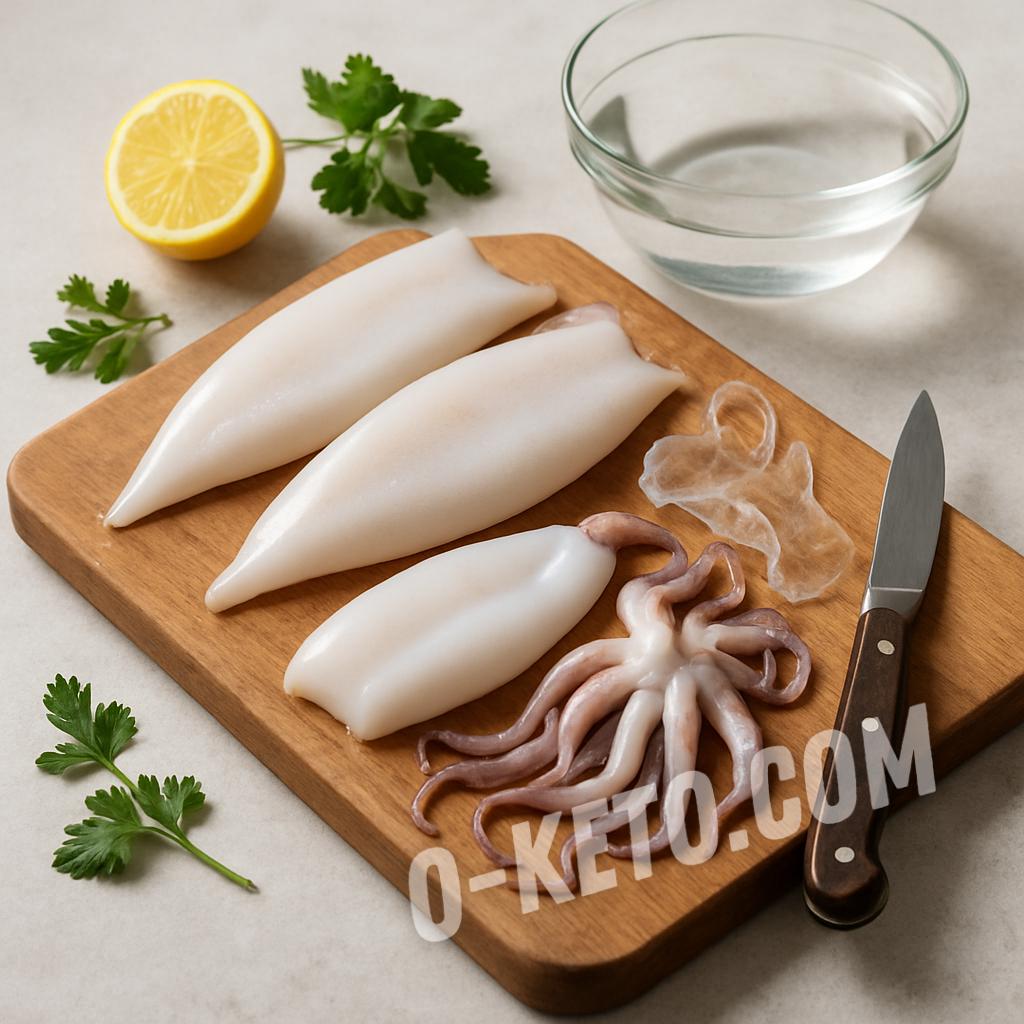
Before cooking, remove the skin, entrails, transparent gladius plate, eyes, and beak:
- clean the body from the skin;
- remove the entrails and gladius;
- wash and dry;
- if necessary, marinate before frying or grilling.
The mantle and tentacles are better cooked separately as their textures differ.
Best cooking methods for squids
- blanching;
- frying over high heat for 1-2 minutes;
- grilling;
- deep-frying;
- baking;
- long stewing;
- without heat treatment for the freshest product.
Best combinations:
- garlic;
- parsley;
- black pepper;
- chili pepper;
- thyme;
- rosemary;
- lemon juice;
- soy sauce;
- mayonnaise.
Features of choosing cuttlefish
Cuttlefish are very close to squids in taste and texture. They are often sold small — “one bite” — and are especially good when deep-fried.
Fresh cuttlefish:
- bodies are firm, without damage;
- smell is marine, without ammonia notes;
- surface is clean, without slime.
They are characterized by the presence of a large ink sac. The ink can be used for pasta, risotto, and sauces — it gives a rich black color and a slight marine flavor.
Frozen cuttlefish:
- better to buy already cleaned — it saves time;
- small ones are perfect for deep-frying;
- large ones are cooked in the same ways as squids.
Best cooking methods for cuttlefish
- deep-frying;
- frying;
- grilling;
- baking;
- stewing;
- blanching.
Best combinations:
- black pepper;
- lemon juice;
- soy sauce;
- mayonnaise;
- garlic;
- parsley;
- thyme;
- rosemary.
Practical recommendations
- thaw slowly in the refrigerator;
- be sure to dry before frying;
- do not cook for 10-15 minutes — this is the “rubber” zone;
- when frying quickly, use a very hot pan;
- salt at the end of cooking;
- do not overload with spices to preserve the marine flavor.
Squids and cuttlefish are products with a minimalist cooking philosophy. Short heat treatment, proper preparation, and a moderate amount of seasoning allow them to retain their softness, juiciness, and natural sweetness.
How to thaw and clean squid
Frozen squid should be thawed slowly in the refrigerator. This keeps the texture more stable and reduces the time the product spends at a temperature where microbes multiply quickly.
After thawing, remove the head and internal organs, pull out the transparent cartilage and rinse the mantle. Pat it dry before frying or grilling. If the squid is already cleaned, still check the cavity and remove any remaining cartilage or fragments of skin.
Why squid becomes rubbery
Squid has a narrow window for quick cooking. A very hot pan or grill usually needs only a short time, often about 1–2 minutes depending on the size of the pieces. If the squid has already become firm, prolonged gentle stewing can soften it again; intermediate cooking is the zone in which the texture most often turns rubbery.
Salt and acidic marinades are best used with timing in mind. Dry the squid, heat the cooking surface well, and serve it soon after cooking rather than holding it warm for a long time.
Sources
- Selecting and Serving Fresh and Frozen Seafood Safely: U.S. Food and Drug Administration
- Fish and Fishery Products Hazards and Controls Guidance: U.S. Food and Drug Administration
- The Impact of Cooking Methods on the Physical, Sensory, and Nutritional Quality of Fish
- Texture of Cooked Mantle of Squid Illex argentinus as Influenced by Specimen Characteristics and Treatments
- FoodData Central — U.S. Department of Agriculture, cooked squid
- Food Allergies — U.S. Food and Drug Administration