


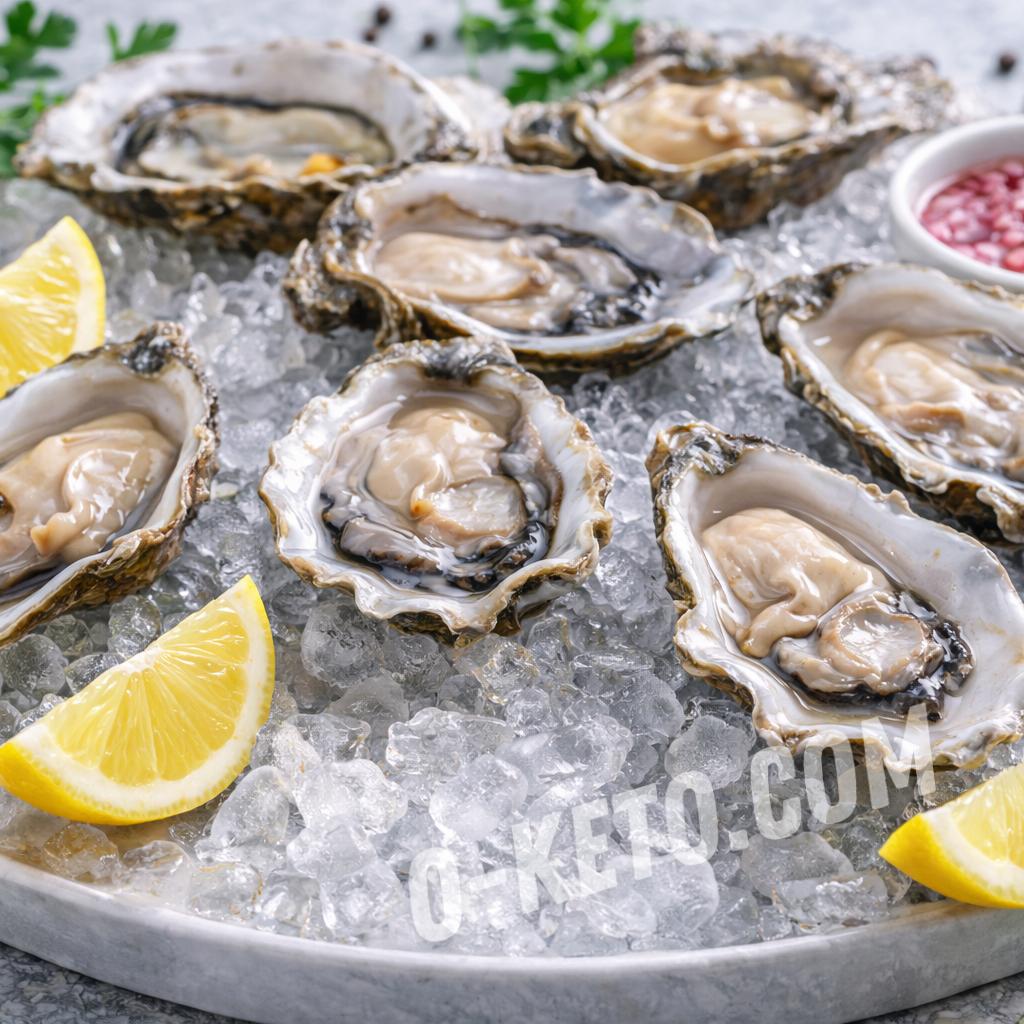

Oysters are one of the most famous seafood delicacies. They are rich in trace elements and complete protein, and in gastronomy, they are valued for their pure taste of the sea and creamy texture. The overwhelming majority of oysters in the world are consumed alive, so freshness is the main criterion for selection.
How to choose live oysters
- the shells are tightly closed or close when tapped;
- the shell is heavy for its size;
- there are no cracks or chips;
- the smell is fresh, marine, without sharp notes.
You can check freshness with a drop of lemon juice or vinegar: a live oyster slightly “tightens up”.
If the shell is slightly open and does not react, it is better not to use the product.
How to properly open an oyster
The main difficulty is opening the shell. For this, an oyster knife and a thick glove or folded towel are used:
- fix the shell with the flat side up;
- insert the knife between the shells;
- cut the adductor muscle;
- cut the mollusk from the bottom;
- keep the juice inside the shell.
Live oysters are served on ice, on one shell, and eaten immediately after opening.
Best cooking methods
Without heat treatment. The classic serving is with minimal additions. This allows you to preserve the natural sweetness and iodized notes.
Baking and grilling:
- cook for 3–5 minutes until slightly set;
- add butter or sauce just before serving;
- do not overcook.
Frying. Used less often, but provides a contrast of crispy shell and juicy center.
Best combinations:
- lemon juice;
- wine vinegar;
- shallot;
- mayonnaise.
The classic mignonette sauce — wine vinegar and finely chopped shallot — emphasizes the flavor without overpowering it.
Butter, lemon, and a pinch of white pepper also work well.
Frozen oysters. They are frozen raw, but they are inferior in taste to fresh ones and may have a more pronounced fishy flavor:
- thaw slowly in the refrigerator;
- do not use for serving raw;
- cook quickly, without prolonged heat treatment.
It is better to use them for baking, grilling, or frying.
Practical recommendations
- buy oysters from trusted suppliers;
- store at 0–4 °C, not in water;
- open just before serving;
- do not overload with sauces and spices;
- serve immediately after cooking.
Oysters are a product of minimalist cuisine. The less interference, the more their natural taste of the sea and creamy texture is felt.


