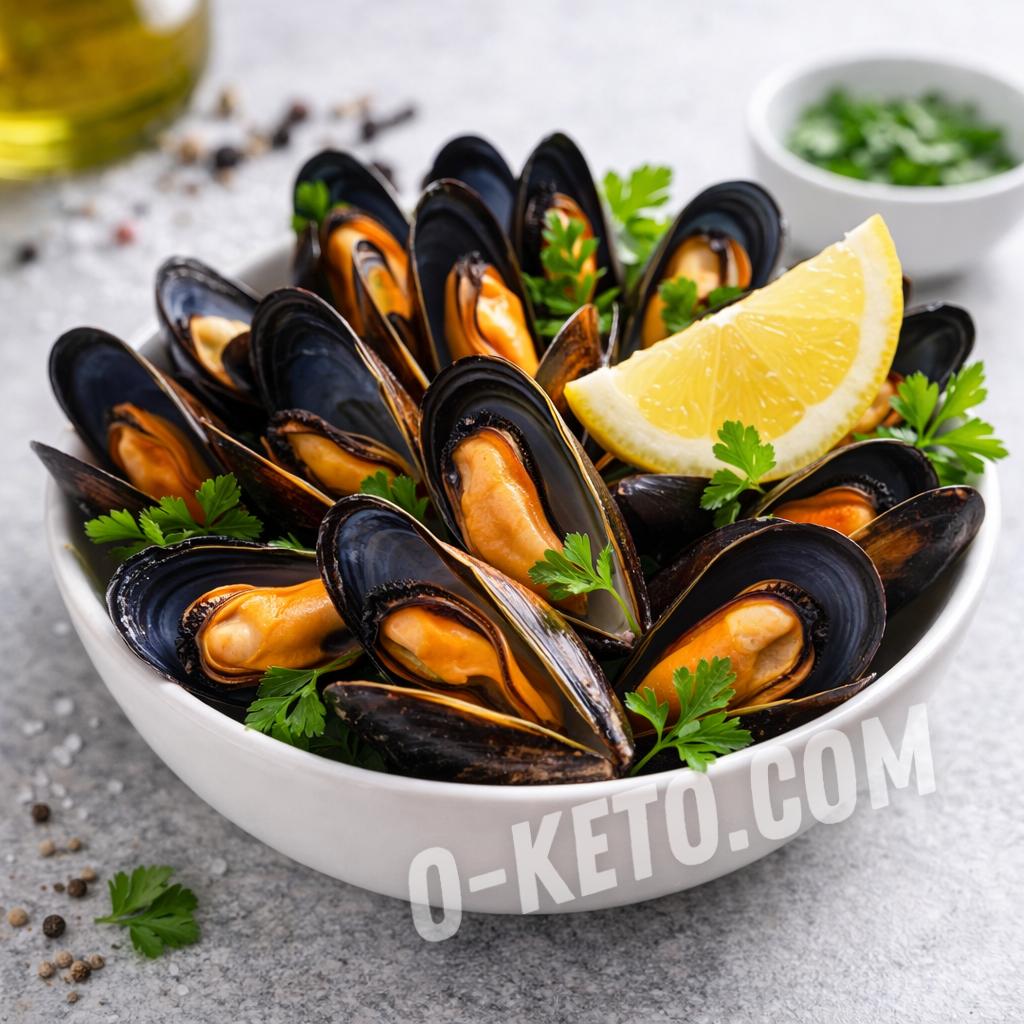

Mussels are one of the most accessible and popular bivalve mollusks.
Today, almost all chilled and frozen mussels are farmed, which allows for control over water quality and product safety.
It is important to consider that different species and formats of mussels require different approaches to cooking.
Nutritional value and limitations
Mussels are valued for more than their flavor and short cooking time. One hundred grams of cooked mussels usually provide about 12 g of protein, roughly 86 kcal and very little carbohydrate; exact values vary with species, size and how much cooking liquid remains in the serving. This makes mussels a convenient way to add complete protein without a large calorie load.
Along with protein, mussels provide vitamin B12, iron and long-chain omega-3 fats. A review of farmed mussels gives an approximate range of 300–800 mg of omega-3 per 100 g of cooked meat, but this is not a universal number for every package: the amount depends on species, growing area, season and serving composition. Mussels can therefore contribute to omega-3 intake, but they should not replace every other type of fish.
Farmed mussels also have a distinctive environmental profile: unlike fed finfish aquaculture, they do not need feed in the same way because they filter natural plankton from the water. Under controlled conditions, this can mean less pressure on land and freshwater, while the shellfish remove some nutrients from the water as they grow and are harvested. This does not make every farm impact-free; production methods, local conditions and area monitoring still matter.
Nutritional value does not remove the limitations. Mussels are molluscan shellfish and can cause allergy, while their filter-feeding explains the need to control bacteria, harmful algal toxins and contaminants. Buy them from a legal, traceable supply chain and avoid them completely if you have a shellfish allergy; then choose the format and cooking method that fit your meal.
How to choose mussels
Live mussels. The most valuable option is live mollusks with closed shells. They should be heavy and smell like the sea, without any foreign odors:
- the shells are tightly closed or close when touched;
- no cracks or chips;
- fresh, sea smell;
- when tapped, the shells close.
Open and unresponsive mussels should be discarded before cooking.
Frozen in shells. These are mussels that have been cooked and frozen along with the juices inside the shells. In taste, they are closest to live mussels but only require reheating. When choosing them, pay attention to the following points:
- the ice glaze is thin and transparent;
- the shells are undamaged;
- there is no snow residue in the packaging.
Frozen on the half shell. Most often, these are large New Zealand mussels. They are already cooked and suitable for baking or serving with sauces.
Cooked-frozen meat. The most budget-friendly option. Used in salads, pastas, and soups. Re-cooking is not required — just reheating.
Best cooking methods
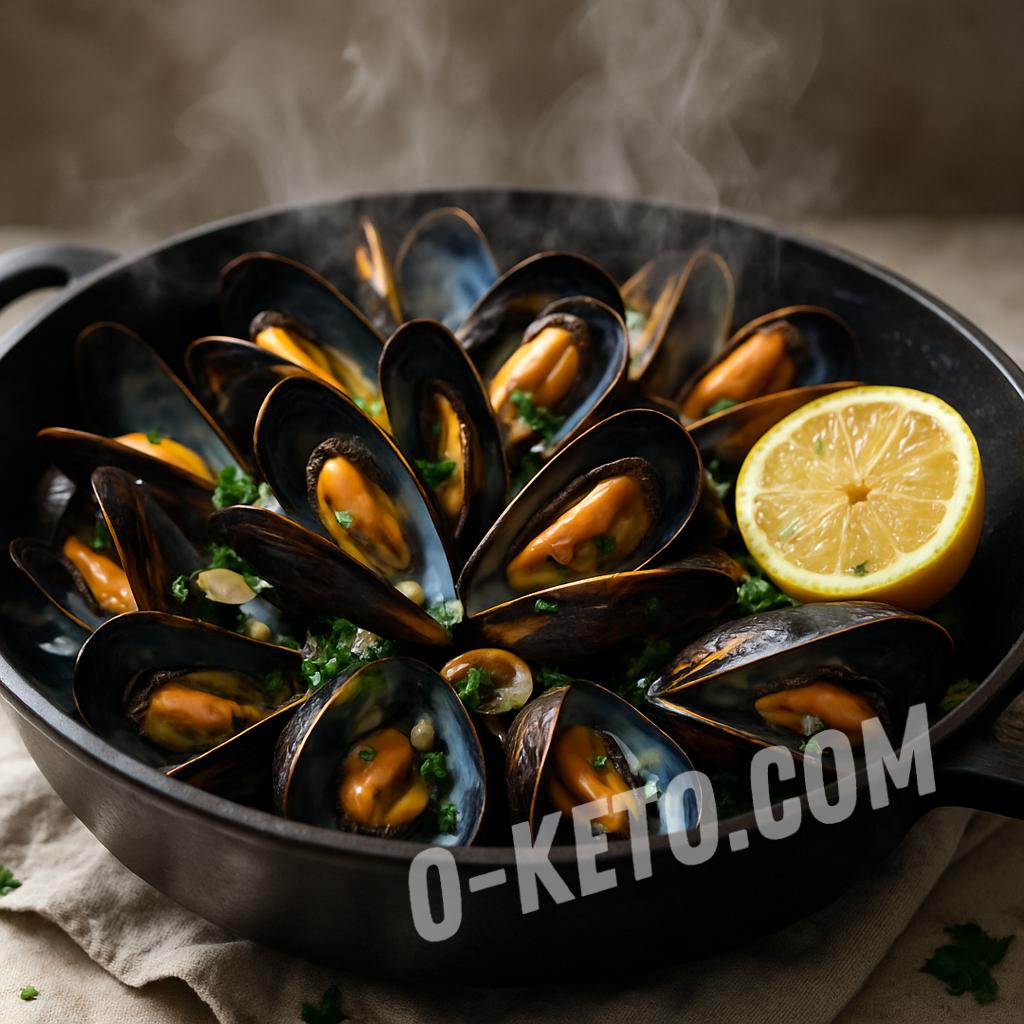
Preparation for cooking:
- clean the shells with a brush to remove sand and seaweed;
- remove the “beard” — a tuft of byssus;
- wash under cold water;
- if necessary, soak for 1–2 hours in salted water to remove sand.
For live mussels:
- steaming until the shells open;
- brief boiling;
- frying;
- stewing.
Cook until the shells open — usually 3–5 minutes. Those that do not open after cooking should not be consumed.
For frozen mussels:
- steaming;
- quick stewing;
- baking with sauces;
- blanching.
Best combinations:
- celery;
- parsley;
- cilantro;
- lemon juice;
- white wine;
- beer;
- black pepper;
- chili pepper;
- cream;
- blue cheese;
- tomato sauce;
- coconut milk;
- lemongrass.
Boiled Frozen Mussels: Where They Are Easy to Overcook
Boiled frozen mussels follow the same logic as ready-cooked shrimp: the product has already been heat-treated, so it usually needs a short reheat rather than a new cooking cycle. If you leave such mussels in a boiling sauce or soup for too long, they quickly become dry, firm, and lose their natural sweet marine flavor.
For pasta, creamy sauces, stews, and warm salads, it is better to add mussels at the very end. First bring the sauce or broth to the right taste and texture, then add the mussels for just 1-2 minutes so they warm through. This simple step greatly reduces the risk of a rubbery texture.
If mussels are sold frozen in shells, do not think in terms of prolonged boiling; focus on heating and shell opening. Shells that remain suspiciously closed after proper heating should not be eaten. Shelled mussels from a bag are even easier to overcook because they are smaller and heat through very quickly.
Practical recommendations
- do not overcook — mussels become tough;
- do not use too many spices to avoid overpowering the flavor;
- serve immediately after cooking;
- use the juice from the shells as a base for sauce.
Properly chosen and quickly cooked mussels retain their tender texture, natural sweetness, and characteristic sea aroma.
Marine toxins and traceable sourcing
Mussels filter seawater and can accumulate toxins associated with harmful algal blooms. Such contamination cannot be reliably detected by smell or taste, and ordinary cooking does not guarantee that the toxins will be destroyed. Buy mussels from a controlled legal supply chain and do not collect them in waters subject to shellfish closures or advisories. Cooking reduces ordinary microbial risks, but it does not replace control of the harvest area and supplier.
How to store live mussels before cooking
Buy live mussels on the day you plan to cook them, or keep them briefly in the refrigerator. Do not seal them airtight or submerge them in fresh water. Place them in a bowl, cover them with a damp towel and keep them cold. The shells should be closed or close after a light tap. Cracks, an unpleasant smell or mussels that do not respond to touch are reasons to discard them before cooking.
How to choose frozen mussels
For frozen mussel meat and mussels in shells, check the integrity of the package, a thin ice glaze and the absence of snow or large ice crystals. Cooked-frozen meat should not be boiled for a long time: add it to the sauce at the end and reheat it for about 1–2 minutes. If live mussels are cooked in their shells, steam or boil them until they open; do not serve shells that remain closed after proper heating.
Sources
- Selecting and Serving Fresh and Frozen Seafood Safely: U.S. Food and Drug Administration
- Safe Selection and Handling of Fish and Shellfish: FoodSafety.gov
- Shellfish Food Safety: Health Canada
- Seafood Safety and Quality: The Consumer’s Role: NOAA Fisheries
- Food Poisoning from Marine Toxins — Centers for Disease Control and Prevention
- Farmed Mussels: A Nutritive Protein Source, Rich in Omega-3 Fatty Acids, with a Low Environmental Footprint — Nutrients / PMC
- Blue Mussel: Aquaculture — NOAA Fisheries