


Nutritionist Maslennikova warns: low-calorie diets can increase stress and decrease immunity
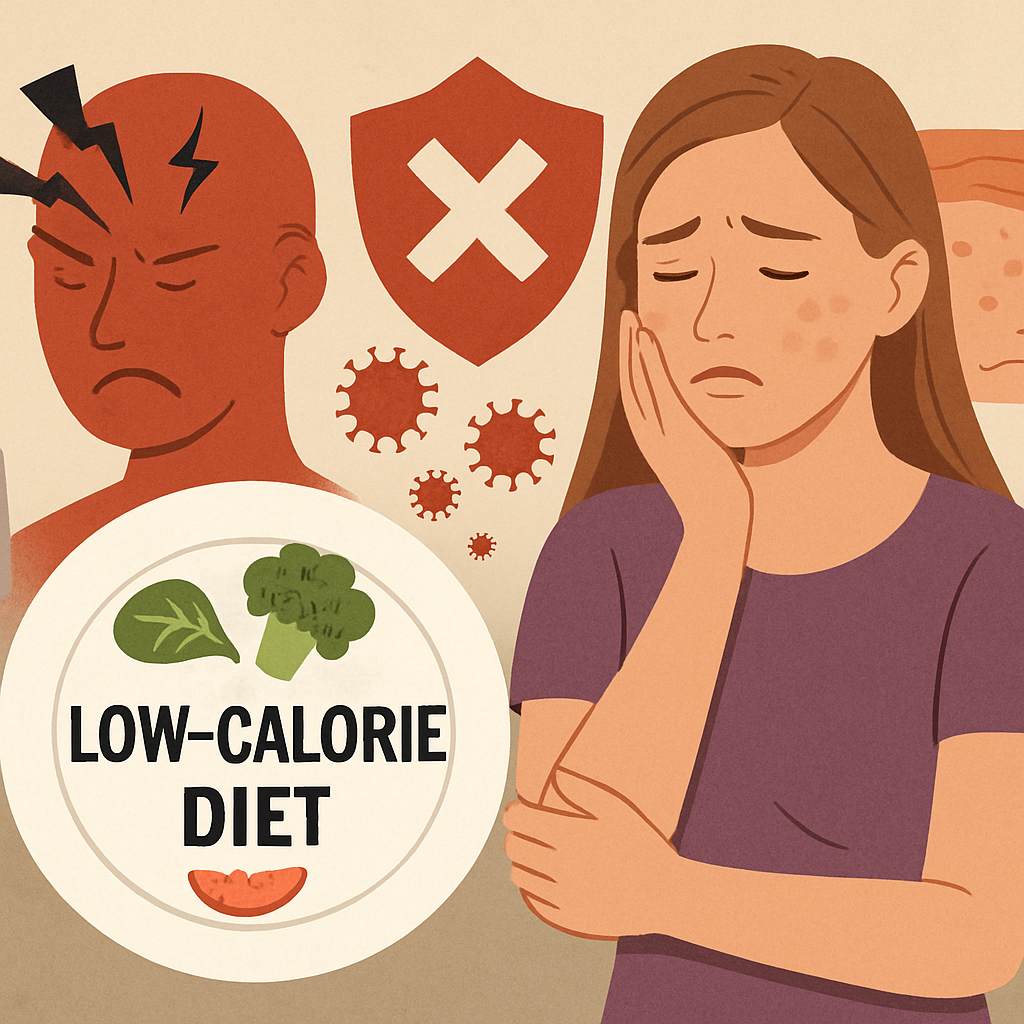

Nutritionist Mila Maslennikova stated that reducing calorie intake by more than 20% from the norm can lead to increased stress levels, decreased immunity, and worsening skin condition. For safe weight loss, it is recommended to reduce calories by 4-20% from the basal metabolism.


Increased stress levels, decreased immunity, and worsening skin condition can be consequences of excessively low-calorie diets, warned nutritionist Mila Maslennikova in a comment to RIA Novosti.
According to the expert, reducing calories by more than 20% from the norm or below the basal metabolic level provokes increased anxiety and disrupts the balance of nutrient intake. This, in turn, leads to deficiencies in vitamins and trace elements, which negatively affects immunity, cognitive abilities, and energy levels, as well as worsens skin condition.
What is basal metabolism and how to calculate the norm of calories
Mila Maslennikova explained that basal metabolism (or basic metabolism) is the number of calories the body burns at rest to support vital processes such as breathing, digestion, circulation, maintaining body temperature, and brain function.
The norm of calories corresponds to maintaining current weight with a normal level of physical activity — that is, a person neither loses nor gains weight.
Recommendations for safe weight loss
For safe weight loss, the nutritionist recommends reducing calorie intake from the norm by 4-20%. This approach helps avoid stress reactions in the body and maintain health.
The expert urges to calculate basal metabolism using the Mifflin-St Jeor formula before starting a diet to determine personal calorie norms and plan a diet wisely.
- Reducing calories below the basal level by more than 20% increases stress and anxiety levels;
- Lack of nutrients leads to decreased immunity;
- Deficiencies in vitamins and trace elements arise, affecting cognitive functions and energy;
- Skin health worsens;
- Safe calorie reduction is from 4% to 20% of the norm.
Thus, overly strict low-calorie diets pose health risks and should be applied with caution and under the supervision of specialists.