


TOP-5 studies on biohacking and longevity from 05.16.2026 - 05.23.2026
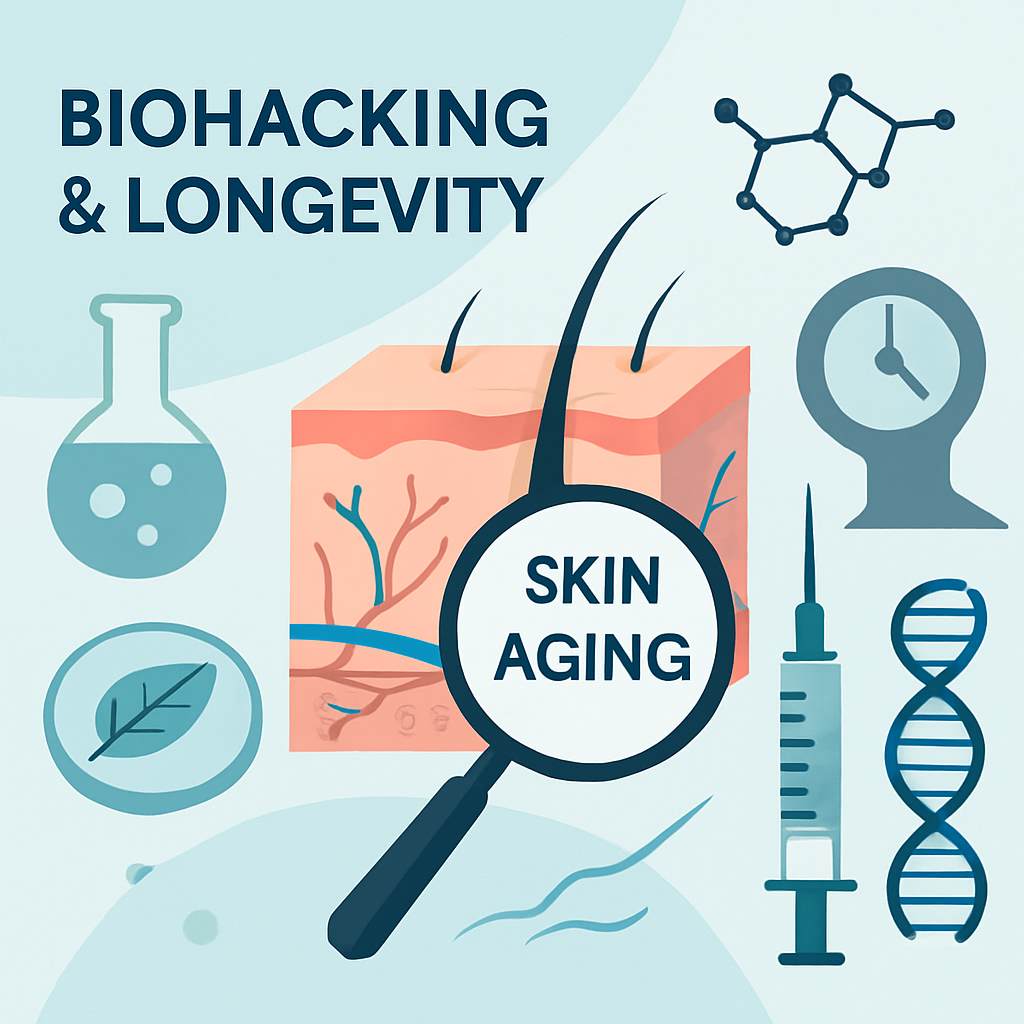

Skin as a guardian and modulator of systemic aging: translational basis for evidence-based gerotherapy; Circadian disruptions and cellular aging: new perspectives in periodontitis; Detection of peri-implantitis using AI on 2D radiographs: systematic review and assessment of diagnostic accuracy; Skin aging: mechanisms, assessment, and rejuvenation; GAVeCeLT-IVAS package for safe insertion of central catheters: SIMiC protocol.


5. Skin as a guardian and modulator of systemic aging: translational basis for evidence-based gerotherapies.
About the work.
The study aims to explore the role of skin as an indicator and modulator of systemic aging, focusing on the application of dermatological data for the development of gerotherapeutic interventions. Skin biomarkers and functional indicators are discussed to support the priorities of translational medicine.
Results.
The available abstract does not describe the results in sufficient detail.
4. Circadian disruption and cellular aging: new perspectives in periodontitis.
About the work.
The study aims to investigate the impact of circadian rhythm disruptions and cellular senescence on susceptibility and progression of periodontitis. The mechanisms through which these factors may influence immune responses and metabolic activity in periodontitis are discussed.
Results.
The available abstract does not describe the results in sufficient detail.
3. Detection of peri-implantitis using AI on 2D radiographs: systematic review and assessment of diagnostic accuracy.
About the work.
The aim of the study was to systematically evaluate and synthesize the effectiveness of deep learning models for detecting peri-implantitis on two-dimensional radiographs. The study included an analysis of eighteen publications, of which eight met the inclusion criteria.
Results.
Deep learning models demonstrated high technical efficacy, with sensitivity up to 0.90-0.98 and specificity up to 0.95. Segmentation models showed Dice coefficients exceeding 0.97. However, all studies had a high risk of bias in patient selection and testing, relied solely on internal validation, and used heterogeneous diagnostic targets and reference standards.
2. Skin aging: mechanisms, assessment, and rejuvenation.
About the work.
The study investigates the mechanisms of skin aging, including cellular senescence and intercomponent communication disruptions, as well as the assessment of quantitative methods for analyzing skin aging and rejuvenation strategies.
Results.
The available abstract does not describe the results in sufficient detail.